Back to Blog

从安全研究员的视角回顾Poly Network黑客事件

Code Auditing
August 15, 2021

在这篇博客中,我们想要回顾Poly Network被黑客攻击的整个过程,并讨论由此吸取的教训。

我们知道Poly Network于2021年8月10日被黑客攻击(本博客使用+8时区)。然而,我们对攻击是如何发生的,以及攻击的根本原因一无所知。作为一个安全研究团队,我们开始了我们的调查。

第一步:找到攻击交易

我们在交易虚拟化系统(https://tx.blocksecteam.com)中回放了攻击交易 0xd8c1f7424593ddba11a0e072b61082bf3d931583cb75f7843fc2a8685d20033a。

交易追踪非常简单,这与其他操纵价格的攻击不同。那些攻击通常有非常复杂的函数调用(请参阅Popsicle黑客攻击)。

第二步:分析合约代码

获取攻击追踪后,我们需要审查合约的源代码。令人惊讶的是,Poly Network在Etherscan上没有经过验证的源代码。然而,我们设法在github上找到了发布的源代码。

在审查了源代码后,我们没有发现任何明显的代码漏洞。我们还将攻击追踪与合法交易追踪进行了比较,发现它们是相似的。

第三步:恢复关键状态

然后我们恢复了攻击期间的关键状态。由于攻击是从调用VerifyHeaderAndExecuteTxEvent发起的,我们恢复了几个关键变量的值,我们已经在第一次分析中分享了这些值 [1]。

在此过程中,我们发现只有一个 keeper(见上图)。由于该值是从攻击追踪中获取的,并且攻击交易已通过所有签名验证,因此我们认为潜在原因可能是私钥泄露或服务器签名过程中的错误 [1]。

然而,我们在这里犯了一个错误。分析一次攻击就像剥洋葱,一层一层地剥,直到找到真正的“根本根本”原因。当时,我们没有继续深挖,看看keeper是否被更改了!

第四步:新线索

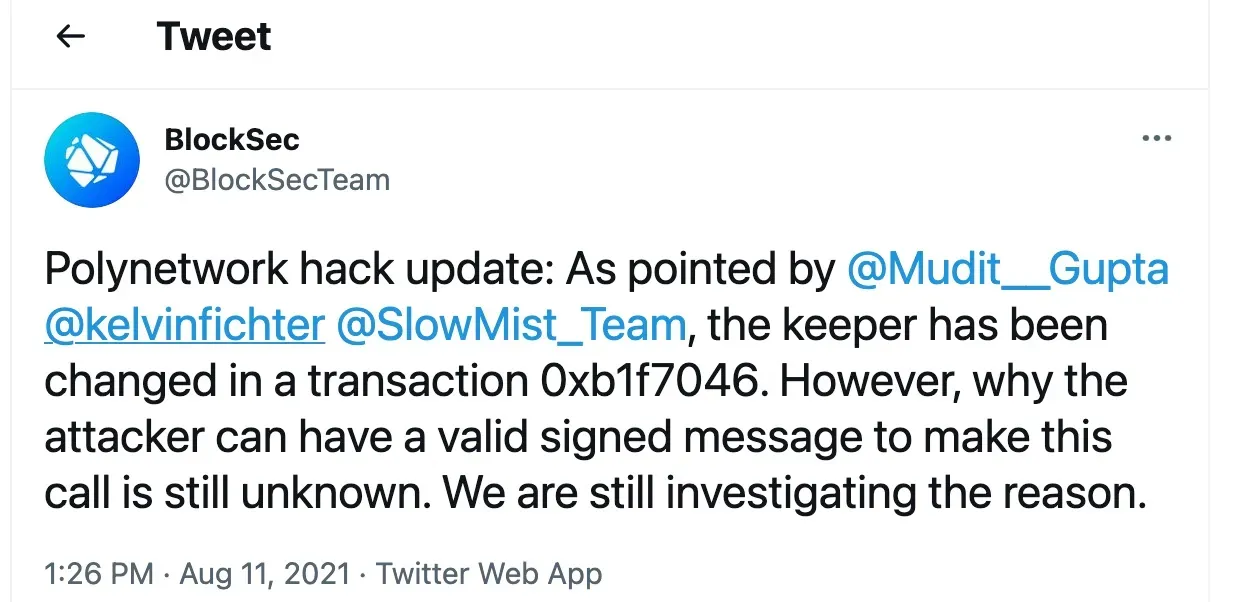
几个小时后,Kelvin和slow mist在Twitter上提供了新线索,显示keeper已被更改。更改过程滥用了哈希碰撞来调用一个强大的函数——一个“智能”的黑客攻击。

现在我们意识到我们的第一次分析并不完整。基于最新信息,我们回放了更改keeper的交易。交易追踪仍然非常简单。
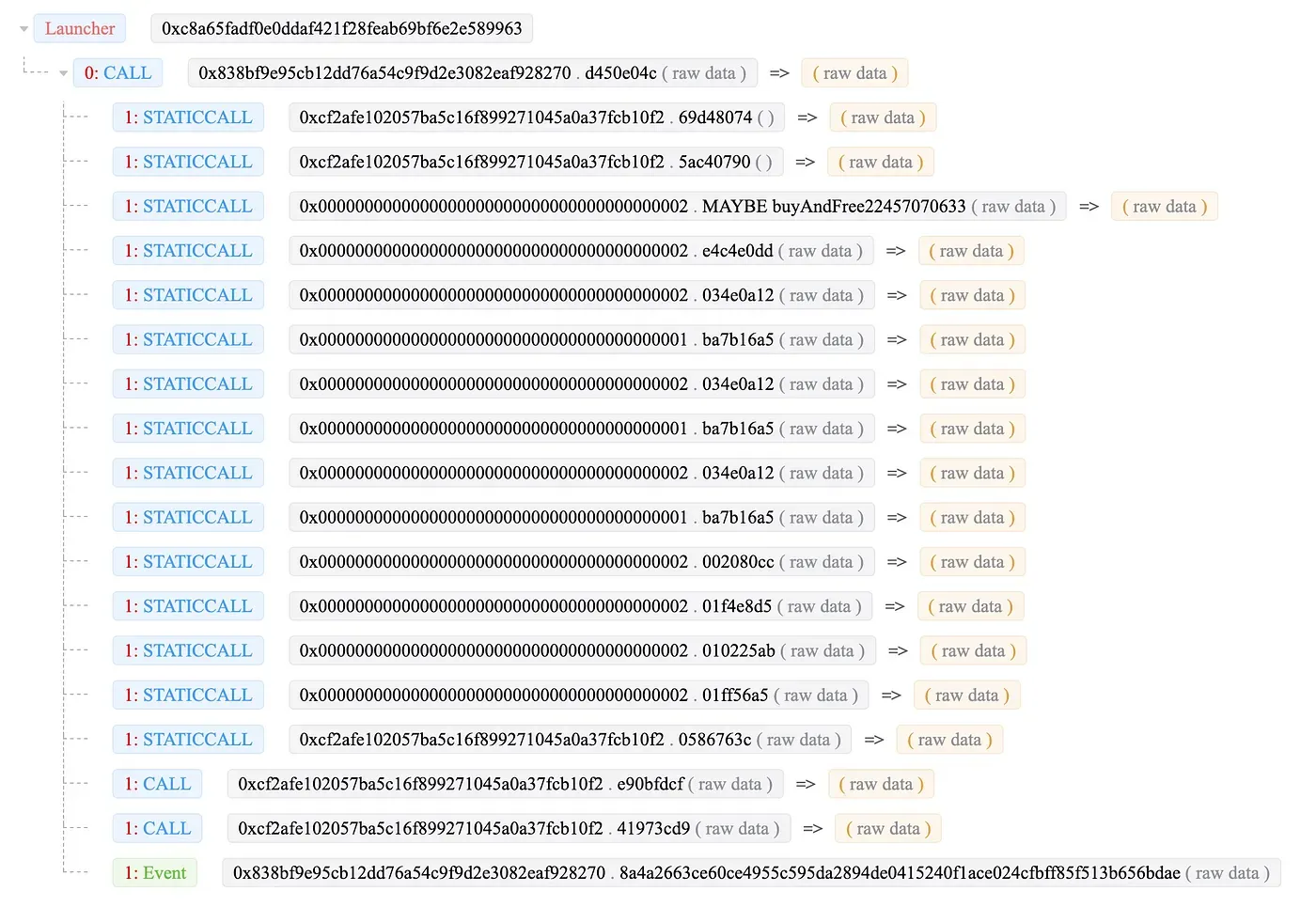
但请记住,在此交易过程中,有四个keeper(而不是一个)。所有这些密钥与其他合法交易的密钥相同——这意味着这些密钥是合法的。这里出现了一个问题:为什么更改keeper的交易可以被打包到链上并被执行呢?

第五步:定位源交易
然后我们尝试定位源交易,因为Poly Network是一个跨链桥。某个地方应该存在一个源交易。我们通过解码关键变量(如下所示)来做到这一点。它显示了源链和Poly链的交易哈希。

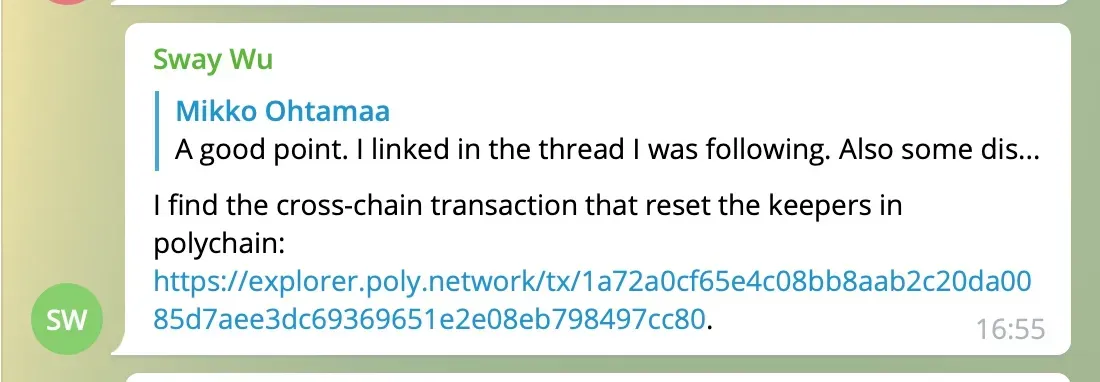
有一个技巧是其他地方没有提及的。变量中的tx哈希值与Poly链上的官方值表示不同。例如,图中Poly链的tx哈希是0x80cc978479eb082e1e656993c63dee7a5d08a00dc2b2aab88bc0e465cfa0721a。但在Poly链浏览器中,哈希值是1a72a0cf65e4c08bb8aab2c20da0085d7aee3dc69369651e2e08eb798497cc80(你看到区别了吗?)。我们在8月11日16:55在EthereumSecurity tg群组分享了我们的发现。
第六步:定位根本原因

但我们仍然无法回答“为什么更改keeper的交易可以被打包到链上”的问题。为了回答这个问题,我们从Ontology链开始,找到了交易流程:

Ontology交易 -> Ontology中继器 -> Poly链 -> Ethereum中继器 -> Ethereum

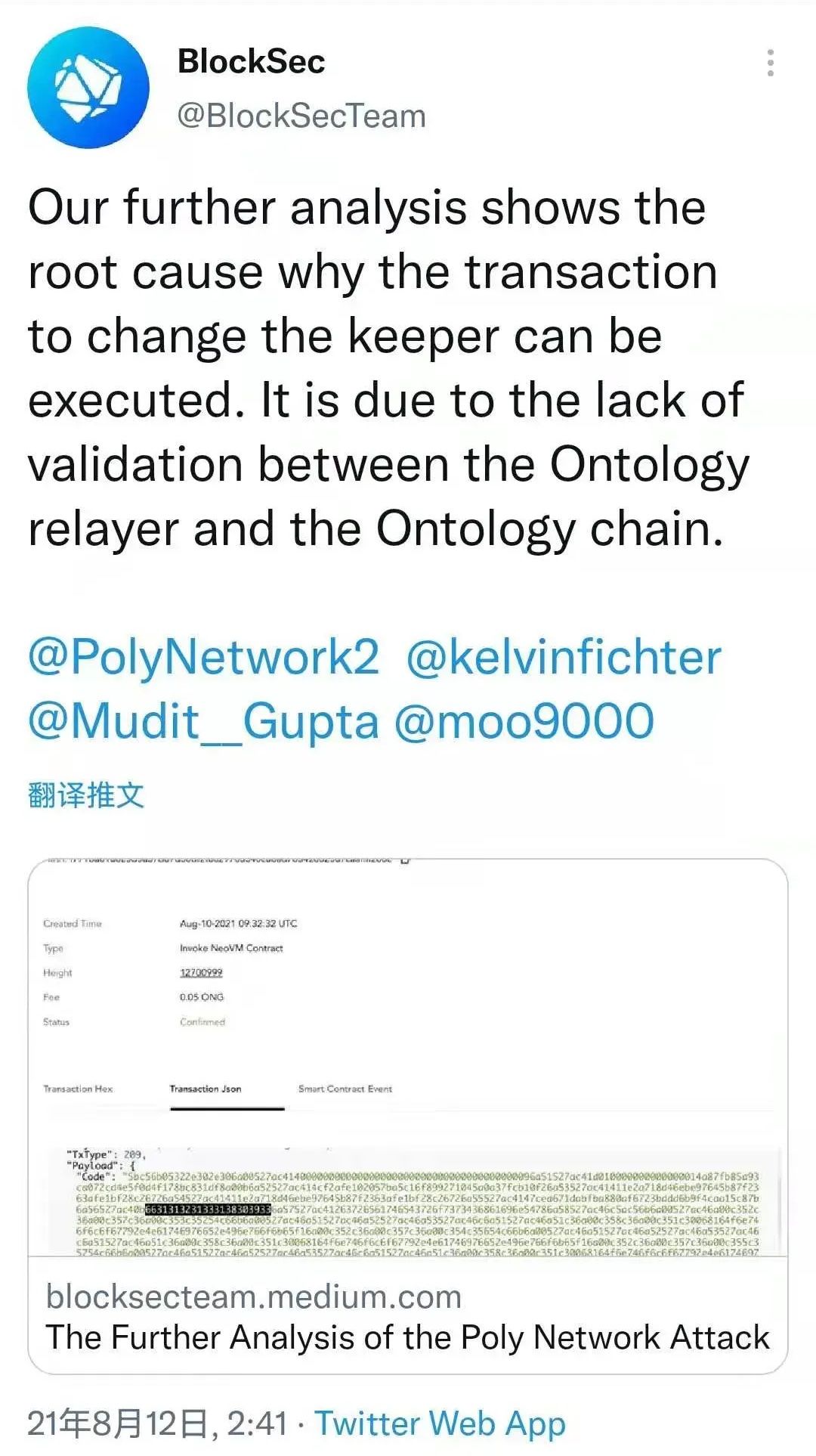
然后我们阅读了Ontology链和中继器的源代码。经过几个小时,我们发现Ontology中继器对跨链交易的验证不足。这使得恶意交易可以被打包到Poly链上。之后,系统就被攻破了。

经过内部讨论和挑战,我们在8月12日02:41在Twitter和medium上发布了我们的发现[3]。
吸取的教训

  • 设计即安全。 安全应该贯穿DeFi项目的整个过程。用户将资金委托给项目。反过来,项目应该值得信赖。不幸的是,我们看到了Poly Network在安全方面的疏忽。例如,缺乏验证是一个老式的安全漏洞,我在本科课程中讲过。

  • 对于TVL超过6亿美元的DeFi项目,没有经过验证的源代码。 去中心化基础设施的基础是信任,而信任的基础是透明度。不幸的是,用户愿意将资金投入一个黑箱项目,这让我感到惊讶和担忧。如何提高用户的安全意识可能需要一个新的解决方案。

参考

[1]https://blocksecteam.medium.com/the-initial-analysis-of-the-polynetwork-hack-270ac6072e2a

[2]https://twitter.com/kelvinfichter/status/1425290462076747777

[3]https://blocksecteam.medium.com/the-further-analysis-of-the-poly-network-attack-6c459199c057

鸣谢:Yufeng Hu, Siwei Wu, Lei Wu, Yajin Zhou @ BlockSecTeam
BlockSec (@BlockSecTeam) / Twitter

Sign up for the latest updates
Tracing $1.6B in TRON USDT: Inside the VerilyHK Ponzi Infrastructure
Case Studies

Tracing $1.6B in TRON USDT: Inside the VerilyHK Ponzi Infrastructure

An on-chain investigation into VerilyHK, a fraudulent platform that moved $1.6B in TRON USDT through a multi-layered fund-routing infrastructure of rotating wallets, paired payout channels, and exchange exit funnels, with traced connections to the FinCEN-sanctioned Huione Group.

Weekly Web3 Security Incident Roundup | Mar 30 – Apr 5, 2026
Security Insights

Weekly Web3 Security Incident Roundup | Mar 30 – Apr 5, 2026

This BlockSec weekly security report covers nine DeFi attack incidents detected between March 30 and April 5, 2026, across Solana, BNB Chain, Arbitrum, and Polygon, with total estimated losses of approximately $287M. The week was dominated by the $285.3M Drift Protocol exploit on Solana, where attackers combined multisig signer social engineering with Solana's durable nonce mechanism to bypass a zero-timelock 2-of-5 Security Council, alongside notable incidents including a $950K flash loan TWAP manipulation against the LML staking protocol, a $359K Silo Finance vault inflation via an external `wstUSR` market donation exploiting a depegged-asset oracle and `totalAssets()` accounting flaw, and an EIP-7702 delegated-code access control failure. The report provides detailed vulnerability analysis and attack transaction breakdowns for each incident, covering flawed business logic, access control, price manipulation, phishing, and misconfiguration attack types.

Drift Protocol Incident: Multisig Governance Compromise via Durable Nonce Exploitation
Security Insights

Drift Protocol Incident: Multisig Governance Compromise via Durable Nonce Exploitation

On April 1, 2026 (UTC), Drift Protocol on Solana suffered a $285.3M loss after an attacker exploited Solana's durable nonce mechanism to delay the execution of phished multisig approvals, ultimately transferring administrative control of the protocol's 2-of-5 Squads governance with zero timelock. With full admin privileges, the attacker created a malicious collateral market (CVT), inflated its oracle price, relaxed withdrawal protections, and drained USDC, JLP, SOL, cbBTC, and other assets through 31 rapid withdrawals in approximately 12 minutes. This incident highlights how durable nonce-based delayed execution can decouple signer intent from on-chain execution, bypassing the temporal assumptions that multisig security implicitly relies on.

Best Security Auditor for Web3

Validate design, code, and business logic before launch. Aligned with the highest industry security standards.

BlockSec Audit