如何避免成为Web3网络钓鱼的受害者

如何避免成为Web3网络钓鱼的受害者

我们观察到网络钓鱼攻击的趋势日益增长,已造成数亿美元的损失。因此,除了技术层面,我们还必须告知用户常见的网络钓鱼方法,并教育他们如何避免网络钓鱼攻击。

网络钓鱼攻击的类型

我们发现存在四种常见的网络钓鱼攻击类型。

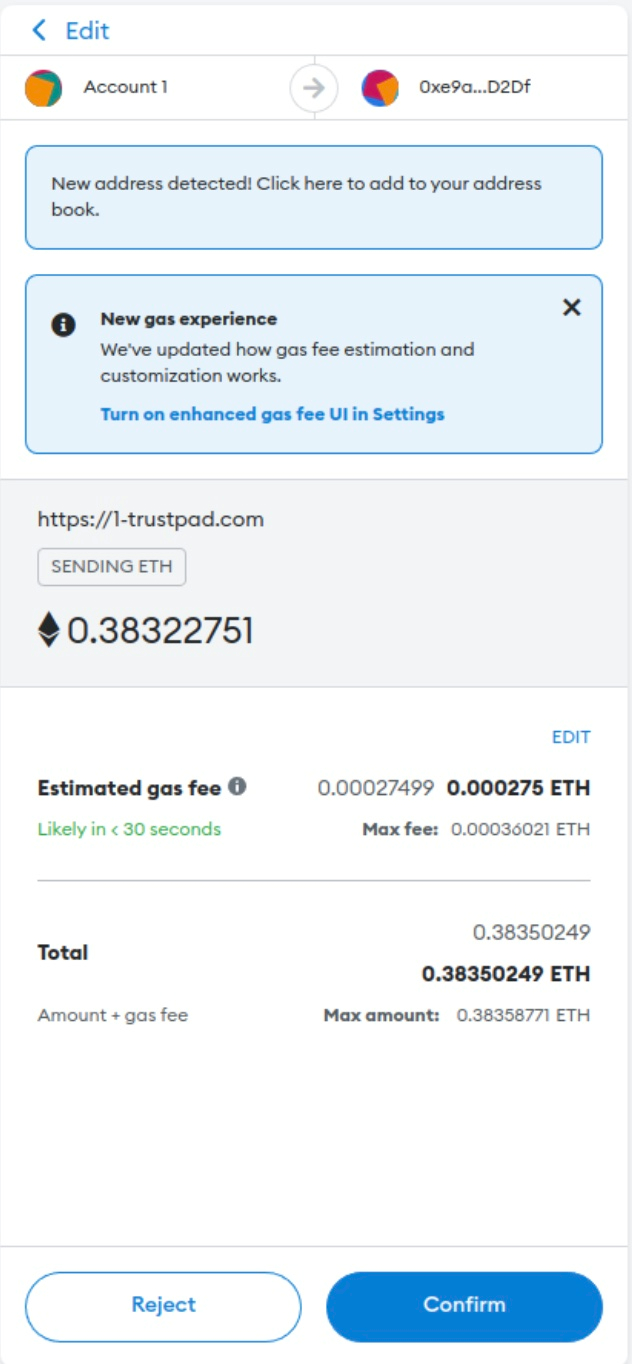
  • 直接代币转移:攻击者诱骗用户直接将原生代币(以太币)或 ERC20/ERC711 代币转移到攻击者控制的账户。

  • 授权钓鱼:授权是一种机制,通过签署授权交易,将用户的代币委托给支出方。攻击者可以诱骗用户签署一笔交易,授权其代币给攻击者,然后攻击者就可以转移受害者的代币。

  • 地址投毒:例如虚假代币攻击、零价值攻击和粉尘转账攻击。

  • NFT 零买钓鱼:攻击者诱骗用户签署一笔交易,以低价甚至免费的价格出售其 NFT。

  • 其他。

直接代币转移

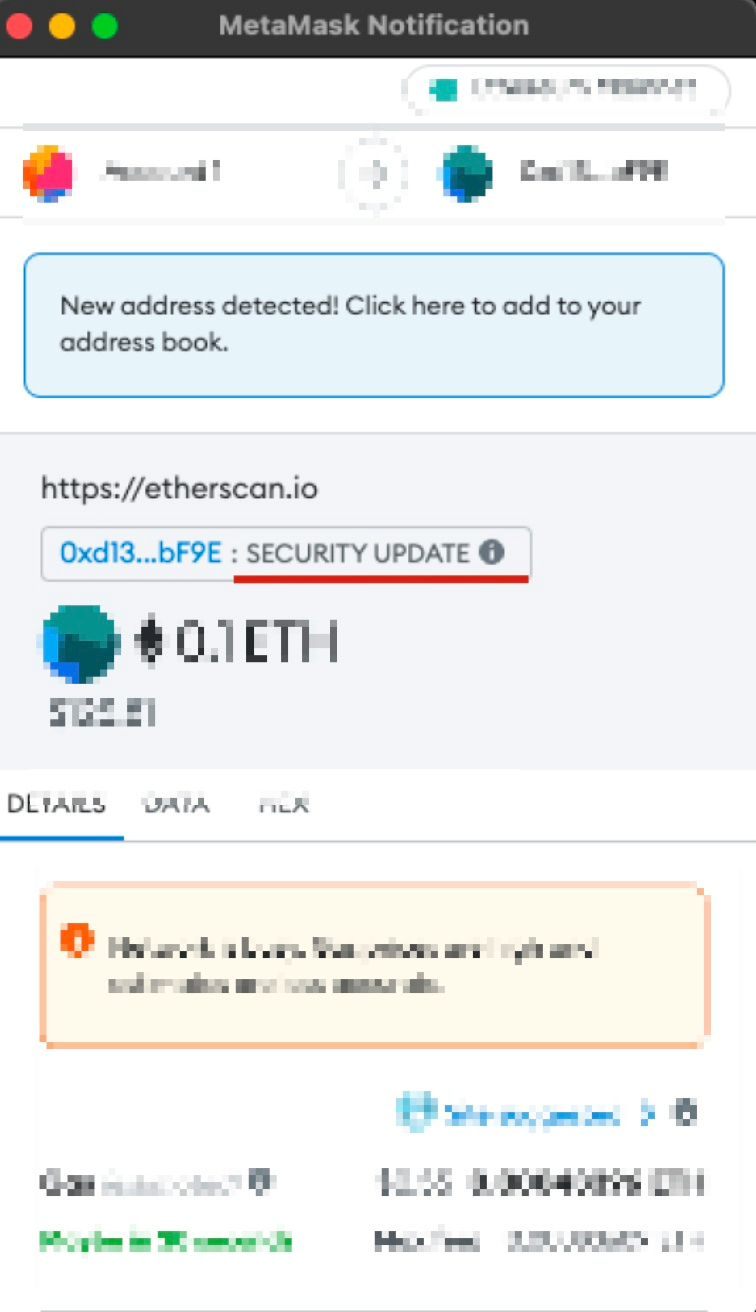
第一种称为直接代币转移。攻击者要求用户签署一笔交易,直接将其以太币转移到攻击者控制的账户。更高级的攻击利用一个名为 SecurityUpdateClaimRewards 函数的恶意智能合约,让用户签署交易。

上图(右图)展示了一个带有智能合约中 SecurityUpdate 函数的网络钓鱼交易示例。如果用户签署此交易,他们的以太币将被转移到该智能合约,然后转移给攻击者。

授权钓鱼

授权是一种机制,让用户允许其他用户(支出方)花费其代币。例如,用户可以授权其 USDC 给某个智能合约,以便该智能合约可以代表用户操作 USDC 代币,例如将其兑换成其他代币。由于用户已将代币授权给智能合约,智能合约操作用户 USDC 代币无需用户再次确认(或新的签名消息)。这可以使整个流程更加顺畅。

然而,攻击者滥用了这一机制。他们可以诱骗用户签署一笔交易,将其 USDC(或其他有价值的代币)授权给攻击者控制的合约或 EOA 地址。之后,攻击者就可以将用户的代币转移给攻击者。
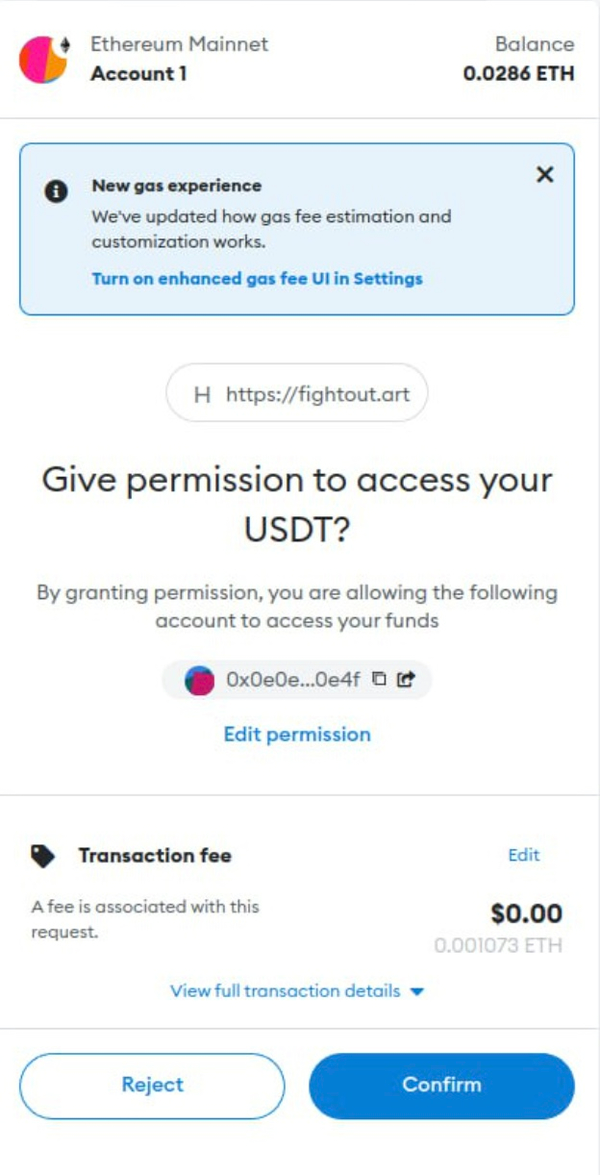
上图展示了一笔授权 USDT 给攻击者的交易。请注意,授权权限在用户明确撤销之前不会过期。因此,请尽快撤销恶意授权。

我们还注意到一种利用合法合约的新型网络钓鱼攻击,我们称之为 Web3 网络钓鱼攻击中的 ROP。有关更多信息,请参阅我们的博客

地址投毒

在本视频中,我们将向您展示地址投毒是如何发生的,包括虚假代币攻击、零价值攻击和粉尘转账攻击,以及如何在 Etherscan 上识别可疑交易。

**零价值转账:**攻击者会将流行的代币(例如 USDC)从受害者转移到钓鱼地址的零价值转账记录。这个钓鱼地址与受害者交易历史中的地址非常相似。当受害者在下次转账时直接复制地址时,他们可能会复制交易历史中的钓鱼地址。更多信息请阅读我们的 Twitter、Coinbase 的调查1 2 3更多

NFT 零买钓鱼

在 NFT 市场(例如 OpenSea)上出售 NFT 时,用户首先签署一笔交易,表明出售其 NFT 并设定价格。然后,想要购买此 NFT 的人可以获取签名订单信息来完成订单。

这为骗子提供了一个机会,诱骗用户签署一笔交易,以极低的价格(甚至免费)出售其 NFT。然后,攻击者可以获取这笔交易,并在 NFT 市场上完成该订单,以低价(或免费)获得受害者的 NFT。

这种钓鱼方式很普遍,因为用户在签署订单时很难理解其含义。
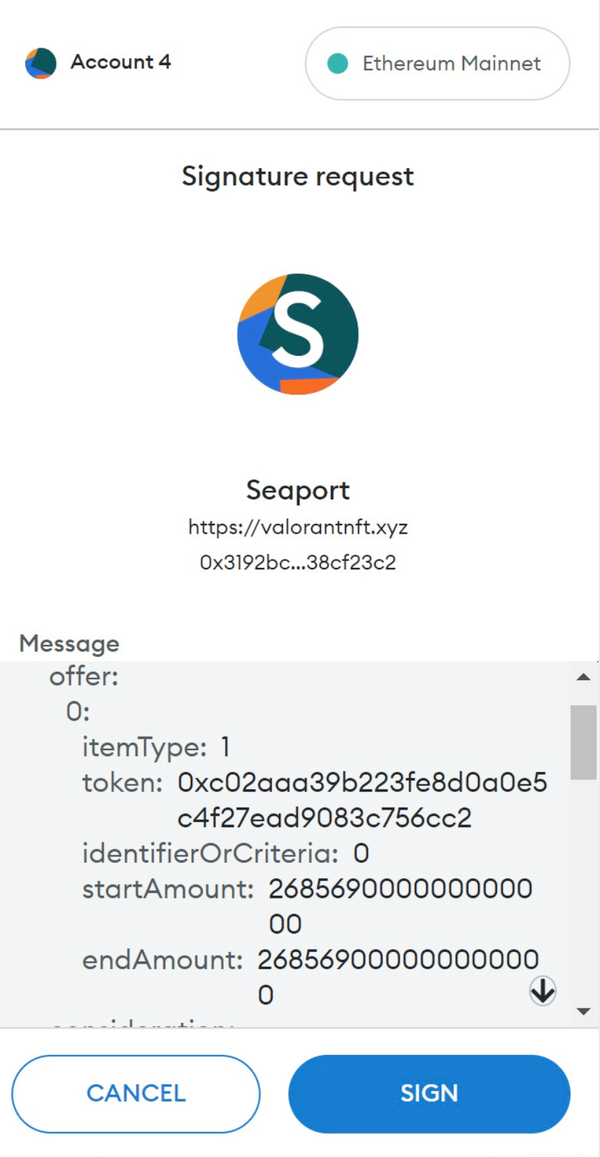
上图展示了 MetaMask 在 OpenSea 签名订单时的 UI。不幸的是,这些信息对用户来说很难理解。

如何保护自己

  • 首先,只签署您理解的交易!如果您对交易有任何疑问,请不要签署。
  • 其次,使用多个钱包进行交易。将一个钱包地址用于日常交易,但只存放少量代币。将大部分代币存放在另一个钱包地址,该地址除了转账代币到第一个钱包外,不签署任何交易。
  • 第三,请检查您的授权并删除不必要的授权。您可以利用 MetaSuites 的授权诊断功能来达到此目的。
Sign up for the latest updates
Weekly Web3 Security Incident Roundup | Feb 9 – Feb 15, 2026

Weekly Web3 Security Incident Roundup | Feb 9 – Feb 15, 2026

During the week of February 9 to February 15, 2026, three blockchain security incidents were reported with total losses of ~$657K. All incidents occurred on the BNB Smart Chain and involved flawed business logic in DeFi token contracts. The primary causes included an unchecked balance withdrawal from an intermediary contract that allowed donation-based inflation of a liquidity addition targeted by a sandwich attack, a post-swap deflationary clawback that returned sold tokens to the caller while draining pool reserves to create a repeatable price-manipulation primitive, and a token transfer override that burned tokens directly from a Uniswap V2 pair's balance and force-synced reserves within the same transaction to artificially inflate the token price.

Top 10 "Awesome" Security Incidents in 2025

Top 10 "Awesome" Security Incidents in 2025

To help the community learn from what happened, BlockSec selected ten incidents that stood out most this year. These cases were chosen not only for the scale of loss, but also for the distinct techniques involved, the unexpected twists in execution, and the new or underexplored attack surfaces they revealed.

#10 Panoptic Incident: XOR Linearity Breaks the Position Fingerprint Scheme

#10 Panoptic Incident: XOR Linearity Breaks the Position Fingerprint Scheme

On August 29, 2025, Panoptic disclosed a Cantina bounty finding and confirmed that, with support from Cantina and Seal911, it executed a rescue operation on August 25 to secure roughly $400K in funds. The issue stemmed from a flaw in Panoptic’s position fingerprint calculation algorithm, which could have enabled incorrect position identification and downstream fund risk.