BlockSec USDT 冻结追踪器上线

BlockSec USDT 冻结追踪器上线

地址冻结和解冻检查是USDT用户频繁且实际的需求。然而,长期以来,通过传统渠道很难处理这项任务。TronScan和Etherscan并未清晰显示冻结状态。一些企业级KYT工具提供这些数据,但它们通常缺乏简单开放的搜索界面。

BlockSec发布了一份关于近12.6亿美元被冻结USDT的报告以及如何降低冻结风险。自那时以来,我们收到了许多用户关于如何检查地址是否被冻结的请求。为了解决这个问题,我们推出了USDT Freeze Tracker。下面,我们将介绍其四个核心页面中的第一个。

概览:一览全局

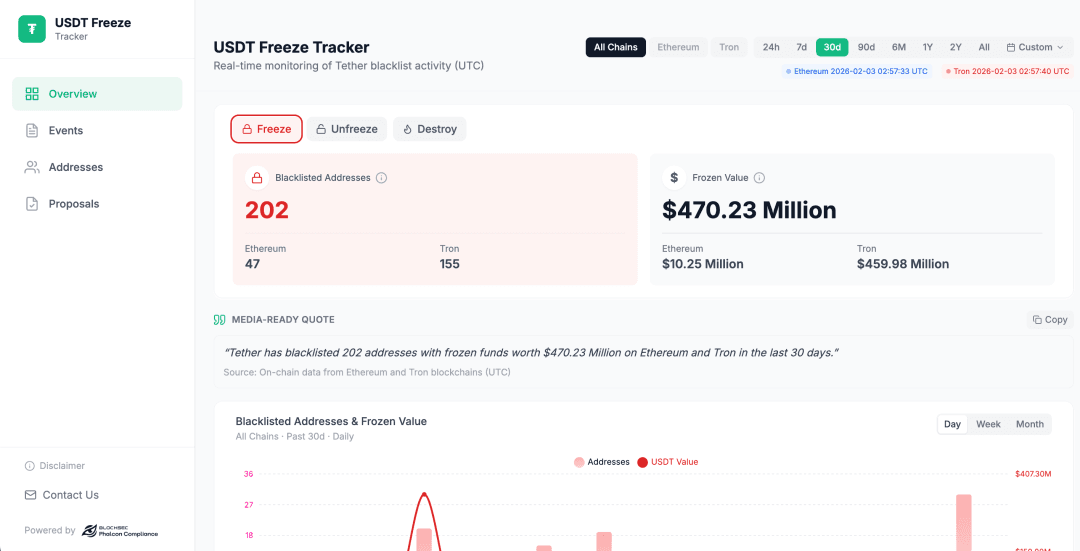
“概览”页面是主仪表板。它汇总了USDT地址冻结、解冻和销毁事件的全部数据。您可以按不同的时间范围筛选结果,包括过去24小时、7天、30天、90天、六个月、一年、两年或全部时间。

无需复杂的设置,您可以快速了解任何选定期间的活动。数据清晰易读。整体趋势一目了然,帮助您更快地获取信息并做出更明智的决策。

概览
概览

事件:逐一追踪地址活动

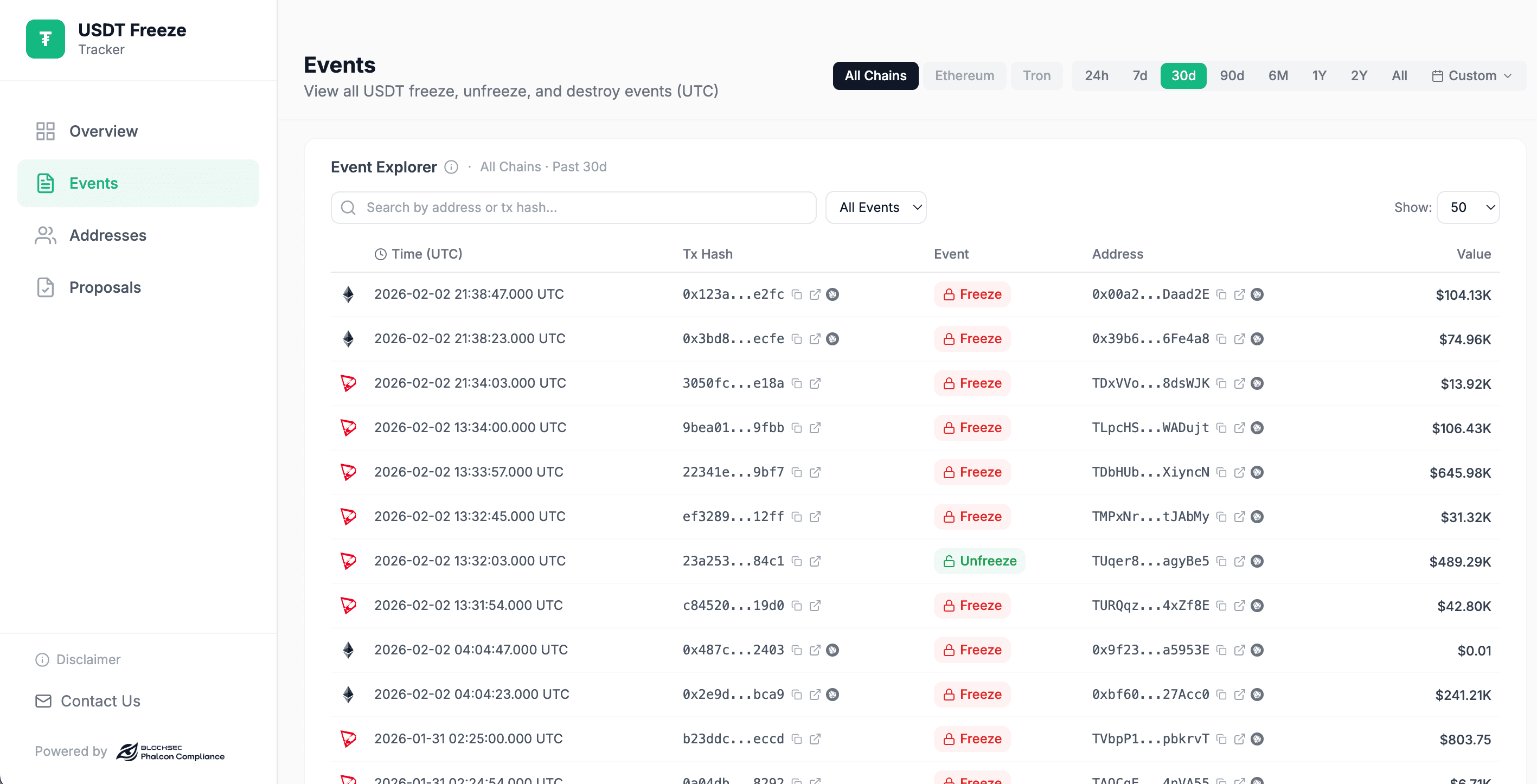
“事件”页面以清晰的列表显示地址活动,按时间排序。每一行都显示一个单独的冻结、解冻或销毁事件及其完整详情。这使得追踪事件的发生和时间变得容易。

对于每个事件,您可以打开Phalcon Explorer中的相关交易来查看链上详情。您还可以点击受影响的地址,打开Phalcon Compliance并运行风险扫描。这有助于您了解地址为何被冻结、解冻或销毁,以及风险可能来自何处。

事件
事件

地址:即时搜索并获取结果

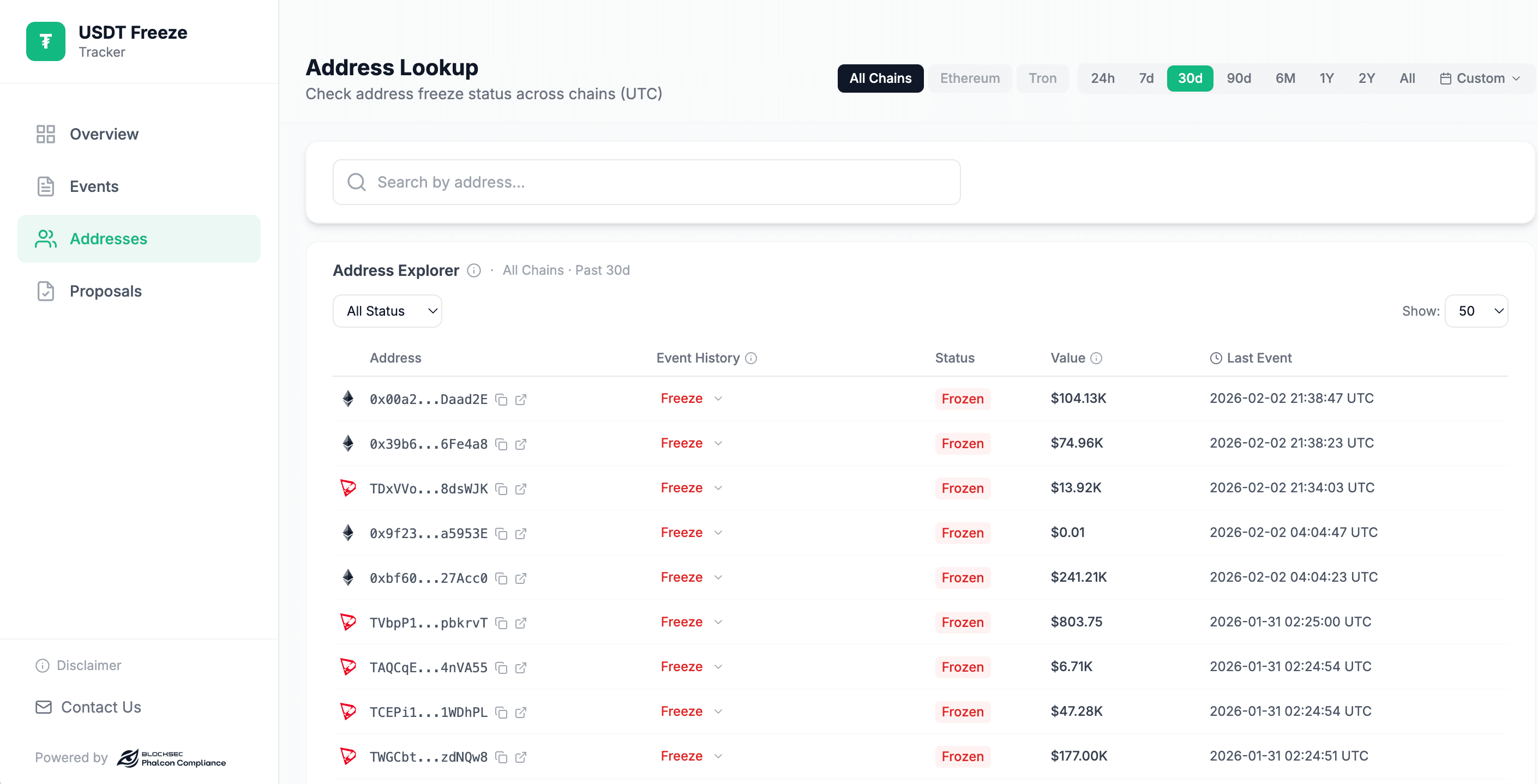
在“地址”页面,您可以输入一个钱包地址进行直接搜索。系统会快速检查该地址是否在黑名单上,并显示其当前的冻结或解冻状态。

这使您可以立即确认特定地址的状态,并了解其是否受到任何USDT限制的影响。

地址
地址

提案:追踪相关的治理行动

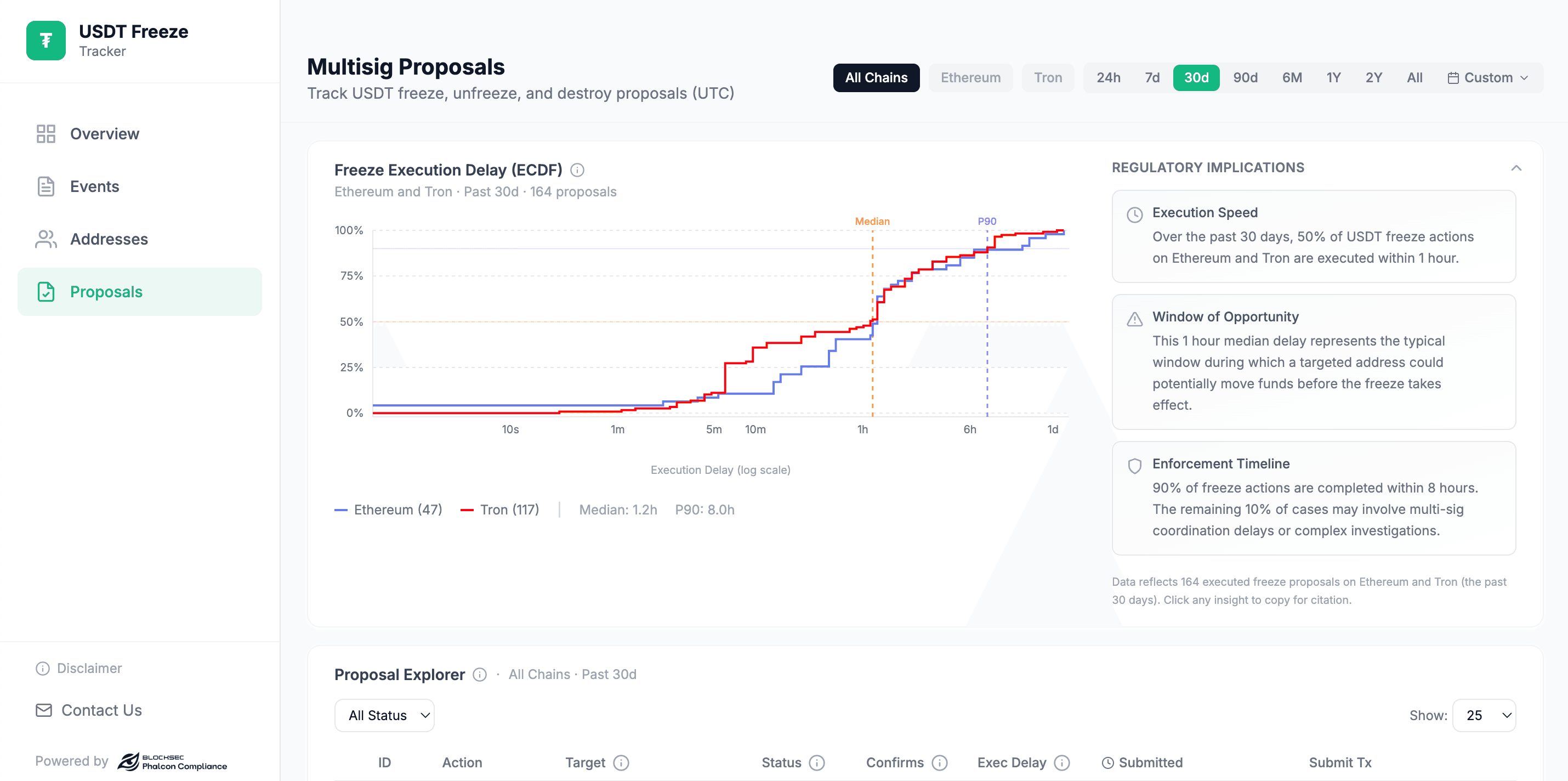
“提案”页面显示与USDT冻结和解冻相关的已完成多重签名提案。它还提供详细的监管影响,以帮助解释每个提案的含义。

您可以查看关键信息,如执行速度、操作窗口和执行时间表。这让您对冻结决策的执行方式及其与加密行业更广泛监管实践的联系有更清晰的了解。

提案
提案

该工具涵盖了从一般概览到特定地址搜索的所有内容。它有助于事件追踪,并解释冻结背后的规则。它非常适合需要USDT地址查询的普通用户和行业专家。所有数据均直接来自原生的以太坊和波场链上源。这确保了准确性并提供实时更新。

为了更好地保护您的平台并确保无缝合规,请探索Phalcon Compliance如何帮助您实时识别、分析和减轻风险。立即开始保护您的加密运营。

Sign up for the latest updates
#1 Cetus Incident: One Unchecked Shift Drains $223M in the Largest DeFi Hack of 2025

#1 Cetus Incident: One Unchecked Shift Drains $223M in the Largest DeFi Hack of 2025

Cetus Protocol, the largest concentrated-liquidity DEX on Sui, was exploited on May 22, 2025, resulting in an estimated ~$223M loss across multiple liquidity pools. The attacker leveraged a flaw in checked_shlw(), a custom overflow-prevention helper used in fixed-point u256 math, where an incorrect constant and comparison failed to block unsafe left shifts and caused silent truncation of high bits during liquidity delta calculations. By crafting specific liquidity and tick/price-range parameters, the exploit made required deposits appear near-zero while minting an oversized liquidity position, which was later withdrawn to drain real pool reserves.

#2 Bybit Incident: A Web2 Breach Enables the Largest Crypto Hack in History

#2 Bybit Incident: A Web2 Breach Enables the Largest Crypto Hack in History

The largest crypto hack ever, the February 21, 2025 Bybit breach stole about $1.5B after attackers used social engineering to compromise a Safe{Wallet} workflow, injected malicious JavaScript into an AWS S3 bucket, tampered with the transaction signing process, and upgraded Bybit’s Safe{Wallet} contract to a malicious implementation that drained funds across multiple chains.

Weekly Web3 Security Incident Roundup | Jan 25 – Feb 1, 2026

Weekly Web3 Security Incident Roundup | Jan 25 – Feb 1, 2026

During the week of January 25 to February 1, 2026, six blockchain security incidents were reported with total losses of ~$18.05M. These involved improper input validation, token design flaws, key compromises, and business logic errors across DeFi protocols on multiple chains. The primary causes included unchecked user inputs enabling arbitrary calls, flawed burn mechanisms allowing price manipulation, compromised developer tools, and missing solvency checks in lending functions.