An exchange compliance officer at peak load watches hundreds of deposits and withdrawals arrive every second. A batch KYT run that screens overnight misses the mixer-linked deposit that landed two minutes ago. A slow screen, in turn, holds legitimate withdrawals hostage and erodes user trust. KYT for crypto exchange is the operational answer to both failures. It scores each transfer in real time, intercepts high-risk flow at millisecond latency, and archives a suspicious-transaction report per transfer. This page extends the KYT platform for crypto exchanges hub. It covers the high-throughput workflow exchanges run, the four-layer monitoring architecture on the transaction timeline, and the landing benchmark a real payment institution hit.
Why Exchanges Need High-Throughput KYT
A high-throughput KYT deployment is not one product feature. It is a five-element capability checklist that together decides whether screening survives peak load. The elements are throughput, low latency, multi-chain coverage, automated STR generation, and API integration. Each element corresponds to a specific failure mode in the legacy batch paradigm, and each is verifiable against a concrete number rather than a marketing claim.
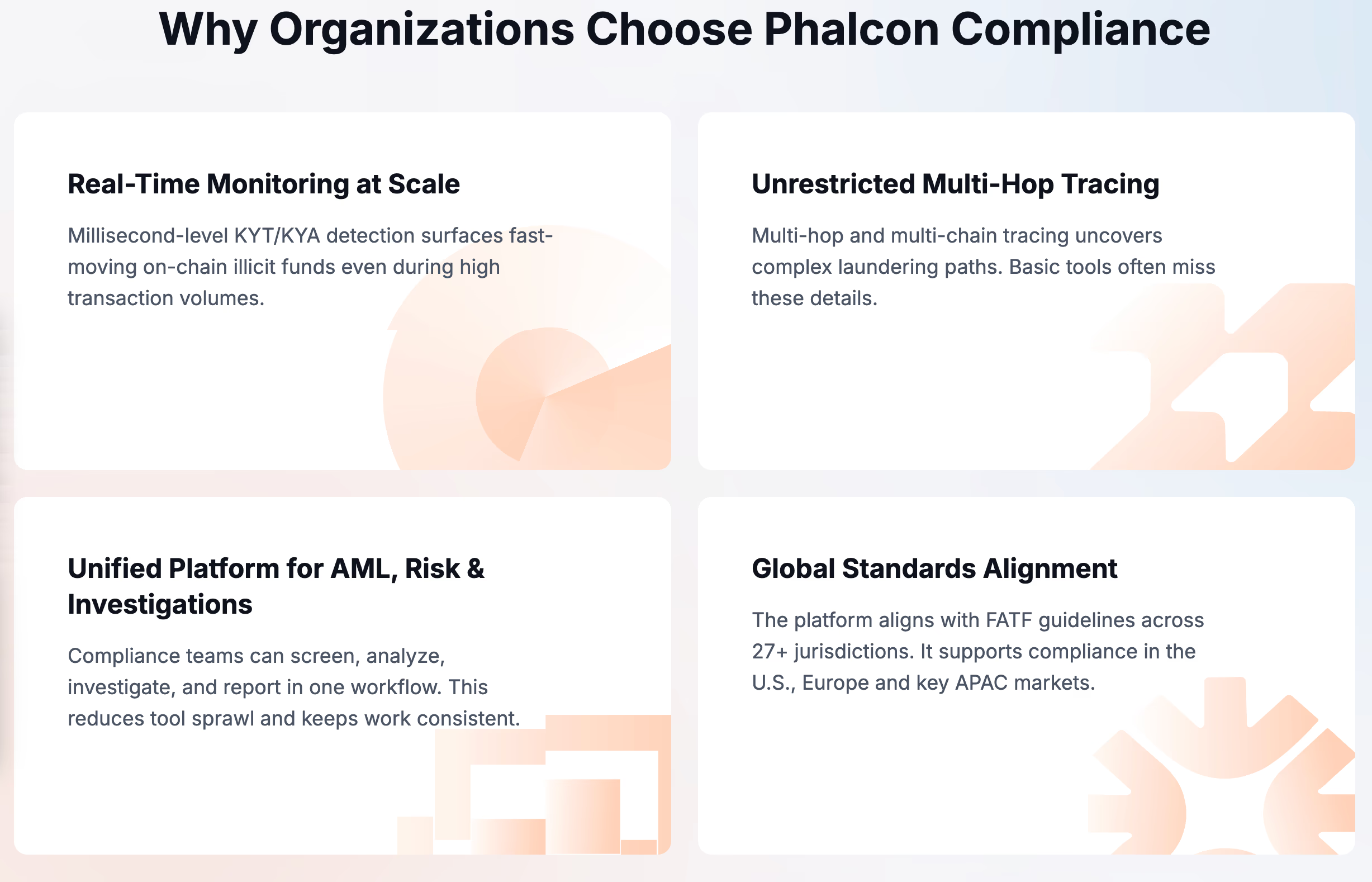
The first element is throughput. Legacy AML tools built on second-hand label repositories update every few days, which means an address cleared at onboarding can carry illicit exposure by the time the next batch runs. Phalcon Compliance screens at 500+ transactions per second and returns API responses in milliseconds while analyzing 200+ risk signals. The second element is low latency. A screen that takes seconds at the withdrawal node blocks legitimate users. Millisecond-level responses let the risk engine sit inline without user-visible delay. The third element is multi-chain coverage across 9 chains: Ethereum, Tron, BNB Chain, Polygon, Base, Optimism, Avalanche C-Chain, Arbitrum, and Bitcoin, so contamination routed through a bridge or a hop on another chain does not read as clean. The fourth element is automated STR generation. A compliance team that hand-writes suspicious-transaction reports at peak load cannot keep up. One-click export aligned to FATF standards and covering multiple key jurisdictions turns the report into a byproduct of screening rather than a separate labor burden. The fifth element is API integration, available on the Scale and Enterprise plans, which lets the engine sit at deposit and withdrawal nodes instead of running as a detached batch job.
The reporting obligation underneath this checklist is not optional. Under the FATF risk-based approach, a virtual asset service provider must monitor transactions in real time and file suspicious-transaction reports when risk surfaces. For the authoritative framing, see the FATF risk-based approach guidance for virtual assets.
The Full KYT Workflow: Pre-Trade Scoring, In-Trade Signal, Post-Trade STR Archival
The exchange KYT workflow runs on three operational stages, not one screen. Pre-trade scoring evaluates the address and counterparty before funds are accepted. In-trade signal checks the live transfer for mixer, sanctions, and behavior exposure at the deposit or withdrawal node. Post-trade STR archival produces a per-transfer suspicious-transaction report the moment a transfer is flagged. A screen at only one stage is an acceptance check, not a workflow, and examiners read the gap as a missing control.
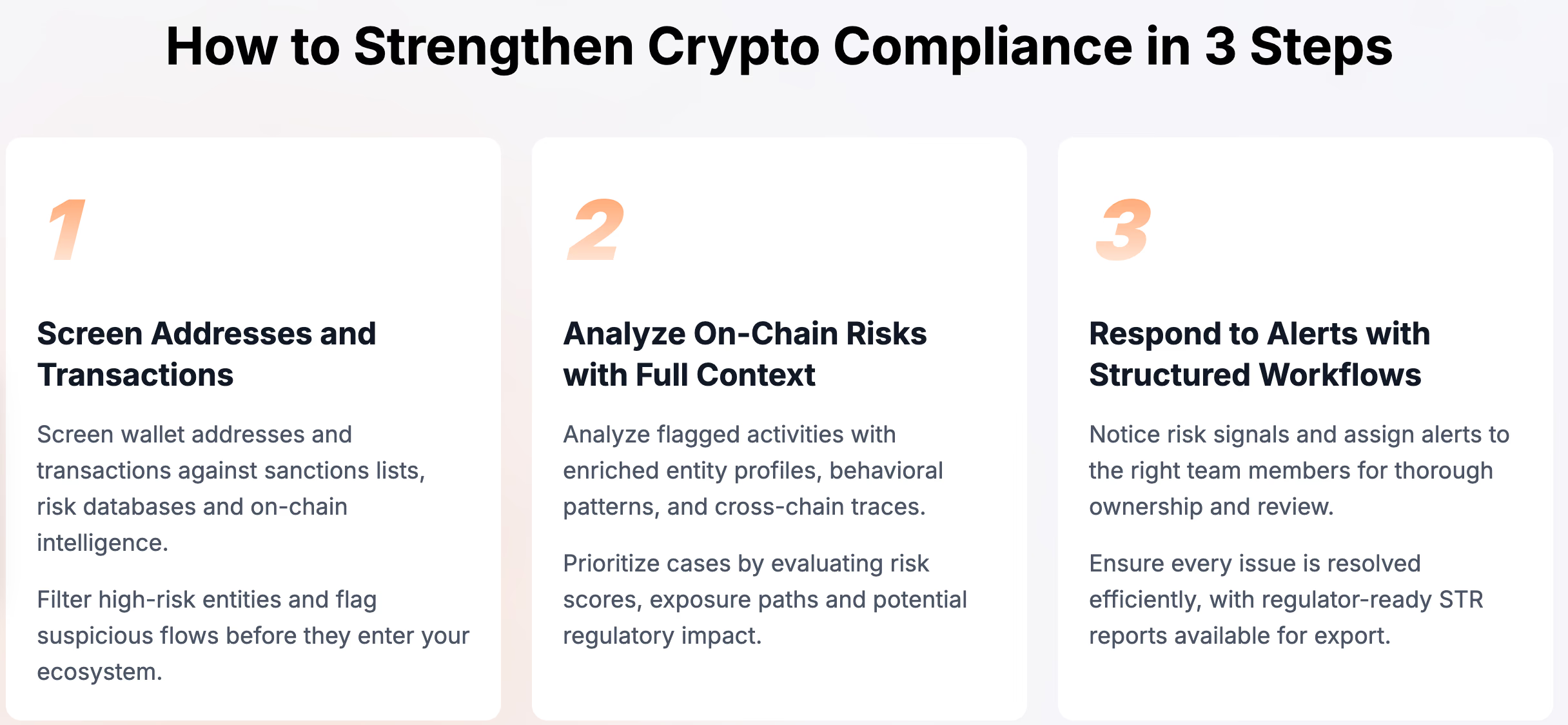
The three stages map onto a familiar operational sequence. Pre-trade scoring is the identity-and-risk check before a counterparty touches the platform. In-trade signal is the live gate at the deposit or withdrawal node, where the transfer is evaluated against risk intelligence before it commits. Post-trade STR archival is the audit artifact generated when a transfer is flagged, attached to that specific transfer rather than to the customer file.
Two design choices make this workflow fit exchange load. The minimum screening unit is the single transfer, not the whole transaction. A transaction can contain multiple transfers, and each can be screened separately or in batch for a combined assessment. The second choice is direction. A Deposit screens only the inflow to the platform. A Withdrawal screens only the outflow and its destination. Unspecified direction defaults to Both. Risk engines configured by direction do not fire across directions, which is what lowers false positives at scale. Bulk screening via CSV handles up to 400 transactions per batch, and a single screen that exceeds ten seconds switches to asynchronous mode and returns a task ID.
Post-trade archival is where the workflow becomes audit-ready. The STR report requires a direction specified at screening time as its prerequisite, and each transfer generates its own report. A Share Result link produces a no-login view that can be handed to an auditor, a regulator, or a partner. Seven notification channels push alerts to the team: Telegram, Email, Lark, Webhook, Slack, Discord, and PagerDuty. For the product surface that runs this workflow end to end, see Phalcon Compliance transaction screening.
The Four-Layer Monitoring Architecture on the Transaction Timeline
Exchanges that screen only at onboarding miss the risk that appears after acceptance. The operational fix is a four-layer monitoring architecture deployed along the transaction timeline: pre-transaction address scoring, in-transaction real-time signal, post-transaction STR archival, and continuous portfolio review. Each layer answers a different question, and together they cover the exposure a one-time screen cannot catch.
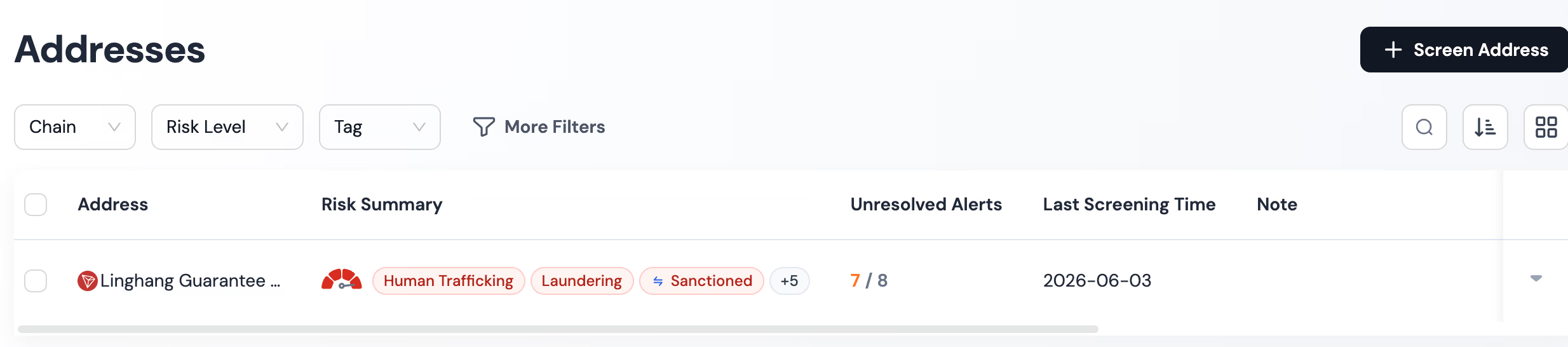
This four-layer view is an operational timeline, not a duplicate of the compliance-view four layers elsewhere in this cluster. The KYT compliance obligation page frames four monitoring objects: address, link, behavior, and fund-pool. This page frames four deployment stages on the time axis. Same risk capability, different axis. An exchange needs both: the object view to know what to screen, and the timeline view to know when to screen it.
The continuous portfolio layer is what closes the post-onboarding gap. Monitor tracks risk changes on addresses already accepted, re-runs on a dynamic schedule, and pushes notifications through configured channels when risk shifts. Four event types drive those notifications: risk level increased, risk level decreased, alert triggered, and alert expired. Monitor does not consume screening quota. It is billed at the monitored-address tier, which means a team can watch its whole accepted book without re-paying for each re-screen. The four deployment points that anchor this timeline are pre-receipt, pre-sweep, pre-withdrawal, and periodic portfolio review. A screen at only one of these points is a one-time acceptance check, not continuous due diligence.
The Landing Benchmark: 99.9% Interception at Millisecond Latency
The five-element checklist is not a specification sheet. It is a verifiable operational outcome, and one payment institution has already hit it. Interlace blocked 99.9% of high-risk withdrawals, integrated the engine in days, and ran millisecond checks that left normal users unaware while only high-risk transfers were intercepted. Numbers on a slide do not survive an examination. A live institution hitting them does. The full Interlace deployment is documented in the Interlace crypto payment compliance case study.
Interlace is a global crypto payment institution licensed in the United States, Hong Kong, and Lithuania, holding a PCI-DSS Level 1 card-payment security certification. Before integration, its compliance team faced large volumes of deposits from mixers, stolen-protocol drains, darknet markets, and sanctioned addresses, with manual review too slow to catch withdrawal-side risk in real time. The deployment paired the 500+ TPS engine with RESTful API checks at the deposit and withdrawal nodes, so every inflow and outflow passed the risk engine before committing.
The operational design was tiered risk control. High and extreme risk triggered deposit restrictions, required the customer to provide a source-of-funds proof, and could return or freeze funds for 7 to 30 days. Medium risk entered periodic retrospective review with dynamic re-assessment. Millisecond-level checks meant normal users experienced no friction. Only high-risk transfers were intercepted precisely. The deployment time, not the license stack, is what matters for an exchange compliance team planning a rollout. Integration completed in days, not quarters. For the U.S. regulatory backdrop underneath this kind of real-time monitoring, see AML monitoring obligations under U.S. law as published by FinCEN.
Assess Phalcon Compliance for Exchange Workflows
The exchange KYT workflow reduces to four things: screen each transfer in real time, gate deposit and withdrawal nodes at millisecond latency, archive a per-transfer STR, and monitor the accepted book continuously. Phalcon Compliance is built against that shape. The engine processes 500+ transactions per second with millisecond API responses. The minimum screening unit is the transfer, with direction set per screen to lower false positives. One-click STR export aligns to FATF standards across multiple key jurisdictions. Monitor re-runs on a dynamic schedule without consuming screening quota and pushes four event types through seven notification channels. The four deployment points anchor the timeline from pre-receipt to portfolio review.