Back to Blog

Binance Smart Chainにおけるプライベート取引サービスのセキュリティとプライバシーに関する懸念

September 20, 2022
4 min read

プライベートtxサービスの背景

プライベートtxサービスは、トランザクションをチェーンにブロードキャストせずにユーザーのトランザクションを保護することを目的としています。このサービスは、ユーザーをサンドイッチ攻撃から保護することで、健全なエコシステムの構築に役立ちます。例えば、攻撃者は保留中のプールを監視して他のトランザクションをフロントランすることはできません。さらに、プライベートtxサービスはMEVボット間のガス代競争を緩和できます。これは、MEVボットが、ガス代を上昇させて通常のトランザクションのパッキングを困難にする保留中ツールでの競争ではなく、そのようなサービスを活用できるためです。

Flashbotsはイーサリアムで有名なプライベートサービスプロバイダーであり、システムがどのように機能するかについての優れたドキュメントがあります。また、プライベートtxデータの明確なAPIも提供しています。BNB48は、Binance Smart Chain(BSC)で同様のサービス(Enhanced RPC)を提供しています。

プライベートtxは攻撃者によって悪用されている

しかし、プライベートtxサービスは攻撃者によって悪用される可能性があり、攻撃トランザクションを(気づかれずに)迅速にチェーンにパッキングさせることができます。

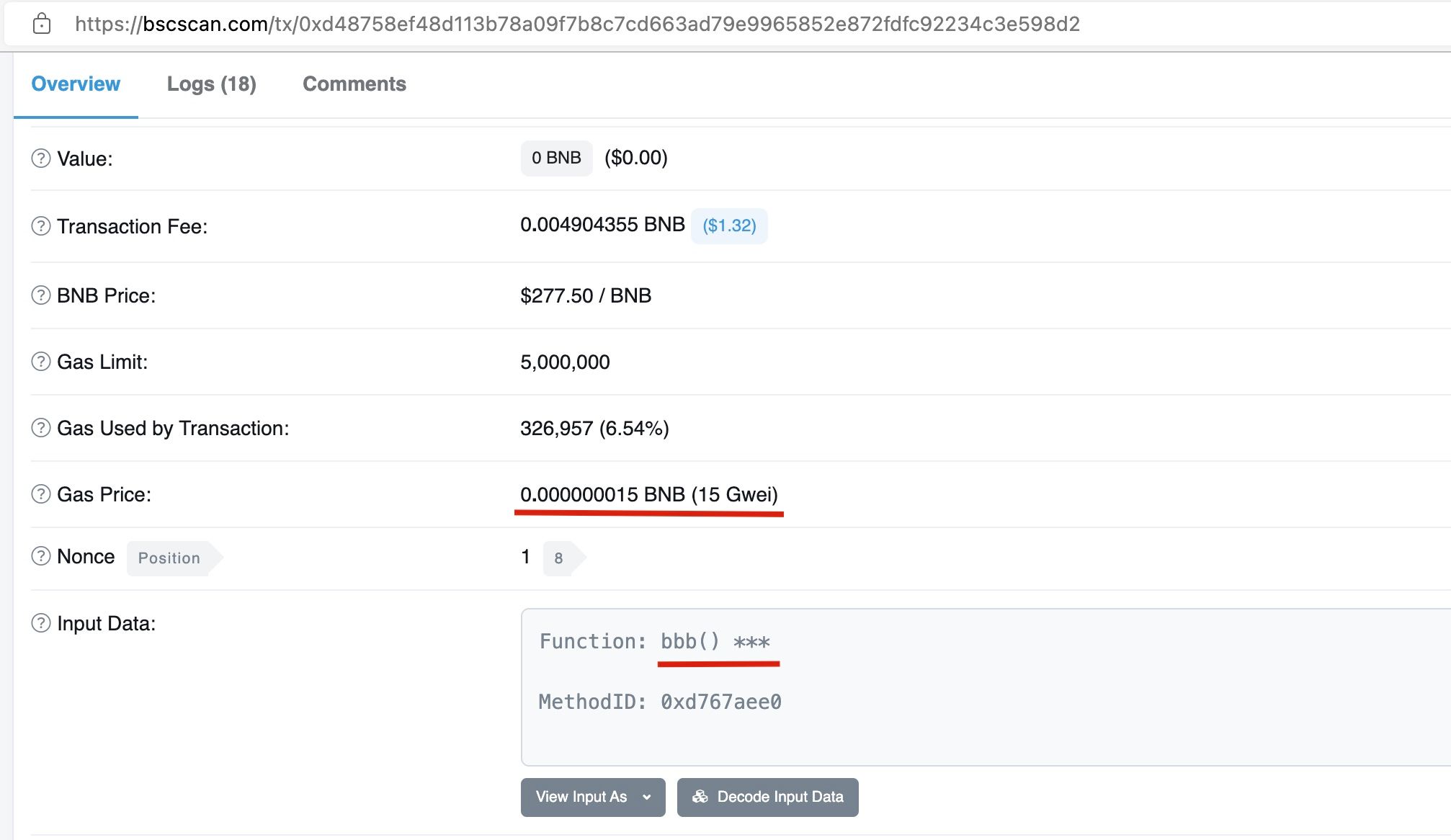
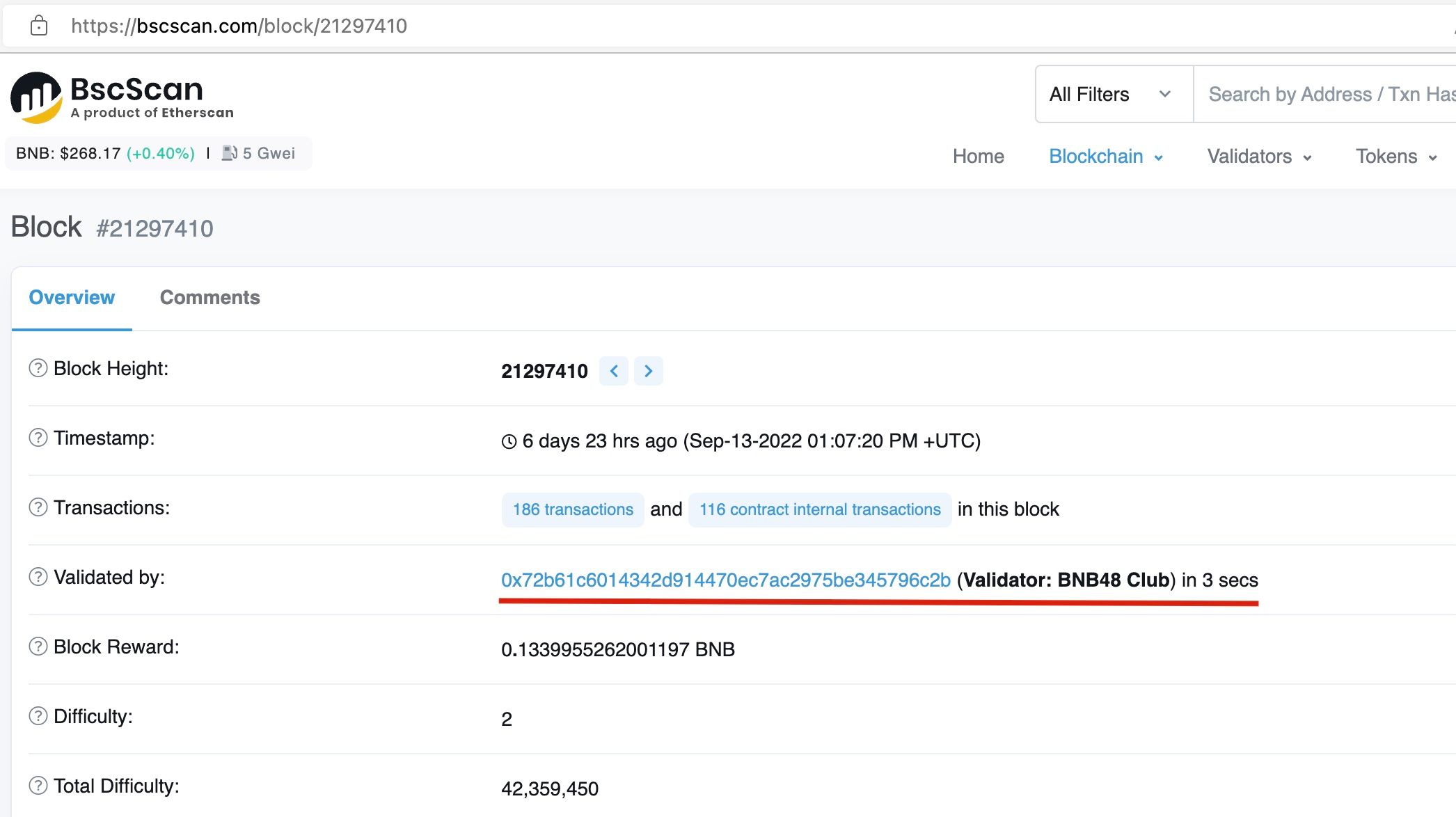
最近、BSCで「興味深い」トランザクションを確認しました。攻撃者はBNB48のプライベートtxサービスを悪用して、攻撃トランザクション(攻撃利益は約「15万ドル」)を隠蔽しました。以下のスクリーンショットから、このトランザクションが「15Gwei」のガス代でBNB48バリデーターによってパッキングされたことがわかります。

残念ながら、BNB48のプライベートtxサービスによってパッキングされたトランザクションをクエリできる公開サービスは見つかりませんでした。しかし、以下の2つの理由から、これはそのケースであると強く疑っています。

  • BNB48のドキュメントによると、enhanced RPCを使用するには、トランザクション送信者はガス代を 15Gwei に設定する必要があります。もちろん、攻撃者がBNB48のプライベートtxサービスを使用せず、偶然にも通常のRPCエンドポイントを使用してトランザクションを送信し、ガス代を「15Gwei」に設定したというわずかな可能性も依然として存在します。
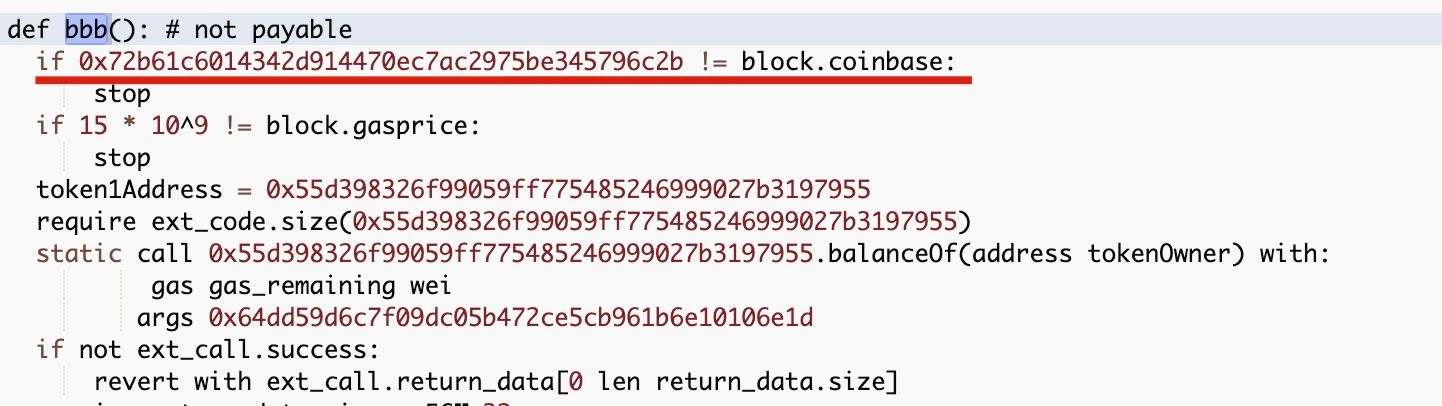
  • さらに、攻撃者のコントラクトには、攻撃トランザクションがBNB48バリデーターでのみ実行されるように制限するコードがあります(以下の図を参照)。

ガス代とコードロジックから、このトランザクションがBNB48プライベートtxサービスを悪用したと強く疑っています。

攻撃者のIPアドレスが特定された

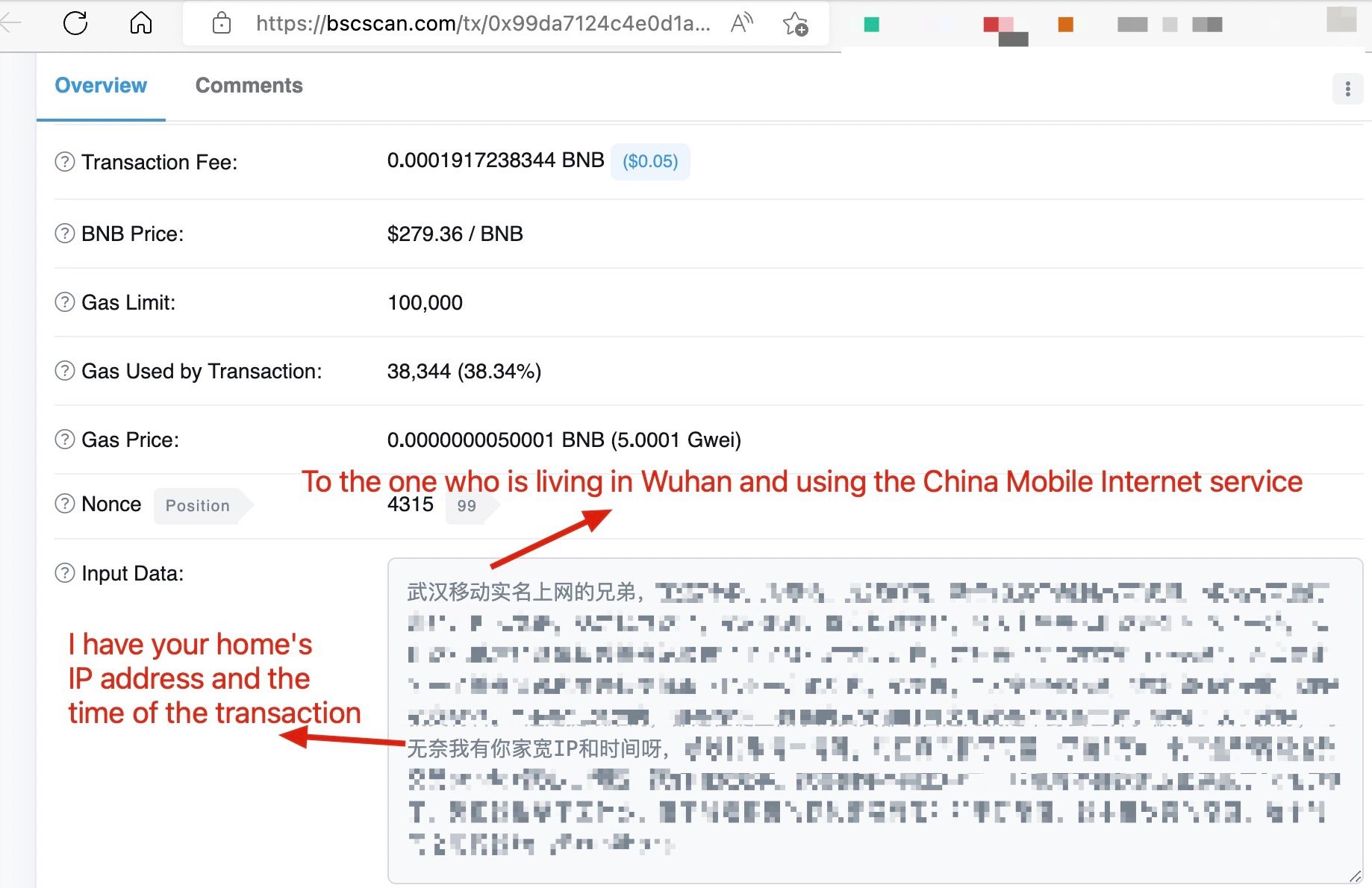
興味深いことに、被害者は攻撃トランザクションのIPアドレスと時間を特定することに成功したと主張しました。その後、被害者はチェーン上で攻撃者に資金を返還するよう求めるメッセージを送信しました。

攻撃者は一連のトランザクションで資金を返還しました [ 1 | 2 | 3 | 4 | 5 | 6 ].

ここで疑問が生じます。つまり、攻撃トランザクションがBNB48プライベートtxサービスを悪用した(BNB48 RPCエンドポイントにトランザクションを送信した)場合、攻撃者のIPアドレスはどのように特定され、漏洩したのでしょうか?資金が返還されたという結果に基づいて、メッセージ内のIPアドレスと地理情報はおそらく本物です。

プライベートtxサービスのセキュリティ/プライバシーに関する懸念

プライベートtxサービスは、トランザクションのブロードキャストとサンドイッチ攻撃からの保護という点で、エコシステムにおける重要な要素であると考えています。しかし、それは他のセキュリティ/プライバシーに関する懸念も引き起こします。

  • プライベートtxサービスが攻撃者によって悪用されるのを防ぐ方法は、未解決の問題です。プライベートtxサービスにフィルタリングサービスが必要かどうかは、コミュニティで(まだ)議論されています。現在、プライベートtxサービスプロバイダーが攻撃サービスを監視するのに役立つシステムを開発しています(攻撃の認識は価値があります)。
  • プライベートtxサービスを利用するユーザーのプライバシーをどのように保護するか?たとえば、プライベートtxを受け入れるエンドポイントは、IPアドレスや時間などの送信者の情報をログに記録できます。この情報が適切に保護されているかは不明です。

BlockSecについて

BlockSecは、2021年に世界的に著名なセキュリティ専門家チームによって設立された、先駆的なブロックチェーンセキュリティ企業です。同社は、Web3の台頭に不可欠なセキュリティと使いやすさを向上させ、その大規模な採用を促進することに尽力しています。この目的のために、BlockSecはスマートコントラクトおよびEVMチェーンのセキュリティ監査サービス、セキュリティ開発と脅威のプロアクティブなブロックのためのPhalconプラットフォーム、資金追跡と調査のためのMetaSleuthプラットフォーム、そしてWeb3ビルダーが暗号世界を効率的にサーフィンするためのMetaDock拡張機能を提供しています。

現在までに、同社はMetaMask、Uniswap Foundation、Compound、Forta、PancakeSwapなど300以上の著名なクライアントにサービスを提供し、Matrix Partners、Vitalbridge Capital、Fenbushi Capitalなどの著名な投資家から2度の資金調達で数千万米ドルを受け取っています。

公式ウェブサイト: https://blocksec.com/

公式Twitterアカウント: https://twitter.com/BlockSecTeam
Sign up for the latest updates
The Decentralization Dilemma: Cascading Risk and Emergency Power in the KelpDAO Crisis
Security Insights

The Decentralization Dilemma: Cascading Risk and Emergency Power in the KelpDAO Crisis

This BlockSec deep-dive analyzes the KelpDAO $290M rsETH cross-chain bridge exploit (April 18, 2026), attributed to the Lazarus Group, tracing a causal chain across three layers: how a single-point DVN dependency enabled the attack, how DeFi composability cascaded the damage through Aave V3 lending markets to freeze WETH liquidity exceeding $6.7B across Ethereum, Arbitrum, Base, Mantle, and Linea, and how the crisis forced decentralized governance to exercise centralized emergency powers. The article examines three parameters that shaped the cascade's severity (LTV, pool depth, and cross-chain deployment count) and provides an exclusive technical breakdown of Arbitrum Security Council's forced state transition, an atomic contract upgrade that moved 30,766 ETH without the holder's signature.

Weekly Web3 Security Incident Roundup | Apr 13 – Apr 19, 2026
Security Insights

Weekly Web3 Security Incident Roundup | Apr 13 – Apr 19, 2026

This BlockSec weekly security report covers four attack incidents detected between April 13 and April 19, 2026, across multiple chains such as Ethereum, Unichain, Arbitrum, and NEAR, with total estimated losses of approximately $310M. The highlighted incident is the $290M KelpDAO rsETH bridge exploit, where an attacker poisoned the RPC infrastructure of the sole LayerZero DVN to fabricate a cross-chain message, triggering a cascading WETH freeze across five chains and an Arbitrum Security Council forced state transition that raises questions about the actual trust boundaries of decentralized systems. Other incidents include a $242K MMR proof forgery on Hyperbridge, a $1.5M signed integer abuse on Dango, and an $18.4M circular swap path exploit on Rhea Finance's Burrowland protocol.

Weekly Web3 Security Incident Roundup | Apr 6 – Apr 12, 2026
Security Insights

Weekly Web3 Security Incident Roundup | Apr 6 – Apr 12, 2026

This BlockSec weekly security report covers four DeFi attack incidents detected between April 6 and April 12, 2026, across Linea, BNB Chain, Arbitrum, Optimism, Avalanche, and Base, with total estimated losses of approximately $928.6K. Notable incidents include a $517K approval-related exploit where a user mistakenly approved a permissionless SquidMulticall contract enabling arbitrary external calls, a $193K business logic flaw in the HB token's reward-settlement logic that allowed direct AMM reserve manipulation, a $165.6K exploit in Denaria's perpetual DEX caused by a rounding asymmetry compounded with an unsafe cast, and a $53K access control issue in XBITVault caused by an initialization-dependent check that failed open. The report provides detailed vulnerability analysis and attack transaction breakdowns for each incident.