Back to Blog

インバースファイナンスのセキュリティインシデントに関する考察:価格操作攻撃

Code Auditing
June 16, 2022
3 min read

導入

2022年6月16日、Inverse Financeが攻撃を受け、100万ドル以上の損失が発生しました。攻撃トランザクションはhttps://versatile.blocksecteam.com/tx/eth/0x958236266991bc3fe3b77feaacea120f172c0708ad01c7a715b255f218f9313cです。根本原因は、Inverse Financeが利用していた価格オラクルが操作されたことです。

攻撃分析

攻撃者はまずフラッシュローンでAaveから27,000 WBTCを借入しました。その後、そのうち225 WBTCをCurveに預け入れ、5,375 crv3cryptoをミントしました。攻撃者はこの5,375 crv3cryptoをyvCurve-3Cryptoに預け入れ、4,906 Yearn cTokenを取得しました。これはInverse Financeで担保として使用されます。
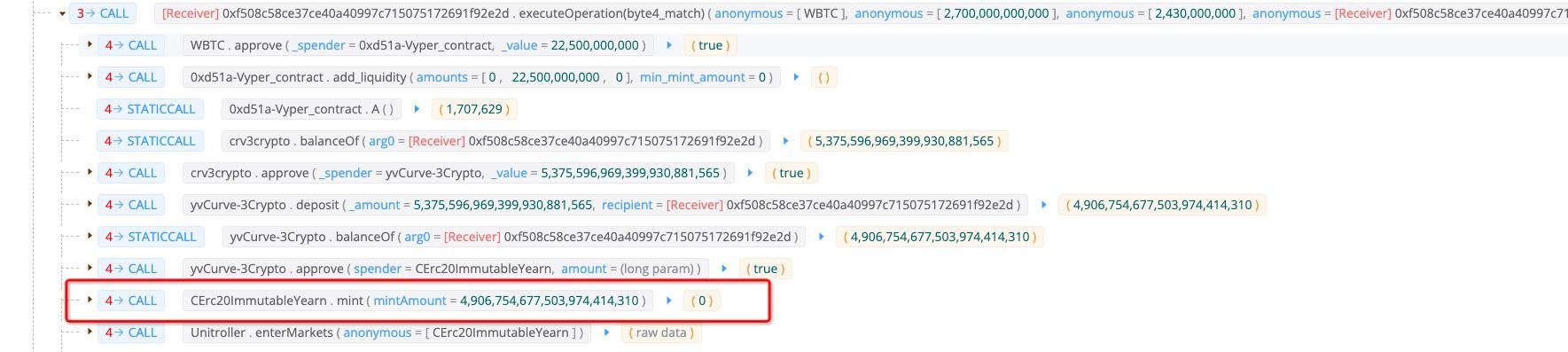
残りの26,775 WBTCは、担保の価格操作に使用されました。攻撃者は26,775 WBTCをスワップし、75,403,376 USDTを得ました。このスワップにより、オラクルの価格は979から2,831に上昇しました。

borrowAllowed関数からわかるように、預け入れた担保で指定された量のトークンを借りることができるかどうかをチェックします。
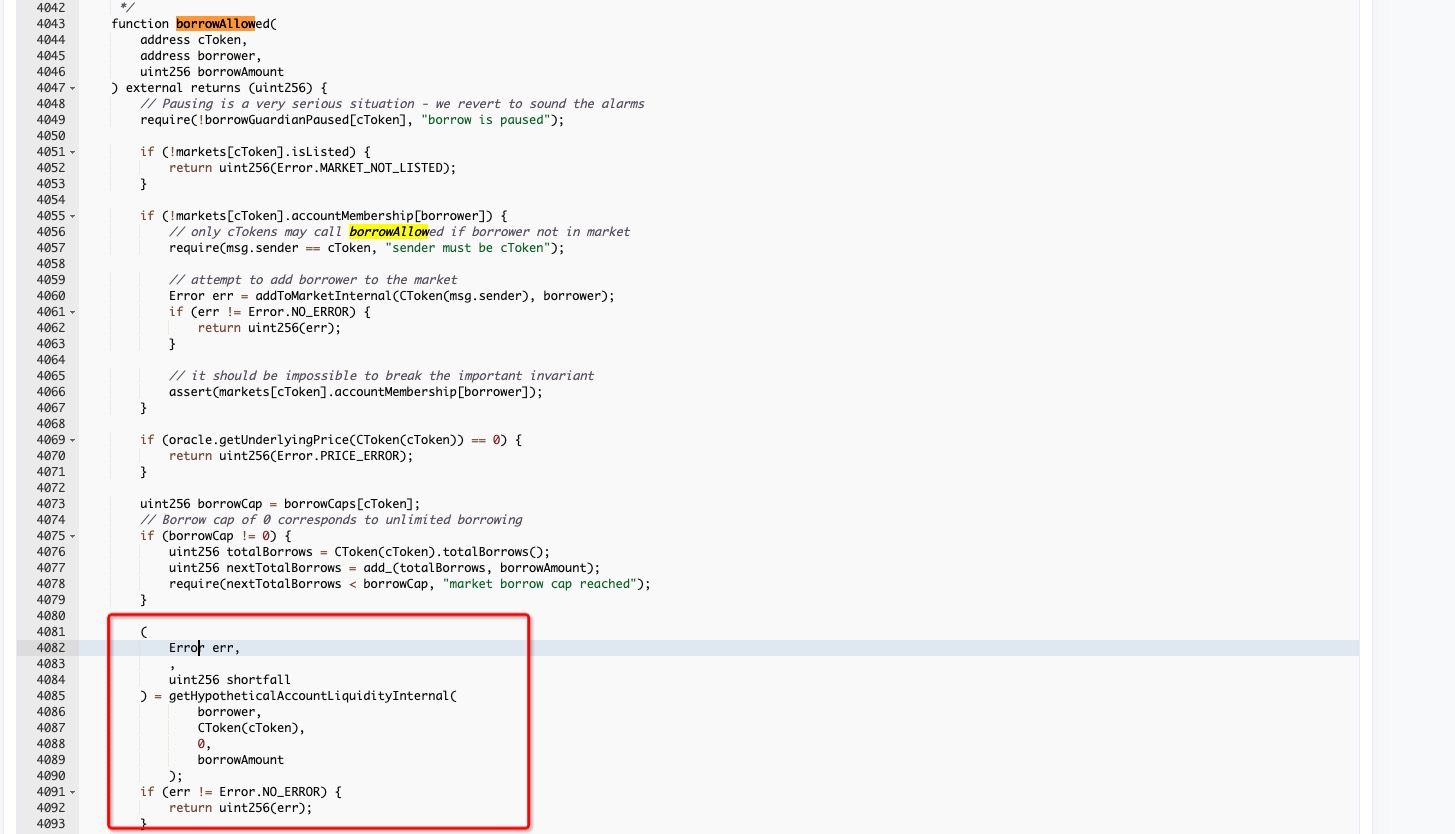
具体的には、getHypotheticalAccountLiquidityInternal関数が、借り入れ行動が安全かどうかをチェックするために使用されます。担保の価格はgetUnderlyingPriceで取得されます。
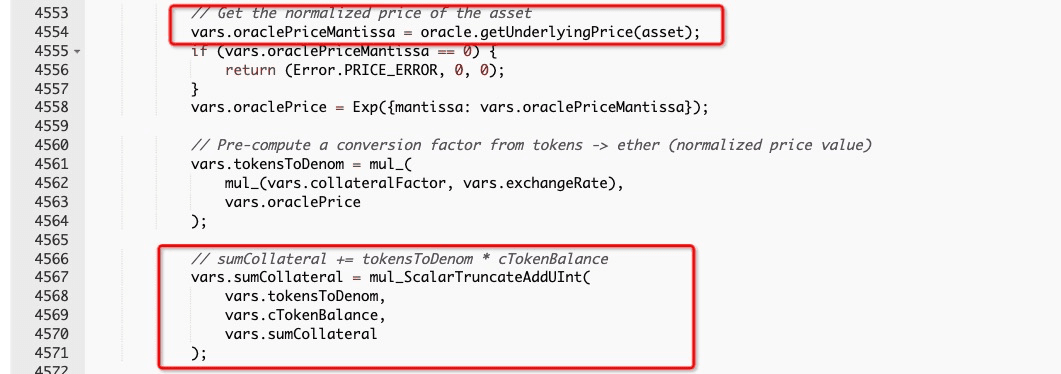
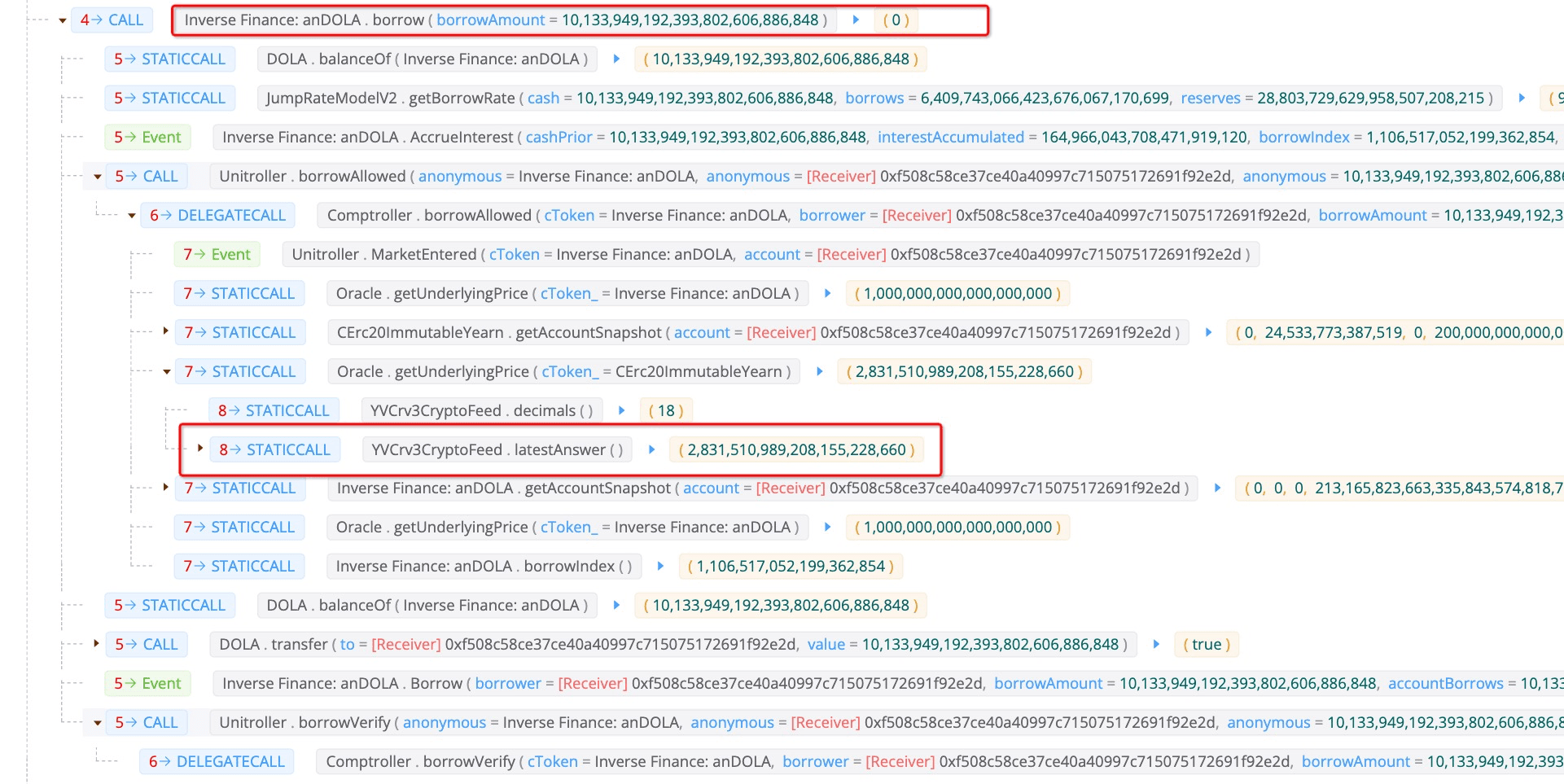
getUnderlyingPrice関数はlatestAnswer関数を呼び出して結果を取得します。前述の通り、26,775 WBTCはUSDTのスワップに使用され、担保価格が上昇しました。

この場合、攻撃者は預け入れた担保価値を大幅に超える大量の(10,133,949)DOLAを借り入れることができました。
最後に、攻撃者は75,403,376 USDTを2,662,649 WBTCにスワップし、借り入れた10,133,949 DOLAを9,881,355 3Crvにスワップし、さらに流動性プールから取り出して10,099,976 USDTを得ました。
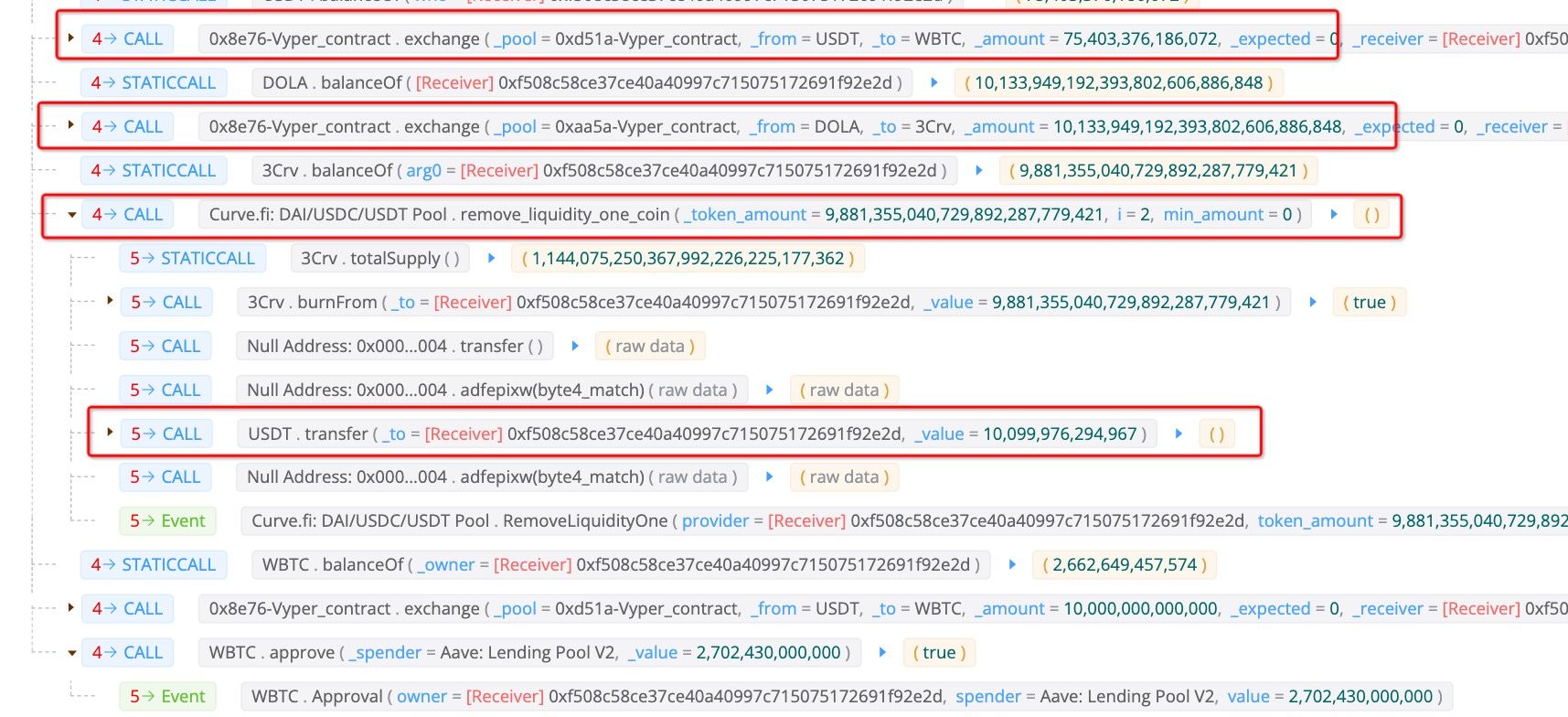
その後、10,099,976 USDTのうち10,000,000 USDTを再びWBTCにスワップし、フラッシュローンを返済するために使用しました。これで攻撃は完了しました。攻撃者はこの攻撃で99,976 USDTと53.2 WBTCを稼ぎました。

まとめ

これは伝統的な価格操作攻撃です。このような攻撃が現在でも発生するとは驚きです。この事件は、DeFiプロトコルがセキュリティシステムを強化するための警鐘となります。

BlockSecについて

BlockSecは、2021年に世界的に著名なセキュリティ専門家グループによって設立された、先駆的なブロックチェーンセキュリティ企業です。同社は、Web3の世界のセキュリティとユーザビリティを向上させ、その大規模な普及を促進することに尽力しています。この目的のため、BlockSecはスマートコントラクトとEVMチェーンのセキュリティ監査サービス、セキュリティ開発と脅威のプロアクティブなブロックのためのPhalconプラットフォーム、資金追跡と調査のためのMetaSleuthプラットフォーム、そしてWeb3ビルダーが仮想通貨の世界を効率的にサーフィンするためのMetaDock拡張機能を提供しています。

現在までに、同社はMetaMask、Uniswap Foundation、Compound、Forta、PancakeSwapなど300以上の著名なクライアントにサービスを提供し、Matrix Partners、Vitalbridge Capital、Fenbushi Capitalなどの著名な投資家から2回の資金調達で数千万米ドルを受け取っています。

公式ウェブサイト:https://blocksec.com/

公式Twitterアカウント:https://twitter.com/BlockSecTeam
Sign up for the latest updates
The Decentralization Dilemma: Cascading Risk and Emergency Power in the KelpDAO Crisis
Security Insights

The Decentralization Dilemma: Cascading Risk and Emergency Power in the KelpDAO Crisis

This BlockSec deep-dive analyzes the KelpDAO $290M rsETH cross-chain bridge exploit (April 18, 2026), attributed to the Lazarus Group, tracing a causal chain across three layers: how a single-point DVN dependency enabled the attack, how DeFi composability cascaded the damage through Aave V3 lending markets to freeze WETH liquidity exceeding $6.7B across Ethereum, Arbitrum, Base, Mantle, and Linea, and how the crisis forced decentralized governance to exercise centralized emergency powers. The article examines three parameters that shaped the cascade's severity (LTV, pool depth, and cross-chain deployment count) and provides an exclusive technical breakdown of Arbitrum Security Council's forced state transition, an atomic contract upgrade that moved 30,766 ETH without the holder's signature.

Weekly Web3 Security Incident Roundup | Apr 13 – Apr 19, 2026
Security Insights

Weekly Web3 Security Incident Roundup | Apr 13 – Apr 19, 2026

This BlockSec weekly security report covers four attack incidents detected between April 13 and April 19, 2026, across multiple chains such as Ethereum, Unichain, Arbitrum, and NEAR, with total estimated losses of approximately $310M. The highlighted incident is the $290M KelpDAO rsETH bridge exploit, where an attacker poisoned the RPC infrastructure of the sole LayerZero DVN to fabricate a cross-chain message, triggering a cascading WETH freeze across five chains and an Arbitrum Security Council forced state transition that raises questions about the actual trust boundaries of decentralized systems. Other incidents include a $242K MMR proof forgery on Hyperbridge, a $1.5M signed integer abuse on Dango, and an $18.4M circular swap path exploit on Rhea Finance's Burrowland protocol.

Weekly Web3 Security Incident Roundup | Apr 6 – Apr 12, 2026
Security Insights

Weekly Web3 Security Incident Roundup | Apr 6 – Apr 12, 2026

This BlockSec weekly security report covers four DeFi attack incidents detected between April 6 and April 12, 2026, across Linea, BNB Chain, Arbitrum, Optimism, Avalanche, and Base, with total estimated losses of approximately $928.6K. Notable incidents include a $517K approval-related exploit where a user mistakenly approved a permissionless SquidMulticall contract enabling arbitrary external calls, a $193K business logic flaw in the HB token's reward-settlement logic that allowed direct AMM reserve manipulation, a $165.6K exploit in Denaria's perpetual DEX caused by a rounding asymmetry compounded with an unsafe cast, and a $53K access control issue in XBITVault caused by an initialization-dependent check that failed open. The report provides detailed vulnerability analysis and attack transaction breakdowns for each incident.

Best Security Auditor for Web3

Validate design, code, and business logic before launch. Aligned with the highest industry security standards.

BlockSec Audit