Back to Blog

アクタールNFTが3400万ドルを失った方法

Code Auditing
April 23, 2022

@AkuDreamsコントラクトに2つの重大な論理的脆弱性が存在することが判明しました(etherscanリンク)。最初の脆弱性はDoS攻撃を引き起こす可能性があり、2番目の脆弱性はプロジェクト資金(3,400万ドル以上)を永遠にロックする可能性があります。

脆弱性I

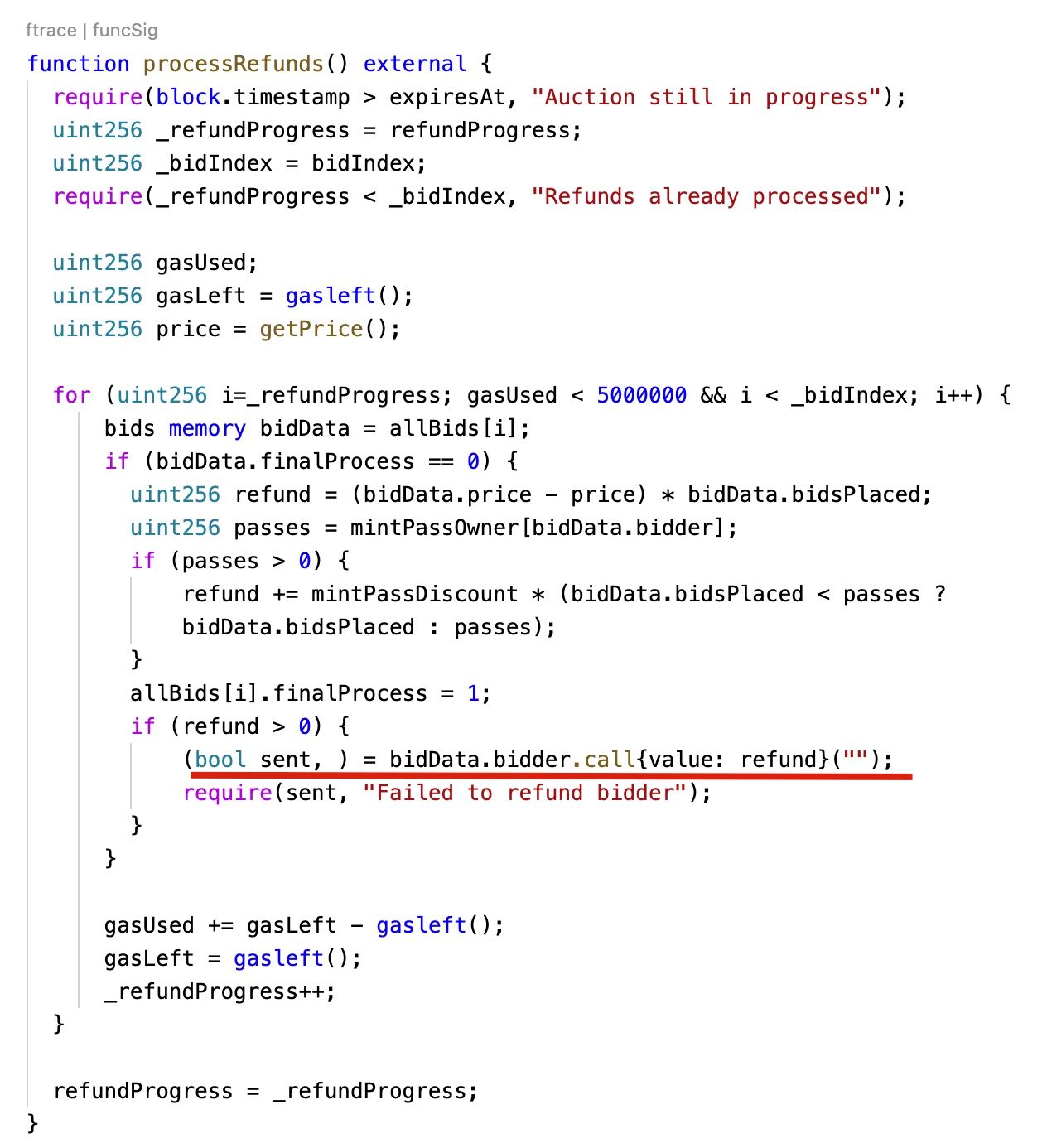
最初の脆弱性は processRefunds 関数に存在します。この関数には、各入札者の資金を返金するループがあります。しかし、入札者はトランザクションをリバートする悪意のあるコントラクトである可能性があります。これにより、processRefunds の呼び出しがリバートし、ユーザーの返金は一切成功しなくなります。幸いなことに、この脆弱性は悪用されていません。

ユーザーへの返金には、コントラクトで以下の対策を講じることを推奨します。

  • EOAのみが入札できるようにする
  • ETHではなく、ERC20トークン(例: WETH)を使用する
  • ユーザーが自分で返金を受け取れる関数を用意する

脆弱性II

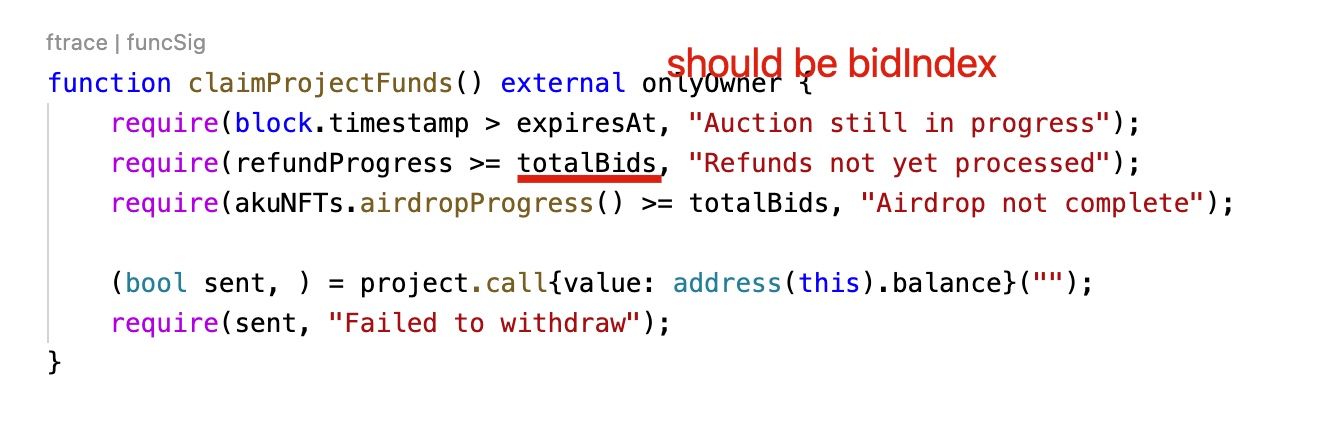
2番目の脆弱性はソフトウェアバグです。 claimProjectFunds 関数では、プロジェクトオーナーはコントラクト内のEtherを請求できます。しかし、require(refundProgress >= totalBids, "Refunds not yet processed"); という要件文にバグがあり、totalBids ではなく _bidIndexrefundProgress を比較する必要があります。この脆弱性により、要件が満たされることはなく、コントラクト内のEther(11,539.5 Ether)は永遠にロックされる可能性があります。

まとめ

昨日(NBA NFTの件)に続き、このような著名なプロジェクトが基本的なソフトウェアセキュリティの実践を軽視していることに再び驚いています。少なくとも、プロジェクトは十分なテストケースを書くべきでした。残念ながら、プロジェクトはテストケースを書くのに忙しすぎて、3,400ドルを永遠に失ったのではないかと推測します。

BlockSecについて

BlockSecは、世界的に著名なセキュリティ専門家グループによって2021年に設立された、先駆的なブロックチェーンセキュリティ企業です。当社は、新興のWeb3世界のセキュリティとユーザビリティを向上させ、その大規模な普及を促進することに専念しています。そのために、BlockSecはスマートコントラクトおよびEVMチェーンのセキュリティ監査サービス、プロアクティブなセキュリティ開発と脅威ブロックのためのPhalconプラットフォーム、資金追跡と調査のためのMetaSleuthプラットフォーム、そしてクリプト界を効率的にサーフィンするためのWeb3ビルダー向けMetaDock拡張機能を提供しています。

現在までに、MetaMask、Uniswap Foundation、Compound、Forta、PancakeSwapなど300社以上の著名なクライアントにサービスを提供し、Matrix Partners、Vitalbridge Capital、Fenbushi Capitalなどの著名な投資家から2回の資金調達で数千万米ドルを受け入れています。

公式ウェブサイト:https://blocksec.com/ 公式Twitterアカウント:https://twitter.com/BlockSecTeam
Sign up for the latest updates
Tether Freezes $6.76M USDT Linked to Iran's IRGC & Houthi Forces: Why On-Chain Compliance is Now a Geopolitical Battlefield
Security Insights

Tether Freezes $6.76M USDT Linked to Iran's IRGC & Houthi Forces: Why On-Chain Compliance is Now a Geopolitical Battlefield

Looking ahead, targeted freezing events like this $6.76M USDT action will only become more common. On-chain data analysis is improving. Stablecoin issuers are also working closely with regulators. As a result, hidden illicit financial networks will be exposed.

Weekly Web3 Security Incident Roundup | Mar 2 – Mar 8, 2026
Security Insights

Weekly Web3 Security Incident Roundup | Mar 2 – Mar 8, 2026

During the week of March 2 to March 8, 2026, seven blockchain security incidents were reported with total losses of ~$3.25M. The incidents occurred across Base, BNB Chain, and Ethereum, exposing critical vulnerabilities in smart contract business logic, token deflationary mechanics, and asset price manipulation. The primary causes included a double-minting logic flaw during full token deposits that allowed an attacker to exponentially inflate their balances through repeated burn-and-mint cycles, a price manipulation vulnerability in an AMM-based lending market where artificially inflated vault shares created divergent price anchors to incorrectly force healthy positions into liquidation, and a flawed access control implementation relying on trivially spoofed contract interfaces that enabled attackers to bypass authorization to batch-mint and dump arbitrary tokens.

Weekly Web3 Security Incident Roundup | Feb 23 – Mar 1, 2026
Security Insights

Weekly Web3 Security Incident Roundup | Feb 23 – Mar 1, 2026

During the week of February 23 to March 1, 2026, seven blockchain security incidents were reported with total losses of ~$13M. The incidents affected multiple protocols, exposing critical weaknesses in oracle design/configuration, cryptographic verification, and core business logic. The primary drivers included oracle manipulation/misconfiguration that led to the largest loss at YieldBloxDAO (~$10M), a crypto-proof verification flaw that enabled the FOOMCASH (~$2.26M) exploit, and additional token design and logic errors impacting Ploutos, LAXO, STO, HedgePay, and an unknown contract, underscoring the need for rigorous audits and continuous monitoring across all protocol layers.