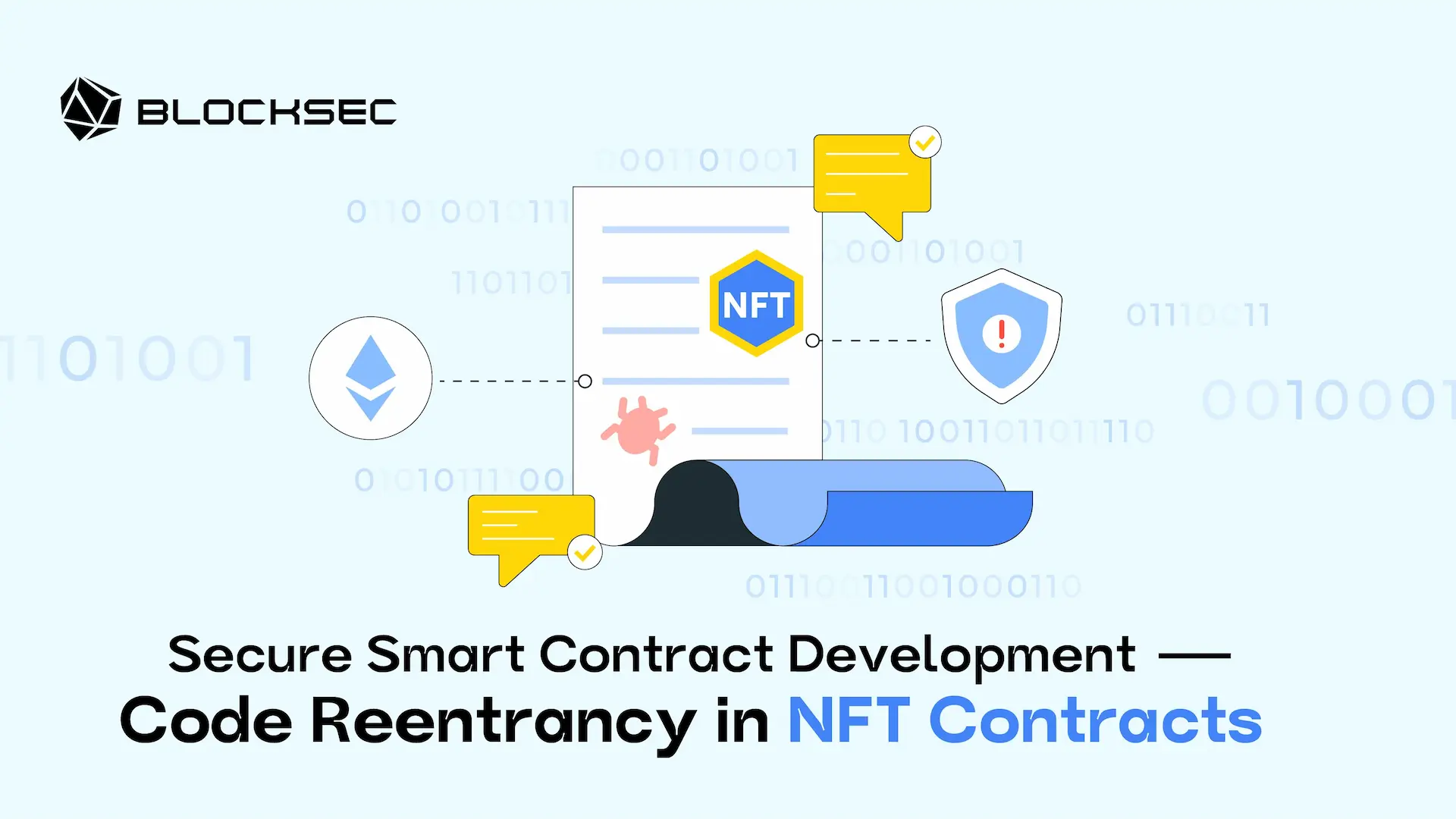
In unserer Serie "Sichere Smart Contract Entwicklung" tauchen wir tief in die kritischen Sicherheitsaspekte der Smart Contract Entwicklung ein, mit besonderem Fokus auf NFT-Verträge. Wir beleuchten eine Reihe von Risiken und Schwachstellen, denen wir als Entwickler begegnen können, und bieten detaillierte Strategien und bewährte Praktiken zur Minderung dieser Probleme an, um die Sicherheit und Effizienz von Blockchain-Anwendungen zu verbessern.
Aufschlüsselung: Ein umfassender Überblick
Dieser Blog untersucht Reentrancy-Schwachstellen in NFT-Verträgen und beschreibt sowohl Single-Function als auch Cross-Function Reentrancy. Er erläutert die mit diesen Schwachstellen verbundenen Risiken und bietet Entwicklern Minderungsstrategien zur Absicherung ihrer Smart Contracts.
Digitale Signaturen werden häufig in Smart Contracts verwendet, z. B. bei Allowlist-Mints und Order-Book-NFT-Marktplätzen. Dies liegt daran, dass sie helfen, Transaktionskosten zu sparen (Off-Chain-Signatur und On-Chain-Verifizierung). Der Missbrauch durch Entwickler birgt jedoch auch Risiken in NFT-Marktplätzen. In diesem Blog möchten wir über den Missbrauch digitaler Signaturen im NFT-Ökosystem sprechen.
Über BlockSec
BlockSec ist ein führendes Blockchain-Sicherheitsunternehmen, das 2021 von einer Gruppe weltweit renommierter Sicherheitsexperten gegründet wurde. Das Unternehmen engagiert sich für die Verbesserung von Sicherheit und Benutzerfreundlichkeit für die aufstrebende Web3-Welt, um deren Massenadoption zu fördern. Zu diesem Zweck bietet BlockSec Smart Contract- und EVM-Chain-Sicherheitsaudits-Dienste, die Phalcon-Plattform für Sicherheitsentwicklung und proaktive Bedrohungsabwehr, die MetaSleuth-Plattform für Fondstracking und Ermittlungen sowie die MetaSuites-Erweiterung für Web3-Entwickler, um effizient in der Krypto-Welt zu surfen.
Bis heute hat das Unternehmen über 300 angesehene Kunden wie MetaMask, Uniswap Foundation, Compound, Forta und PancakeSwap betreut und in zwei Finanzierungsrunden von namhaften Investoren wie Matrix Partners, Vitalbridge Capital und Fenbushi Capital zweistellige Millionenbeträge erhalten.
Offizielle Website: https://blocksec.com/
Offizieller Twitter-Account: https://twitter.com/BlockSecTeam