CVE-2021-39137 ist eine Schwachstelle, die vor wenigen Tagen gemeldet und behoben wurde. Jedoch haben noch nicht alle Ethereum-Nodes den Patch angewendet. Wir beobachten, dass diese Schwachstelle durch eine bösartige Transaktion ausgenutzt wurde.
Angriffstransaktion
https://tx.blocksecteam.com/tx/0x1cb6fb36633d270edefc04d048145b4298e67b8aa82a9e5ec4aa1435dd770ce4
Diese Transaktion enthält einen STATICCALL mit der Adresse 0x4. Dies ist ein vorkompilierter Smart Contract, dataCopy. Das Argument ist wie folgt.
inOffset = 0, inSize = 32, retOffset = 7 und retSize = 32.
Der 0x4 Smart Contract
 Abbildung 1
Da das Ziel des STATICCALL der 0x4 vorkompilierte Vertrag ist, wird die Funktion RunPrecompiledContract in Abbildung 1 ausgeführt.
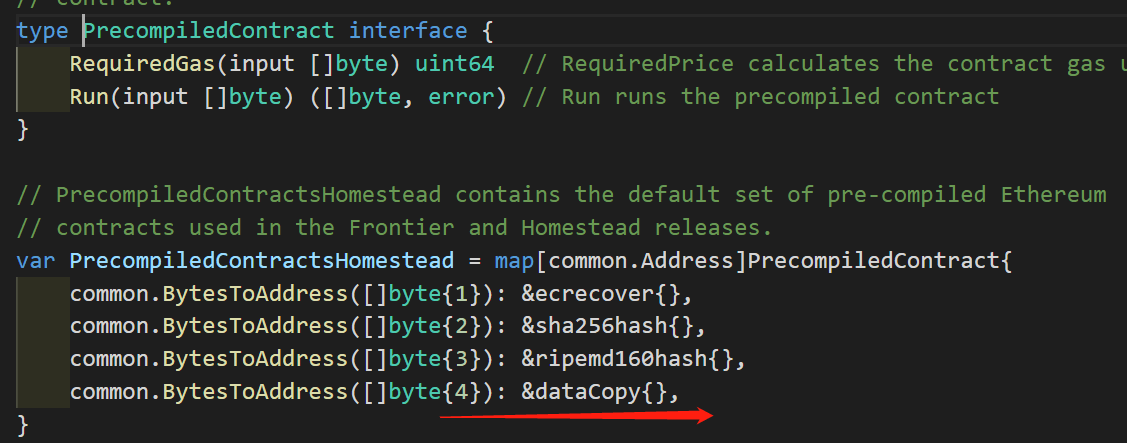 Abbildung 2
 Abbildung 3
Gemäß Abbildung 2/3 gibt der 0x4 Smart Contract einfach die Referenz des in-Zeigers zurück.
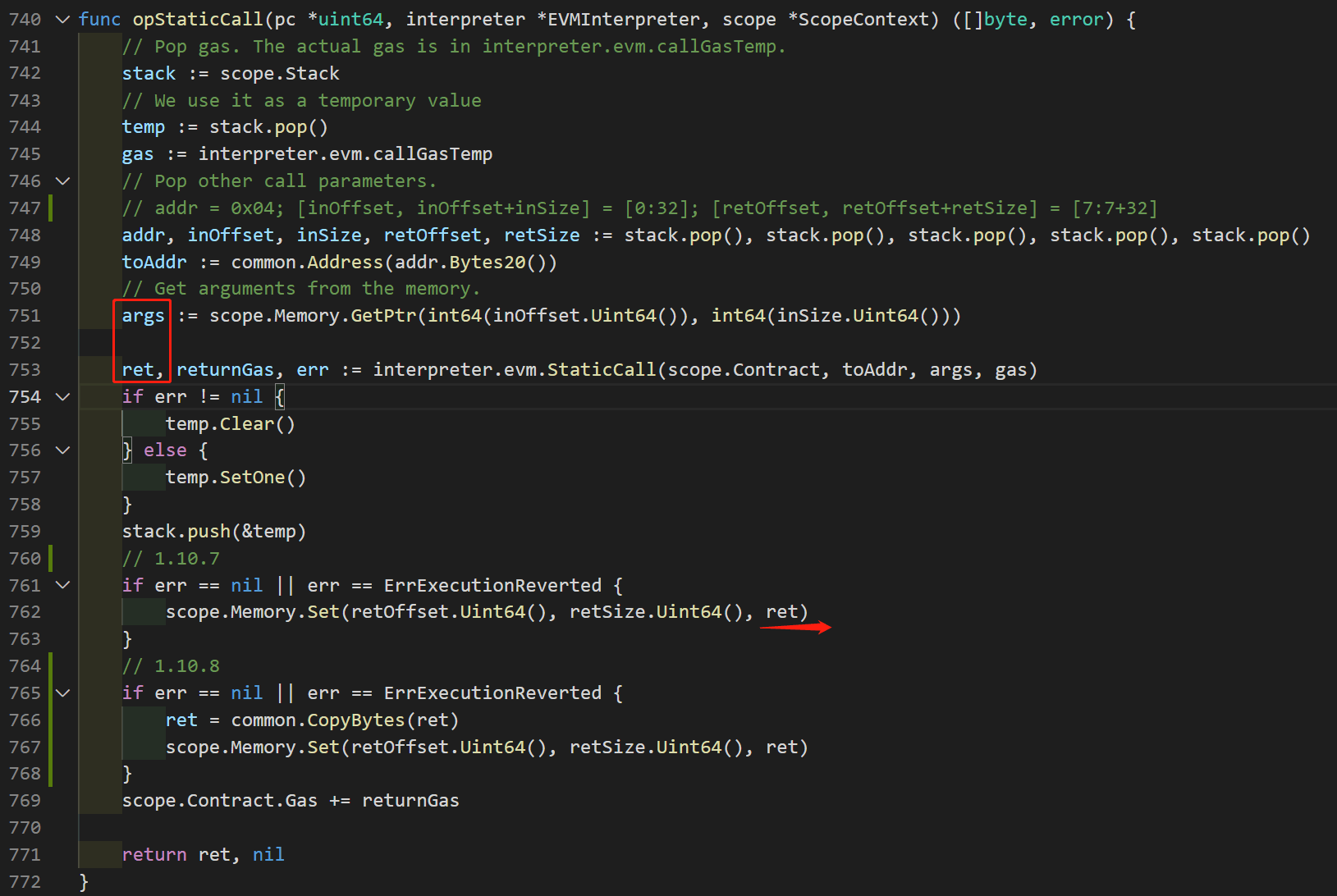 Abbildung 4
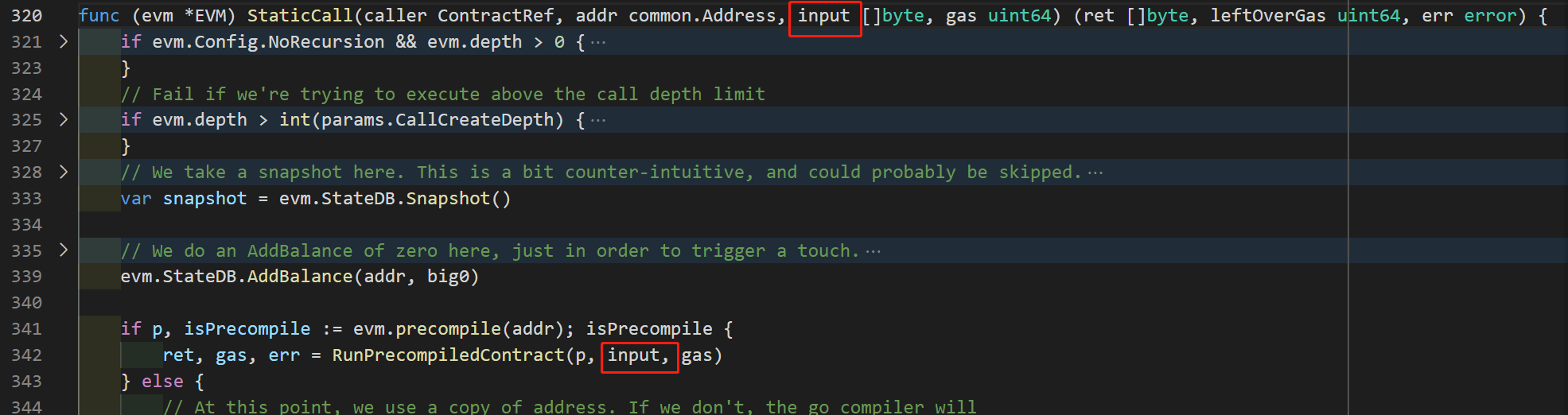 Abbildung 5
Abbildung 4 zeigt den Code für den Opcode STATICCALL. In Zeile 751 zeigt args auf [inOffset ~ inOffset + inSize ] des EVM-Speichers, was Mem[0:32] ist.
Gemäß Abbildung 5 und der Analyse der Code-Logik von 0x04 (Abbildung 2/3) ist der Rückgabewert (ret) eine Referenz auf denselben Speicher wie args. Das bedeutet, er zeigt ebenfalls auf Mem[0:32].
Schwachstelle
Im verwundbaren Code (Version 1.10.7) kopiert Zeile 762 den Inhalt von ret nach Mem[retOffset : retOffset + retOffset], d.h. kopiert Mem[0:32] nach Mem [7:7+32]. Diese Operation verändert versehentlich den Inhalt von ret. Das bedeutet, der Rückgabewert des 0x4 vorkompilierten Vertrags wurde modifiziert.
In der behobenen Version (1.10.8) wird eine Kopie von ret erstellt (Zeile 766). Dies kann die Schwachstelle beheben, da die Kopie in Zeile 767 den Inhalt von ret nicht verändern kann.
Die Schwachstelle CVE-2021–39137 wurde aufgrund von Nodes, die ihre Patches nicht rechtzeitig aktualisierten, durch eine bösartige Transaktion ausgenutzt. Dieser Fehler betraf einen Defekt in den Speicheroperationen der Ethereum Virtual Machine, wurde aber in Version 1.10.8 behoben. Um die Systemsicherheit zu gewährleisten, wird allen Ethereum-Nodes dringend empfohlen, sofort auf die neueste Version zu aktualisieren.
Danksagungen
Der Angriff wird von Siwei Wu, Yufeng Hu, Lei Wu, Yajin Zhou@BlockSec analysiert.