The market entry of institutional capital by 2026 shifted virtual asset operations from basic ledger interactions to standard financial reporting workflows. Operating a regulated entity now dictates that integrating baseline AML compliance automation and direct digital asset monitoring at the API level is a strict operational requirement. For both retail and institutional operators, standardizing VASP regulatory software and deploying on-chain forensic logic are core dependencies for maintaining fiat banking rails. As jurisdictional regulators audit these workflows, businesses need specific transactional risk coverage rather than generic rule sets. This breakdown maps the technical dependencies of compliance infrastructure, examining the data processing requirements for Virtual Asset Service Providers (VASPs) to map decentralized network activity to standard legal reporting formats.
Decoding the Blockchain Compliance Platform: A Primer for VASPs
Evaluating the backend infrastructure of blockchain regulatory software determines a digital asset firm's ability to clear transactions. A functional blockchain compliance platform maps decentralized network states to standard financial reporting fields, allowing operators to route risk alerts, log transaction states, and maintain audit trails within current market frameworks.
Defining Virtual Asset Service Providers (VASPs) in 2026
In 2026, regulatory definitions for Virtual Asset Service Providers cover distinct operational models including spot exchanges, custody providers, institutional lending protocols, and payment gateways. Regulatory agencies apply standard financial reporting logic to these entities. The legal boundary separating custodial and non-custodial operations relies on specific control metrics. Any entity handling private key infrastructure, asset routing, or user deposit administration falls under VASP registration requirements and must deploy risk filtering to prevent illicit fund routing.
How Compliance Software Bridges Crypto and Traditional Finance
Digital asset clearing and standard banking operations use incompatible data structures. Banking systems operate on centralized databases, authenticated user IDs, and standard messaging protocols. Blockchain networks output pseudonymous, decentralized state changes. Compliance software functions as the data parsing layer between these disparate systems. By querying raw on-chain state data and applying heuristic clustering, these platforms output standard risk scores that banking partners require to clear fiat off-ramps. This software generates audit logs formatted for institutional compliance teams, mitigating the compliance mismatch that typically triggers fiat account termination.
Key Differences Between Traditional AML and On-Chain Monitoring
Standard Anti-Money Laundering (AML) workflows rely on static KYC records and fiat transaction volume limits. This methodology fails to capture the technical reality of digital assets. On-chain monitoring queries the actual transfer mechanics across the public ledger, recording a transaction's origin and routing path. Instead of relying on user ID verification alone, blockchain analytics indexes the behavioral metadata of specific contract and wallet addresses. If a user address initiates a transfer with a sanctioned entity, a darknet market contract, or a coin mixer, on-chain monitoring identifies the routing via UTXO tracking or account state diffs. This yields an immediate risk classification that fiat-based AML databases cannot process.
The 2026 Regulatory Landscape: What the Market Demands
The 2026 regulatory baseline for digital assets requires VASPs to map multi-jurisdictional compliance logic into their core trading engines. Processing transactions without these filtering mechanisms results in immediate audit failures, blocked fiat rails, and enforcement actions from financial intelligence units.
Navigating Global Frameworks: MiCA, FATF, and Jurisdictional AML Standards
The enforcement of the Markets in Crypto-Assets (MiCA) regulation across the EU standardized operational licensing, prompting other jurisdictions to match these reporting standards to retain market participants. The Financial Action Task Force (FATF) continues to update its risk-based approach requirements, expanding AML obligations to cover decentralized protocol interactions and unhosted wallet transfers at the transaction screening level. VASPs managing cross-border liquidity must align their internal monitoring systems with overlapping AML requirements, tracking varying transaction thresholds and data retention periods across active jurisdictions. A functional compliance platform consolidates these legal rules, allowing compliance teams to deploy rule engines that trigger specific block logic based on user IP geography and the legal classification of the traded asset.
The True Cost of Non-Compliance for Crypto Startups
Running digital asset operations without enterprise-grade compliance endpoints introduces direct operational friction for early-stage firms. Financial enforcement data indicates that cryptocurrency sector fines surpassed $5.8 billion, focusing on operators lacking functional transaction filtering protocols. Deficient compliance architectures lead to fiat banking partner withdrawals, institutional capital flight, and suspended trading licenses. Compliance directors also face direct legal exposure for systemic reporting failures. For a startup, the integration cost of an API-based compliance module is a standard operational expense compared to the legal overhead of defending against regulatory enforcement.
Why Manual Risk Assessment is Obsolete in Modern Markets
The transaction throughput of current blockchain networks makes manual risk review technically impossible. Digital asset exchanges process persistent transaction queues across different network standards. Compliance analysts cannot manually trace multi-hop transactions, cross-chain bridge transfers, or smart contract routing in real-time. Manual interventions create transaction queue bottlenecks, resulting in withdrawal delays and high false-positive block rates. Current compliance reporting requires automated execution. Software systems parse these datasets, utilizing algorithmic clustering to assess wallet exposure without degrading the transaction processing speed required by retail and institutional traders.
Essential Features of a Modern Crypto Compliance Solution
An effective regulatory infrastructure requires specific technical outputs to maintain operational continuity. Functional platforms deploy real-time transaction querying, structured forensic databases, and automated reporting formats, ensuring operators can filter illicit fund flows while maintaining standard jurisdictional reporting.
Real-Time Transaction Monitoring and Dynamic Risk Scoring
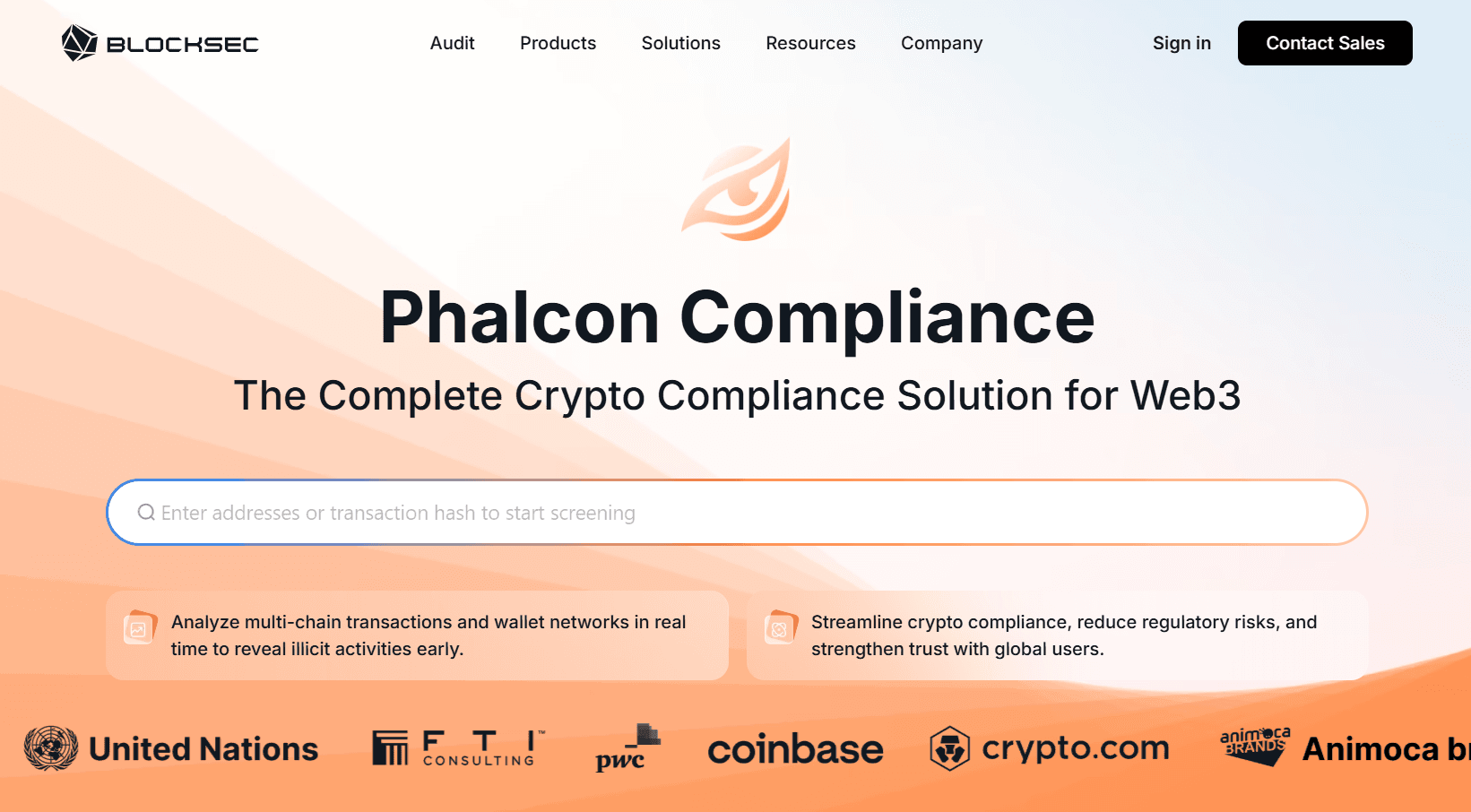
The core module of a compliance platform is its real-time transaction monitoring and dynamic risk assessment engine. When a transaction enters the mempool or is confirmed, the software checks the involved addresses against indexed forensic data. The engine assigns a numerical risk score based on transaction history and proximity to flagged contracts. This assessment must be dynamic. An address classified as safe can trigger an immediate status change if it receives funds from a sanctioned mixer or a newly identified protocol exploit. This processing enables VASPs to programmatically block incoming deposits or suspend withdrawals before the final settlement of illicit assets.
Deep Address Labeling and Forensic Investigation Tools
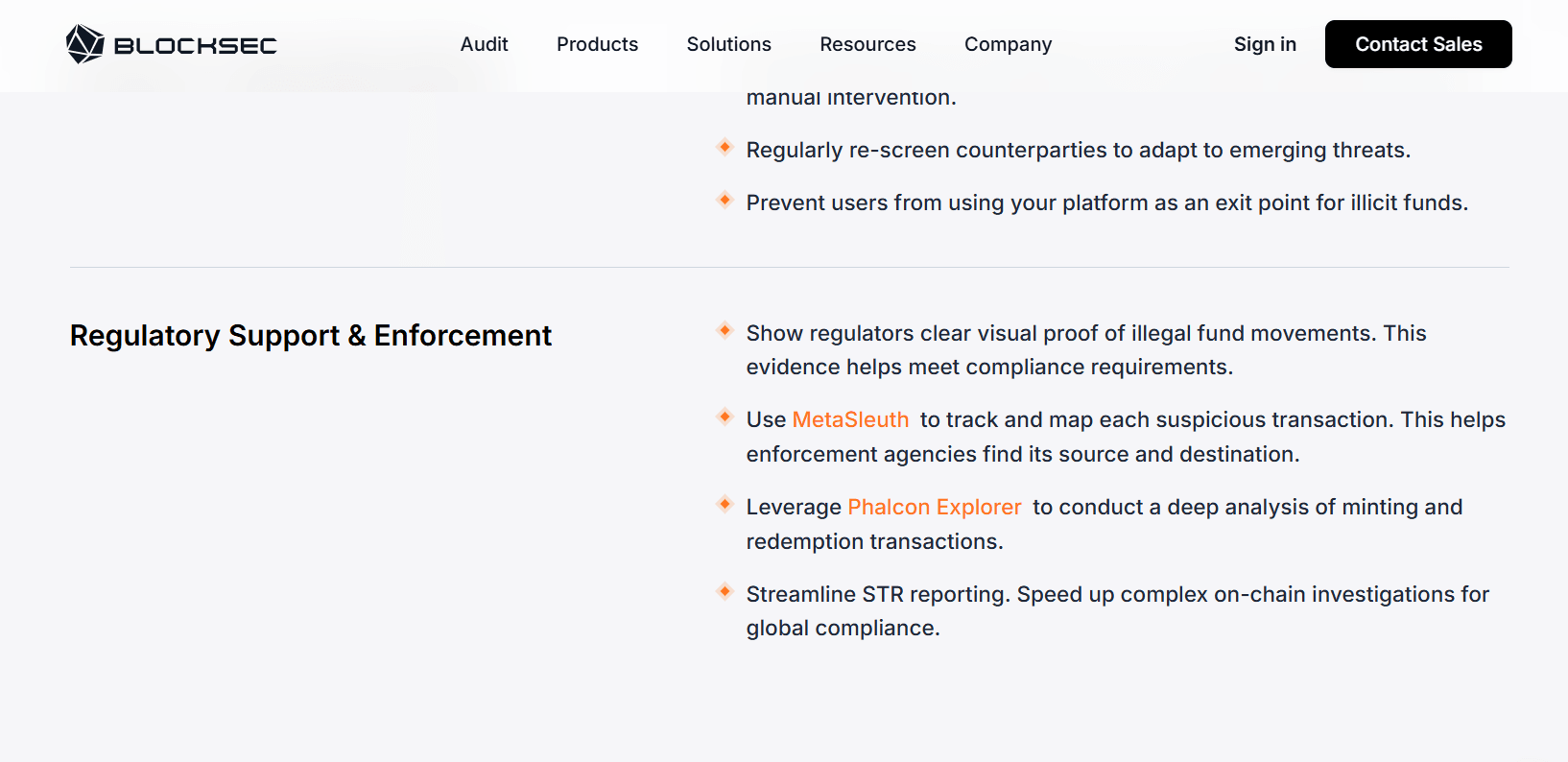
Unprocessed blockchain data outputs alphanumeric hashes, offering no business logic regarding the counterparties. Compliance platforms structure this raw data via address labeling. By indexing public registry data, darknet forum scraping, and proprietary tracing heuristics, platforms map specific real-world entities to wallet hashes—identifying them as distinct exchanges, ransomware groups, or sanctioned individuals. Upon detecting risk thresholds, compliance teams deploy fundflow tracking module to graph the transaction outputs. These visualization tools allow analysts to map standard money laundering typologies, generating the exact transactional evidence required for law enforcement reporting.
Automated Regulatory Reporting for Cross-Border Operations
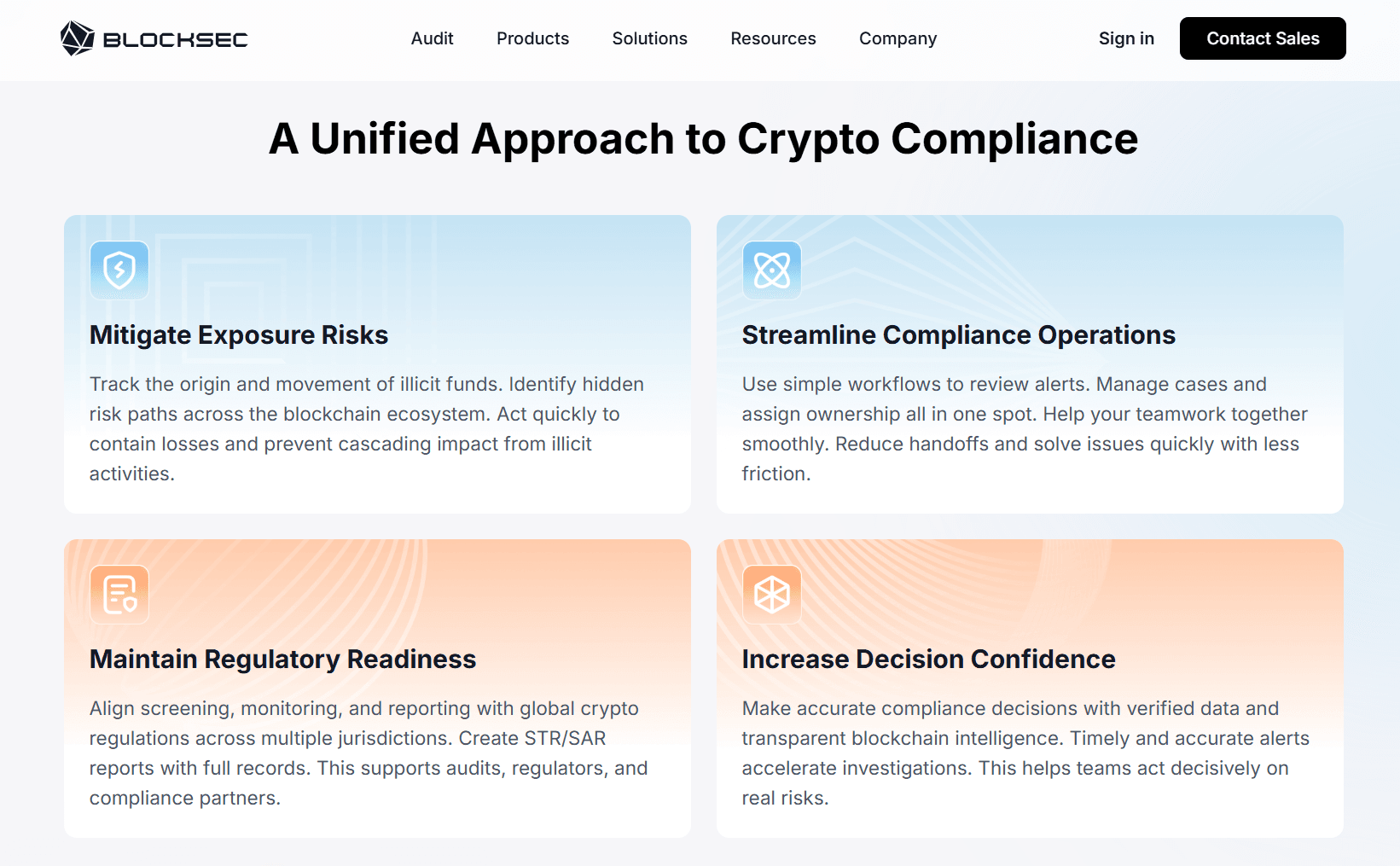
Identifying risk exposure is only the initial diagnostic step; operators must format these findings for regulatory submission. Filing Suspicious Activity Reports (SARs) and Currency Transaction Reports (CTRs) requires structured data entry matching local formatting rules. Enterprise compliance software standardizes the export of transaction logs, user KYC data, and forensic graphs into these required templates. For VASPs scaling globally, the software routes the formatted data to match the API requirements or filing standards of specific regional financial intelligence units (FIUs). This automated data formatting removes manual data entry for compliance staff and aligns the firm with statutory reporting timelines.
How to Evaluate and Choose the Right Infrastructure
Determining the correct regulatory infrastructure requires auditing the vendor's API response times and database architecture. Engineering teams must measure transaction processing limits, on-chain clustering accuracy, and multi-jurisdictional rule support to keep operations scalable and protected against evolving transaction obfuscation.
Evaluating Transaction Processing Speed (TPS) Capabilities
As trading volume moves toward Layer-1 networks and Layer-2 rollups, the API response time of a compliance platform dictates the operational ceiling. If an exchange routes transactions via Solana or Arbitrum networks, the integrated risk API must match that confirmation speed to avoid queue saturation. A compliance endpoint that throttles requests introduces latency, degrading the core matching engine and blocking institutional API traders. Technical evaluators must test the vendor's backend concurrency limits to confirm it can handle asynchronous transaction queries — a core requirement for any enterprise-grade crypto wallet screening solution.
The Importance of Comprehensive On-Chain Address Databases
The precision of a risk engine depends entirely on the coverage and update frequency of its address database. A platform indexing stale or limited data triggers high false-negative rates, passing illicit transactions directly into the exchange's hot wallets. Conversely, poorly clustered data generates false positives, blocking standard retail withdrawals and increasing customer support tickets. During vendor evaluation, VASPs must review the data attribution methodology. An effective platform runs continuous blockchain indexing, mapping new exploit contracts, bridge vulnerabilities, and obfuscation patterns to maintain an accurate directory of the operational digital asset layer.
Ensuring Multi-Jurisdictional Regulatory Coverage for Expansion
For VASPs securing licenses in multiple regions, deploying a platform that supports localized rule logic is a strict requirement. Regulatory reporting metrics in the UK do not map directly to the technical requirements in Singapore, Dubai, or the US. Deploying separate compliance software for each regional entity creates severe technical debt and fragmented data silos. An optimal infrastructure provides a unified control plane that parses different regional reporting rules. This setup allows the global compliance team to set a baseline risk tolerance while engineering specific routing logic for regional subsidiaries, scaling the business logic without fracturing the core risk architecture.
Frequently Asked Questions by Compliance Beginners
Standard inquiries from new market entrants reveal the technical baseline required for regulatory technology. Early-stage firms often miscalculate the engineering cost of compliance, yet integrating standard API filtering at launch establishes the baseline logic needed to detect risk, process user withdrawals, and clear institutional audits.
Do small crypto startups really need enterprise-grade compliance tools?
Yes, integrating standard compliance API endpoints is required regardless of user base size. Regulatory frameworks do not prorate enforcement based on a startup's operational runway. Early-stage protocols are heavily targeted by malicious actors looking for unmonitored deposit addresses to test laundering flows. Configuring a reliable compliance module at launch secures the platform against illicit liquidity, provides the audit logs required by early fiat banking partners, and eliminates the engineering cost of replacing legacy systems during high-growth phases.
How does a platform accurately identify high-risk wallets and mixers?
Risk identification relies on heuristic clustering and persistent state tracking. High-risk addresses are mapped by indexing their direct transfers with identified malicious contracts, parsing threat intel on recent protocol exploits, and cross-referencing darknet data dumps. For obfuscation protocols like coin mixers, the platform applies algorithmic tracing to match standard deposit-withdrawal structures, time-lock metrics, and output volume correlations. By graphing the complete transaction graph, the software identifies wallet addresses attempting to break tracing links via decentralized liquidity pools.
Can compliance software integrate seamlessly with existing VASP systems?
Current regulatory APIs are built for standard integration with a digital asset exchange's backend. They rely on RESTful APIs and WebSocket streams to connect directly with the VASP's matching engine, custodial vaults, and user database. This integration runs entirely on the server side, executing risk queries and block commands within milliseconds. The retail user encounters standard withdrawal processing times, while the VASP's infrastructure runs automated risk checks without needing to rebuild the existing exchange architecture.
Future-Proofing Your Operations with Advanced Security Solutions
Securing standard operational licenses requires deploying tested analytical infrastructure. By integrating established platforms like Phalcon Compliance, virtual asset service providers access structured data feeds and low-latency processing, building a compliant baseline to support institutional trading volumes.
Leveraging 600 Million+ Address Labels for Pinpoint Accuracy
To filter transaction risk in modern digital asset environments, the depth of the forensic database dictates the output quality. BlockSec operates a structured intelligence repository containing over 600 million mapped address labels. This volume of clustered data provides exactness in risk querying, resolving the missing attribution that degrades standard compliance APIs. By connecting to Phalcon Compliance, VASPs accurately retrieve the operational context of multi-hop transactions, giving compliance teams specific transactional logs to make deterministic block/allow decisions and significantly lowering the false-positive rates that drain engineering resources.
Handling High-Throughput Networks with 500 TPS Processing
As trading infrastructure shifts to high-throughput chains, standard compliance endpoints throttle under the request volume, introducing severe API latency. Phalcon Compliance is optimized for high-frequency trading environments, providing a sustained query processing rate of up to 500 transactions per second (TPS). This backend concurrency means that during market volatility spikes or massive on-chain liquidations, the risk evaluation API responds without dropping queries. Deploying Phalcon Compliance ensures that transaction filtering runs continuously, scanning user deposits and withdrawals without bottlenecking the matching engine used by high-frequency institutional clients.
Achieving Seamless Compliance Across 27+ Global Jurisdictions
International market entry requires a compliance backend that maps to fragmented jurisdictional logic. Phalcon Compliance integrates multi-jurisdictional rule support covering more than 27 major regulatory environments. This structured legal mapping permits VASPs to run a single compliance dashboard while programmatically adjusting block logic for local reporting rules. Whether deploying under MiCA in Europe, MAS requirements in Singapore, or VARA guidelines in Dubai, Phalcon Compliance allows the exchange to route transactions based on specific geographic constraints. Consolidating the regulatory API through Phalcon Compliance's architecture stabilizes the firm's compliance systems, creating the operational redundancy needed for secure market expansion.