Getting your crypto stolen is one of the most common, and least navigable, risks an everyday user faces in Web3. Once the funds are moved, most victims are left with little more than a transaction hash: no way to tell where the money went, and no professional tooling to trace it further. The professional on-chain investigation services that do exist typically cost thousands to tens of thousands of dollars, and rarely take on individual, small-value cases. The result is that after a theft, the vast majority of victims have no realistic path to recovery.
For a victim, a few questions are urgent: where did the funds ultimately go, did they pass through key nodes such as exchanges or cross-chain bridges, and can I obtain evidence I can actually use to file a police report or open a case. When funds reach a KYC-enabled node like an exchange, there is often still a chance to request a freeze or pursue recovery; and a clear record of the fund flow is indispensable evidence when reporting to law enforcement. These are precisely the questions an ordinary user cannot answer from a single transaction hash, and precisely where an investigation report earns its value.
Trace AI, launching soon from BlockSec, is built for exactly this. Trace AI is an AI-agent-driven on-chain investigation tool designed for everyday users. You need no on-chain knowledge and no prepared materials; you simply describe what happened in plain language, and the AI agent behind Trace AI understands the case, identifies the relevant chains, traces the fund flow step by step, and produces a complete investigation report. It turns what used to require a professional analyst into a conversation anyone can start.
A conversational AI agent that traces the funds for you
Trace AI keeps the user's job as simple as it can be: all you do is describe what happened. The reasoning, tracing, and analysis are handled by the AI agent.
You describe, much like chatting with an investigator, when and how the theft occurred and which wallet address or transaction hash is involved. During the conversation, the agent automatically identifies which chain each transaction belongs to and organizes the key details into a structured case; if anything is missing, it asks follow-up questions until every element needed for tracing is in place. Once the case is confirmed, the agent follows the fund flow layer by layer, autonomously completing the kind of multi-step investigation that once took an analyst repeated manual checks, and outputs a structured report. You never have to open a block explorer or work out the path of the funds yourself.
A structured report you can actually read
On-chain tracing results are usually a wall of addresses and numbers that most users cannot interpret. Trace AI organizes those results into five parts, presented as clearly as possible:
- Origin and cause. Starting from the transaction you provide, it pinpoints where the funds were moved out and gives an initial assessment of what type of theft this was.
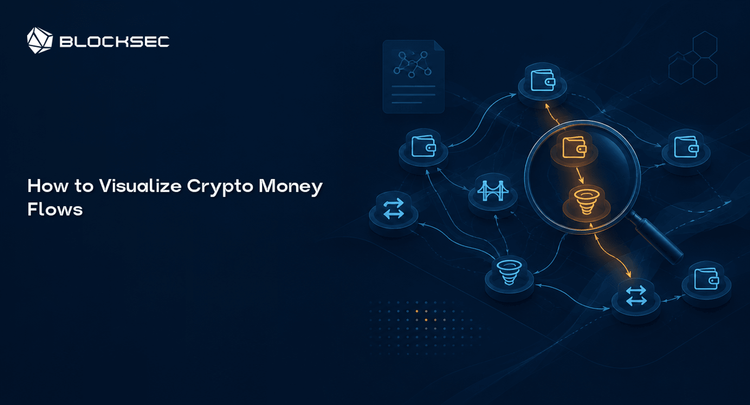
- Fund flow map. It renders the movement of funds after they leave your address as a visual graph, so the branching structure is easy to follow.
- Category summary. It groups the final destinations by category, such as exchanges, mixers, or cross-chain bridges, with the share and the number of addresses involved for each.
- Entity breakdown. For each destination, it breaks down the specific entities, the addresses passed through, and the corresponding amounts and timestamps.
- Conclusion and recommended actions. It explains the current state of the funds and, for each destination, suggests what you can do next, such as which exchange the funds entered and how you might attempt a freeze or file a complaint.
The full report can be exported as PDF and CSV, so you can use it to file a police report, contact an exchange, or brief a lawyer, not just read the result on screen.
Eight chains, ten languages
At launch, Trace AI supports fund tracing across eight major public chains: Ethereum, TRON, BNB Chain, Polygon, Base, Optimism, Avalanche C-Chain, and Arbitrum. Chain identification is automatic, and where it cannot be determined with confidence, the agent asks you to confirm.
The interface and reports support ten languages, including Simplified Chinese, Traditional Chinese, English, Japanese, Korean, Spanish, Portuguese, Indonesian, Thai, and Russian, covering users across major markets.
A price ordinary users can afford
The reason fund tracing has long been out of reach for ordinary users is largely its cost. Trace AI brings that barrier down sharply: starting a trace costs just $5, and unlocking the full report once you have confirmed the fund flow is a limited-time price of $100, with support for cards, crypto, and e-wallets. For a victim who previously had no path to recovery at all, that is a genuinely affordable price worth trying.
Backed by BlockSec's research and frontline practice
Trace AI is built for everyday users, but the tracing ability behind it comes from BlockSec's long-standing technical work and frontline practice in on-chain fund tracing, adapted and simplified for a consumer audience.
On the research side, joint work by BlockSec and Zhejiang University on fund-flow tracing has been accepted at a top-tier academic venue [paper title / venue — TBC], providing a solid methodological foundation. On the practice side, MetaSleuth, BlockSec's on-chain tracing and investigation tool, has been used to reconstruct the full fund networks of complex cases, including on-chain schemes worth over a billion dollars and numerous cross-border laundering and stolen-asset flows. This kind of investigation has, until now, primarily served law enforcement, exchanges, and compliance teams, and remained out of reach for ordinary users.
What Trace AI does is package that capability, validated in research and refined across real cases, into a simplified form that lets individuals with no on-chain expertise run an investigation and read the report themselves. It is worth noting that Trace AI runs on a simplified tracing engine suited to the most common theft scenarios; for structurally complex cases, we still recommend further manual tracing by a professional team. For institutions and practitioners, Trace AI offers a lighter path: when a customer or user is hit by a theft, they can use it to quickly obtain a structured fund-flow analysis before deciding how to proceed.
AI meets Web3 security
Trace AI is also a concrete step in BlockSec's work at the intersection of AI and Web3. On-chain data is inherently open and traceable, making it one of the best settings for an AI agent to work in; and fund tracing, which relies heavily on professional experience, is exactly the kind of work where AI can bring the barrier down. By combining the autonomous investigative ability of an AI agent with the data and experience BlockSec has built in on-chain security, Trace AI turns tracing that only a handful of professional teams could once perform into something ordinary users can do for themselves. It is our answer to how AI can genuinely serve Web3 security.
Coming soon
Trace AI is in its final preparations ahead of launch and will be available shortly. Follow BlockSec for the launch announcement, where we will share the access link and further details the moment it goes live.