DeFi Regulation is no longer a theoretical debate, but rather, a business-critical reality. Exchanges, payment providers, custodians, and banks entering Web3 face growing AML/CFT scrutiny, licensing pressure, and cross-border compliance complexity. One weak control over sanctions screening or transaction monitoring can trigger fines, frozen accounts, or reputational damage that spreads fast in today’s market.
Phalcon Compliance turns DeFi Regulation from uncertainty into infrastructure. With real-time address screening, on-chain transaction monitoring, and automated reporting, you gain clear visibility into risk exposure and actionable compliance controls—so you can scale confidently across jurisdictions without regulatory blind spots holding you back.
You may refer to Technical Standards Short Paper Series: Decentralized Finance (DeFi) and Regulation issued by Global Blockchain Business Council for a structured overview of governance, AML/CFT procedures, and smart contract oracles.
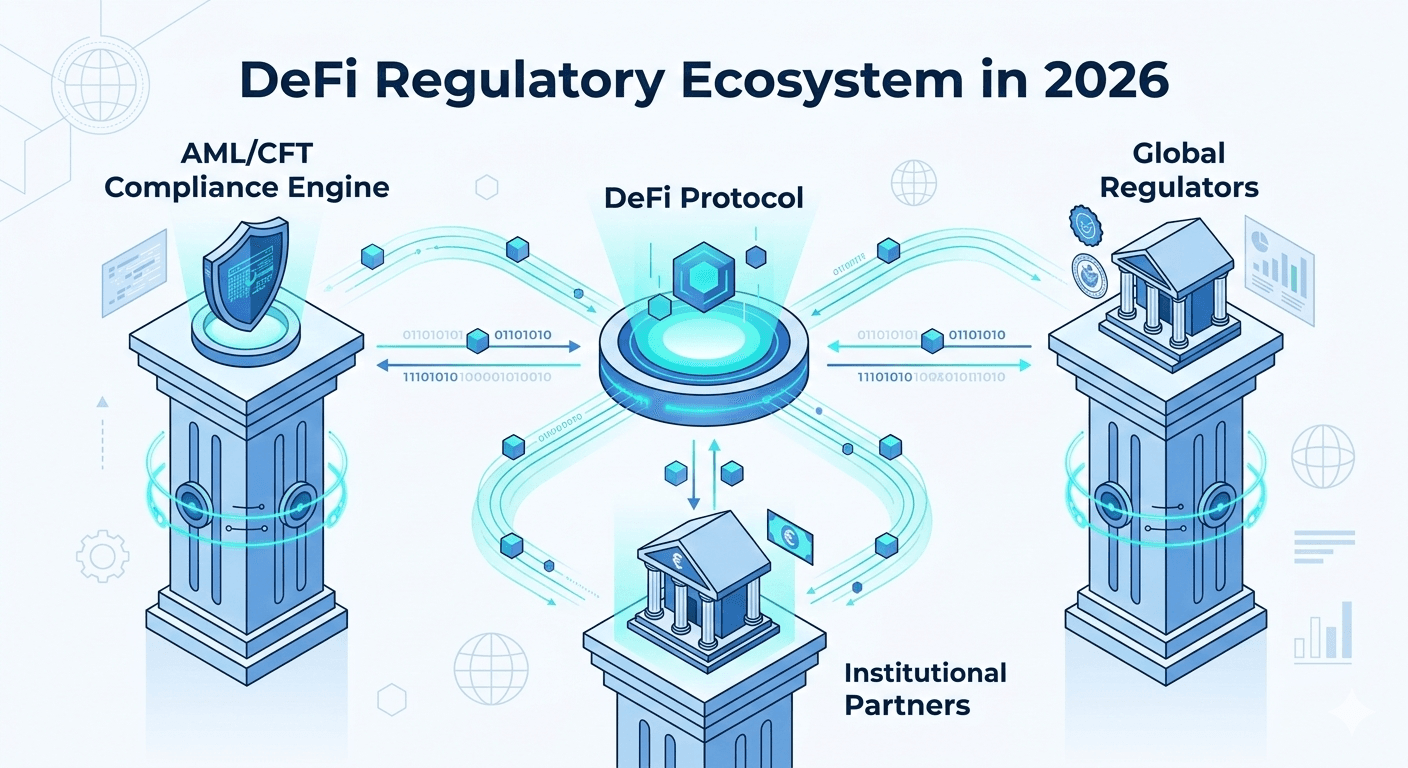
AML/CFT Standards as Pivotal DeFi Regulation’s Baseline
If you are building in DeFi, AML and CFT are not optional discussions. They are the foundation of DeFi regulation. Regulators across jurisdictions consistently treat anti-money laundering and counter-terrorism financing standards as minimum baseline obligations. It does not matter whether your protocol is innovative or decentralized. The first question will always be whether illicit funds can move through your system without detection.
In a Web3 environment, AML/CFT obligations look different from traditional finance, but the underlying principle is the same. You must be able to identify risk, monitor activity, and demonstrate that you act when red flags appear. In DeFi, this does not mean turning your protocol into a bank. It means implementing risk-based controls that match the level of exposure your interface or governance structure creates.
Address Screening
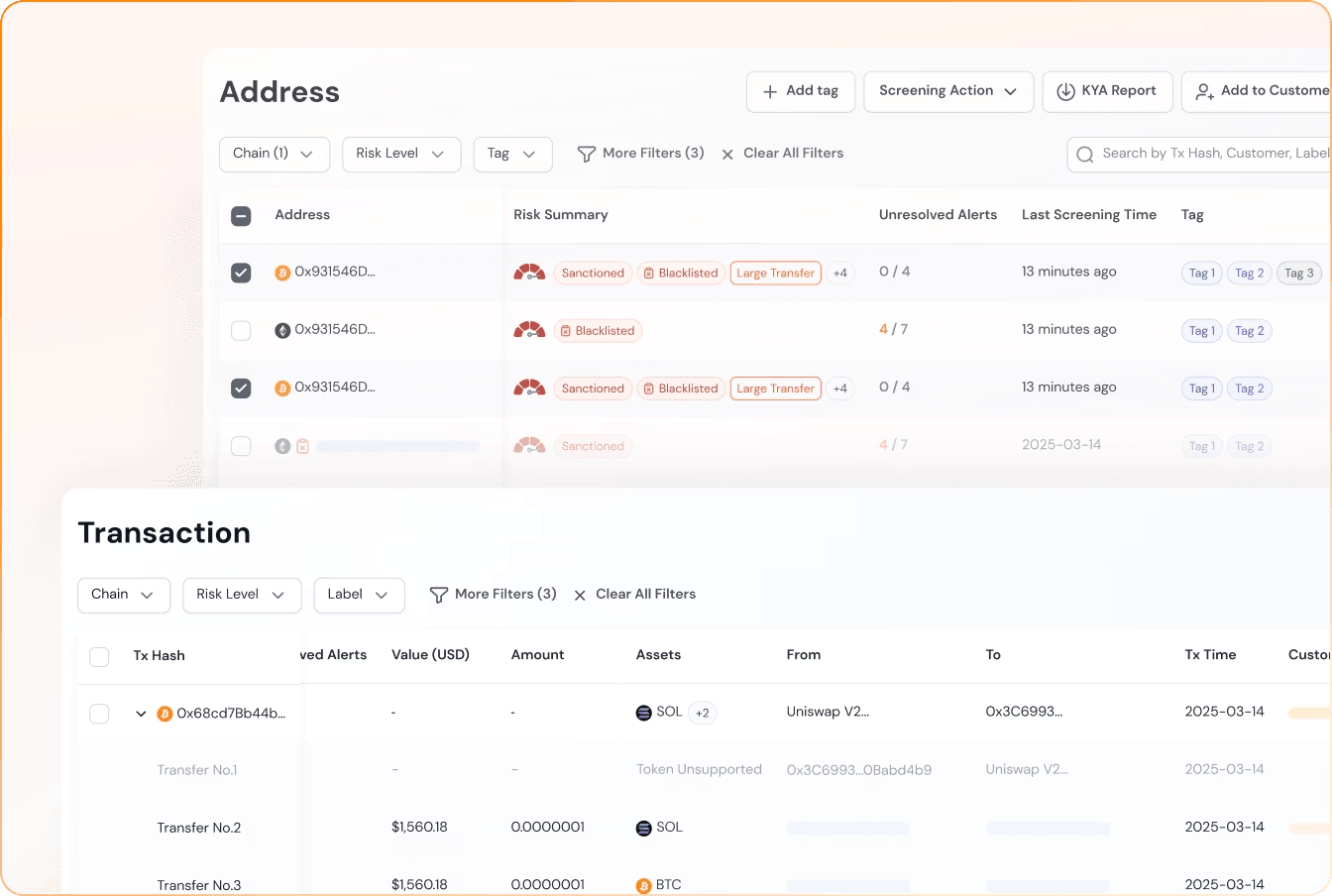
The first layer of AML/CFT compliance is address screening. Before funds interact with your core liquidity, you need to understand who you are dealing with. This includes screening wallet addresses against sanctions lists and known high-risk entities. However, static screening alone is not enough. Risk in DeFi is dynamic. Wallets change behavior. Funds move across chains. Exposure evolves in real time.
This is where Phalcon Compliance provides a structural advantage. Instead of relying on periodic checks, you gain real-time address screening combined with continuous transaction monitoring. As activity unfolds on-chain, suspicious patterns can be detected immediately. High-risk deposits can be flagged before they contaminate liquidity pools. Suspicious withdrawal paths can trigger alerts before violations escalate. This shifts AML/CFT from reactive reporting to proactive risk management.
Transaction Monitoring
Transaction monitoring is equally critical. Regulators increasingly expect visibility into abnormal transaction flows, rapid fund movements, and connections to sanctioned or exploited addresses. In DeFi, where transactions are transparent but fast, monitoring must be automated and scalable. With Phalcon Compliance, it can enable teams to trace fund origins and destinations, identify behavioral anomalies, and generate structured alerts that support internal review processes. This allows you to demonstrate that you are not ignoring obvious red flags.
Interface-Level Responsibility
Another key aspect of AML/CFT standards in DeFi regulation is interface-level responsibility. Even if smart contracts are immutable, frontends and governance mechanisms may create regulatory exposure. Implementing IP filtering, sanctions screening APIs, and risk alerts at the interface layer helps show that reasonable controls are in place. Phalcon Compliance can support this model by providing actionable risk intelligence that can be integrated into operational workflows without requiring you to store excessive identity data.
Documentation
Most importantly, AML/CFT compliance is not only about detecting risk. Instead, it is about documenting action. When regulators or partners ask how you manage financial crime exposure, you must be able to provide evidence. This includes logs of flagged transactions, records of screening results, and documentation of review and escalation processes. With Phalcon Compliance, you can help transform raw blockchain data into structured compliance records, enabling you to demonstrate due care rather than simply claiming it.
In 2026, DeFi regulation will continue to evolve. But AML/CFT standards are unlikely to disappear. Instead, expectations around monitoring, reporting, and risk-based controls will become more defined. Projects that treat AML/CFT as a core infrastructure layer, rather than an afterthought, will be better positioned to operate across jurisdictions and attract institutional participation. Phalcon Compliance is designed to support this shift, allowing you to embed real-time risk visibility into your protocol operations while maintaining the flexibility that Web3 demands.
Operational Controls That Support DeFi Regulation
If you are serious about DeFi regulation in 2026, you cannot treat security as a launch task. You need a playbook as follows.
Build an Annual Health Check System like Smart Contracts Audits
A one-time audit does not guarantee safety. Code changes, dependencies update, and risks evolve. Establish a structured annual health check with quarterly reviews, re-audits after upgrades, automated vulnerability scanning, and continuous monitoring of admin permissions. Ongoing oversight ensures visibility and reduces operational blind spots.
Upgrade Bug Bounty Into a Formal Accountability Program
Bug bounties should function as governance infrastructure, not ad hoc programs. Formalize risk tiers with structured rewards, publish clear response timelines, create a DAO review process for disputes, and issue annual security reports. A structured bounty program demonstrates transparency, repeatability, and documented due diligence to regulators and partners.
Run the REKT Test Before You Ship Anything
Before every major launch, run a structured self assessment. Do not rely only on external auditors. Ask hard internal questions.
Use this checklist as a baseline.
- Do you have all actors, roles, and privileges documented?
- Do you keep documentation of all the external services, contracts, and oracles you rely on?
- Do you have a written and tested incident response plan?
- Do you document the best ways to attack your system?
- Do you perform identity verification and background checks on all employees?
- Do you have a team member with security defined in their role?
- Do you require hardware security keys for production systems?
- Does your key management system require multiple humans and physical steps?
- Do you define key invariants for your system and test them on every commit?
- Do you use the best automated tools to discover security issues in your code?
- Do you undergo external audits and maintain a vulnerability disclosure or bug bounty program?
- Have you considered and mitigated avenues for abusing users of your system?
If you cannot answer yes to most of these, you are not ready. This aims to reduce obvious failure points before attackers find them.
DeFi Regulation Outlook: Let Market Standards Move Faster Than Government Rules
Regulation will continue to evolve and relevant efforts should be made regarding AML/CFI and cybersecurity.
Encourage your community to submit Compliance Improvement Proposals. These cIPs can define minimum screening rules, upgrade transparency requirements, and incident response standards. Make risk disclosure templates part of every new product launch. Propose clear visibility around upgrade permissions so users understand who can change what. Establish security reserve funds that are publicly tracked and governed. These actions do more than reduce risk. They signal maturity.
In 2026, your competitive edge mainly comes from proving that your risk controls are measurable, transparent, and enforceable. Phalcon Compliance can empower you to build systems that can demonstrate responsibility, not just promise it.
FAQ
- Can I still rely on "decentralization" as a legal shield for my protocol?
In 2026, simply claiming decentralization is unlikely to shield a protocol from regulatory scrutiny. Regulators increasingly examine factual control rather than labels. Even if smart contracts are immutable, control over frontend interfaces, admin keys, upgrade mechanisms, or governance processes may attract attention. Whether liability applies depends on jurisdiction and specific facts. The key shift is this: the question is no longer “Is it decentralized?” but “Who has the ability to manage or influence risk?” Demonstrating proactive risk management and transparent governance is often more persuasive than relying on structural decentralization claims alone.
- Will developers be held legally responsible if they only write code?
Regulatory exposure for developers varies by jurisdiction and legal framework. The proposed Blockchain Regulatory Certainty Act (BRCA) in the United States suggests potential protections for developers who do not exercise custody or control over user funds. However, the bill remains subject to legislative process and interpretation. In practice, factors such as revenue-sharing mechanisms, admin privileges, or ongoing governance control may increase regulatory scrutiny. Developers who separate protocol logic from operational control, document governance structures clearly, and implement risk monitoring tools may reduce perceived exposure, but outcomes depend on evolving legal standards.
- What are the practical implications of the CLARITY Act for DeFi builders?
The proposed CLARITY framework aims to clarify the distinction between securities and digital commodities, potentially affecting how different digital assets are supervised in the United States. However, it does not automatically eliminate regulatory obligations for DeFi protocols. For builders, this means architectural transparency becomes increasingly important. Demonstrating non-custodial design, clear governance processes, and transparent risk controls may help reduce licensing exposure, depending on how regulators interpret specific activities. Stablecoin treatment and yield-related products remain areas of active policy development, and requirements may differ across jurisdictions.
- Does implementing KYC/AML kill the core privacy of Web3?
Not necessarily. The industry is gradually moving toward more privacy-aware compliance models. Instead of broad data collection, many projects focus on risk-based filtering and transaction monitoring. Emerging approaches, such as cryptographic proof systems, aim to allow users to demonstrate compliance conditions without exposing full identity details. While these models are still developing across the ecosystem, the direction of travel suggests that compliance does not have to mean mass surveillance. Risk detection tools that monitor behavior patterns rather than storing identity documents can help reduce exposure while limiting unnecessary data retention.
- Am I liable if a third-party oracle or bridge I use gets exploited?
Responsibility for third-party dependencies depends on jurisdiction and the specific governance structure of your protocol. However, regulators and institutional partners increasingly expect DeFi builders to conduct reasonable due diligence on their technical stack. If a critical dependency fails and no safeguards, monitoring systems, or contingency plans were in place, this could increase exposure to claims of inadequate governance or risk management. Implementing circuit breakers, conducting vendor assessments, and maintaining a tested incident response plan can help demonstrate reasonable care, even when external components are involved.