Achievement
MetaDock, as a niche web3 browser extension, has successfully gained its 6000th user today!
Since its release, MetaDock has been loved by many users, including security researchers, founders and developers of DeFi projects, on-chain analysts, and other power users. Many of them provided positive and helpful reviews and recommendations, and some of them even voluntarily wrote tutorials on Twitter and Mirror.
So far, MetaDock has been featured in the Google Chrome App Store and has received five-star ratings on both Chrome and Firefox.
Our Mission
The inspiration for creating MetaDock emerged simply due to our experience of inconveniences involved in using blockchain explorers like Etherscan.
Specifically, as security researchers and blockchain developers, we wanted to be able to explore and analyze a transaction/contract in an integrated and unified manner without repeatedly switching between multiple tools. Instead of reinventing the wheel, why not enhance it?
Thus, MetaDock was born!
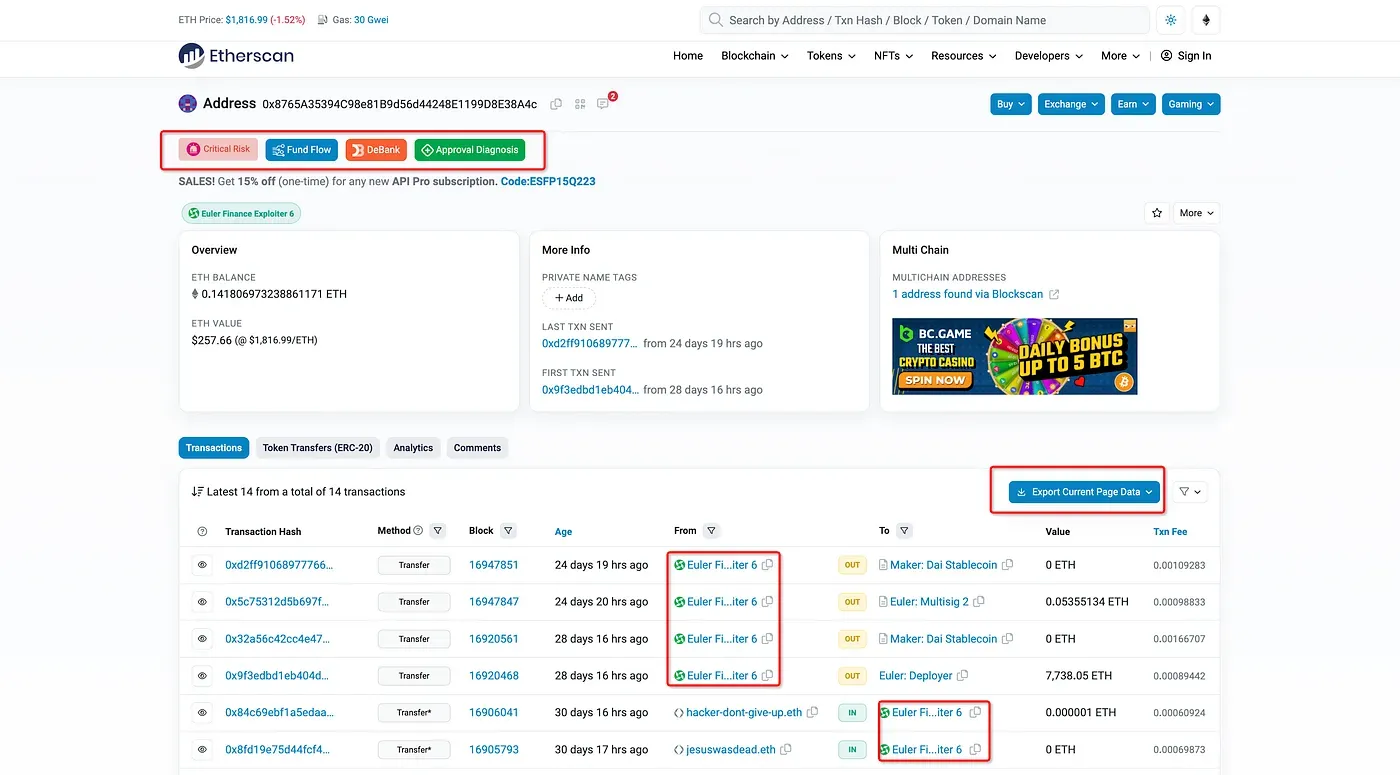
It is a lightweight and user-friendly toolbox aiming to seamlessly enhance Etherscan-like blockchain explorers. It doesn’t take over the page but appears where the user needs it. The clean and well-organized front-end layout makes it easy for users to navigate between multiple tools.
We have been maintaining the product in a relaxed yet dedicated approach since its release. Receiving such love from our users has left us overjoyed, grateful, and amazed.
This further strengthens our conviction that creating products that effectively solve user pain points is truly meaningful and fulfilling!
Product Positioning
MetaDock is an easy-to-navigate, infinitely useful browser extension. It seamlessly enhances blockchain explorers like Etherscan and provides users with valuable information such as address label libraries and fund interaction graphs, also the ability to batch downloading code and analyze transactions on Phalcon and Openchain.
As a technology-driven blockchain security company, BlockSec deeply understands and values the importance of user privacy and security, especially for heavy traders and security researchers. We take these considerations seriously and prioritize them in everything we do.
Therefore, we have been open-sourcing the product since Day 1, accepting community supervision, not collecting any user data, and ensuring the plugin only runs on authorized websites from a code level.
Feature Preview
MetaDock continuously collects user feedback and iterates with new upgrades.
We welcome collaborations and have already integrated APIs from products such as Forta, Debank, and DethCode. If you have an excellent API that you want to integrate, please DM us or send an email to [email protected].
We have some exciting new features coming soon! Stay tuned!
Gratitude & Activity
Finally, we would like to thank users (such as @0xShual, @Larrythecumber, @apoorvlathey, @MrAW8888, @TanselKayaTR, etc.) for their love and enthusiastic recommendations of our product. This has further strengthened our determination to make a great product.
We would love to hear about your experience with BlockSec! Please take a moment to like, share, and comment on your experience. We are eager to hear your feedback and want to reward the 10 most heartfelt comments with a special prize of 20 USDC (https://twitter.com/MetaDockTeam/status/1650878250422505475).
Not only that, but these lucky users will also have the opportunity to join the BlockSec PRO user group (limited to 20 people and by invitation only) to co-create exciting new products and interact with the BlockSec founding team. Join us in shaping the future of blockchain security and let your voice be heard!
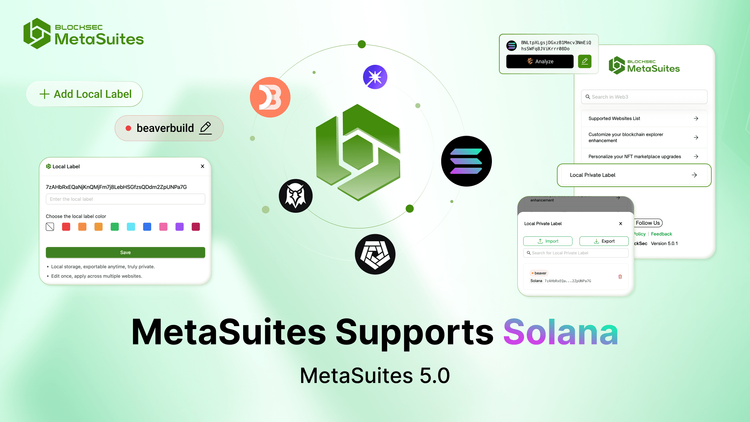
Please note that MetaDock has undergone a name change and is now known as MetaSuites, effective from February 2024. The new name reflects our commitment to providing a comprehensive suite of services and solutions to our valued users. We appreciate your continued support and look forward to serving you under our new brand, MetaSuites.
About BlockSec
BlockSec is a pioneering blockchain security company established in 2021 by a group of globally distinguished security experts. The company is committed to enhancing security and usability for the emerging Web3 world in order to facilitate its mass adoption. To this end, BlockSec provides smart contract and EVM chain security auditing services, the Phalcon platform for security development and blocking threats proactively, the MetaSleuth platform for fund tracking and investigation, and MetaSuites extension for web3 builders surfing efficiently in the crypto world.
To date, the company has served over 300 esteemed clients such as MetaMask, Uniswap Foundation, Compound, Forta, and PancakeSwap, and received tens of millions of US dollars in two rounds of financing from preeminent investors, including Matrix Partners, Vitalbridge Capital, and Fenbushi Capital.
Official website: https://blocksec.com/
Official Twitter account: https://twitter.com/BlockSecTeam