In our "Secure Smart Contract Development" series, we delve into the critical security aspects of smart contract development with a focus on NFT contracts. We explore a range of risks and vulnerabilities that we as developers might encounter and offer detailed strategies and best practices for mitigating these issues to enhance security and efficiency in blockchain applications.
Breaking Down: A Comprehensive Overview
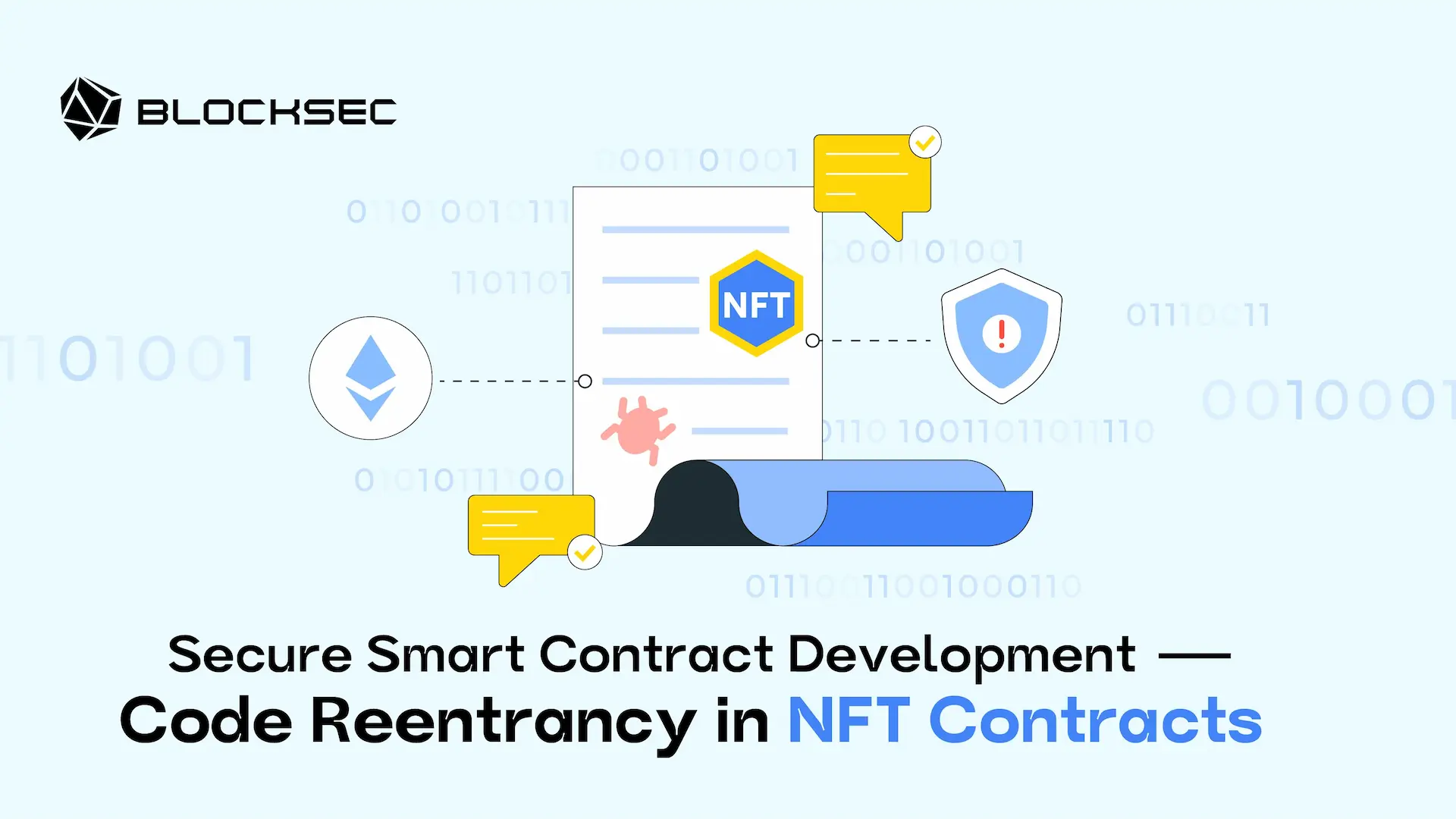
This blog explores reentrancy vulnerabilities in NFT contracts, detailing both Single-Function and Cross-Function Reentrancy. It explains the risks associated with these vulnerabilities and provides developers with mitigation strategies to secure their smart contracts.
Digital signature has been widely used in smart contracts, e.g., in allowlist mint and order-book NFT marketplaces. That’s because it helps save transaction costs (off-chain sign and on-chain verification). However, the misuse of the developers also introduces risks in the NFT marketplaces. In this blog, we’d like to talk about the misuse of digital signatures in the NFT ecosystem.
About BlockSec
BlockSec is a pioneering blockchain security company established in 2021 by a group of globally distinguished security experts. The company is committed to enhancing security and usability for the emerging Web3 world in order to facilitate its mass adoption. To this end, BlockSec provides smart contract and EVM chain security auditing services, the Phalcon platform for security development and blocking threats proactively, the MetaSleuth platform for fund tracking and investigation, and MetaSuites extension for web3 builders surfing efficiently in the crypto world.
To date, the company has served over 300 esteemed clients such as MetaMask, Uniswap Foundation, Compound, Forta, and PancakeSwap, and received tens of millions of US dollars in two rounds of financing from preeminent investors, including Matrix Partners, Vitalbridge Capital, and Fenbushi Capital.
Official website: https://blocksec.com/
Official Twitter account: https://twitter.com/BlockSecTeam