Executive Summary
Custodian CTOs require a compliance infrastructure capable of parsing transaction risks without introducing latency into deposit and withdrawal pipelines. The primary objective is establishing auditable, repeatable risk workflows rather than merely identifying isolated illicit exposure.
A modern blockchain compliance stack integrates real-time wallet screening, transaction monitoring, anti-money laundering risk logic, case handling, and audit-ready reporting. For custodial services, technical thresholds exceed those of consumer-grade wallets due to fiduciary, contractual, and regulatory mandates. Asset screening must account for sanctioned entities, tumbling services, darknet marketplaces, fraudulent clusters, and behavioral anomalies spanning multiple protocols and token standards.
Foundational capabilities such as real-time wallet screening, ongoing transaction monitoring, and configurable AML risk rules form the baseline for institutional crypto operations. Firms managing third-party assets cannot scale securely while depending on fragmented, manual analyst reviews for compliance clearances.
Chainalysis data indicates that illicit cryptocurrency addresses received approximately 24.2 billion USD in 2023, with sanctions-related transfers dominating the volume[1]. Concurrently, institutional trading spans diverse chains and assets, raising the operational overhead of incomplete attribution and delayed alert processing. Custodian engineering leaders must evaluate compliance software as foundational risk infrastructure rather than peripheral administrative tooling.
Architectural and Operational Baselines
Effective compliance architectures align rapid data ingestion with precise risk attribution and configurable policy engines. CTOs evaluate these platforms based on API latency, entity coverage, decision explainability, and the net impact on processing times.
Selection criteria rest on three structural principles. First, screening executions should precede asset transfers whenever technically feasible. Second, monitoring workflows must persist post-onboarding, as wallet risk profiles mutate dynamically. Third, systemic compliance actions must generate deterministic evidence, detailing the triggered alert, applied rule version, reviewing analyst, and subsequent operational response.
False positive rates demand engineering scrutiny. In a 2024 ACAMS survey, compliance personnel cited alert bloat and degraded data fidelity as primary drivers of review bottlenecks[2]. For digital asset custodians, elevated false positive ratios stall client withdrawals, degrade service level agreements, and inflate headcount costs. Conversely, permissive thresholds risk portfolio contamination and reactionary asset freezes.
The integration checklist evaluates whether the system processes high-throughput RPC calls, interfaces smoothly with multi-party computation wallets and core ledgers, supports granular policy tuning, and exports defensible audit logs. Platforms like Phalcon Compliance align with these parameters, targeting high-volume crypto enterprises prioritizing low-latency risk evaluations across deposits, withdrawals, and complex asset flows.
Why Custodians Need Institutional-Grade Compliance Infrastructure
Custodial risk profiles diverge from those of exchanges or payment processors because custodians hold direct fiduciary responsibility for asset safekeeping. Control failures trigger regulatory liabilities, asset contamination, settlement blockages, and institutional trust degradation.
Custodians operate at the foundational settlement layer of digital asset markets. While exchanges prioritize matching engine throughput and payment processors focus on transactional finality, custodians must secure assets while maintaining operational continuity across onboarding, staking, treasury rebalancing, and internal wallet routing.
Contaminated deposits introduce immediate engineering and compliance overhead. If incoming funds originate from sanctioned entities, mixers, or darknet services, the custodian is forced to initiate freeze protocols, generate internal risk disclosures, and restrict outbound transfers. The Financial Action Task Force mandates that virtual asset service providers implement risk-calibrated controls to intercept illicit flows[3].
Manual oversight mechanisms degrade under institutional load. Custodians processing continuous asset flows across Bitcoin, Ethereum, stablecoins, and Layer-2 networks fail when relying on decentralized block explorers or spreadsheet-based tracking. Disparate analytical tools generate fragmented audit trails, forcing analysts to rely on UI screenshots and disjointed scoring logics that fail regulatory scrutiny.
Dedicated compliance platforms standardize wallet risk intelligence into verifiable workflows. The system maps exposure prior to client onboarding, intercepts flagged deposits before ledger updates, verifies outbound addresses pre-execution, and sustains continuous behavioral monitoring. For engineering teams, this mandates a highly available, low-latency, and secure integration layer within production environments.
Core Requirements for a Blockchain Compliance Platform
Enterprise-grade platforms unify screening, monitoring, policy configuration, and case management into a single operational interface. Each module functions to minimize analytical uncertainty, reduce review duration, and document the rationale behind specific account actions.
Real-time wallet screening serves as the initial gateway. Prior to onboarding, deposits, or outbound transfers, the system queries the target address for direct or indirect linkages to sanctioned entities, exploits, scams, mixers, or elevated-risk counterparties. The API response must deliver a deterministic risk score, categorization, attribution provenance, transaction distance, and programmatic action recommendations.
Transaction monitoring constitutes the second pillar. Static screening fails to capture temporal risk shifts. A wallet validated during onboarding may subsequently receive inputs from exploited smart contracts or high-risk exchanges. Continuous monitoring scans inbound and outbound UTXOs and account-based transfers across supported networks, indexing stablecoins and wrapped assets alongside native tokens.
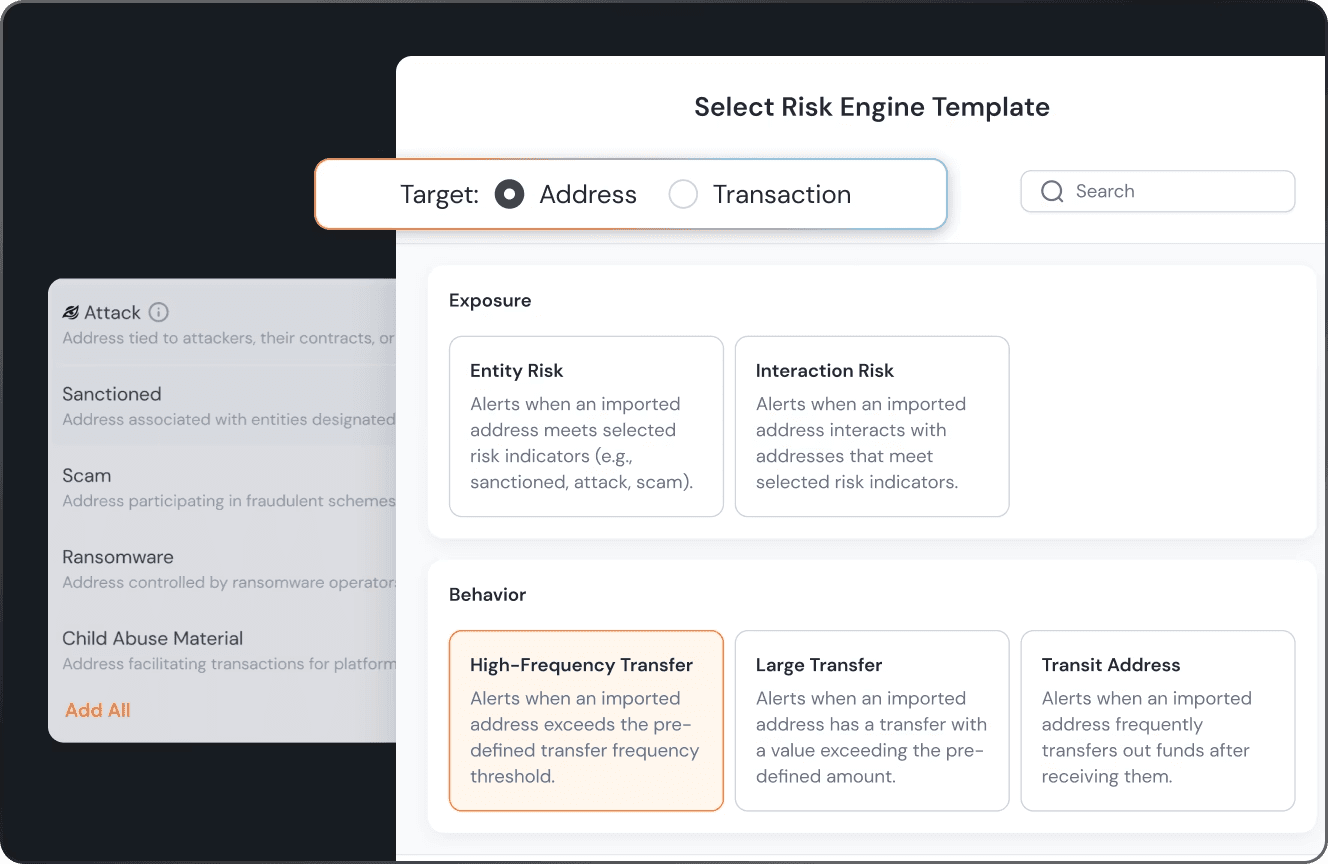
Configurable AML risk engines accommodate varying institutional risk tolerances and multi-jurisdictional mandates. A conservative custodian might automate blocks on any direct sanctions exposure while routing mixer interactions to enhanced due diligence queues. The policy engine must process logic based on risk thresholds, token specifications, nominal fiat values, network-specific parameters, and distinct client segments.
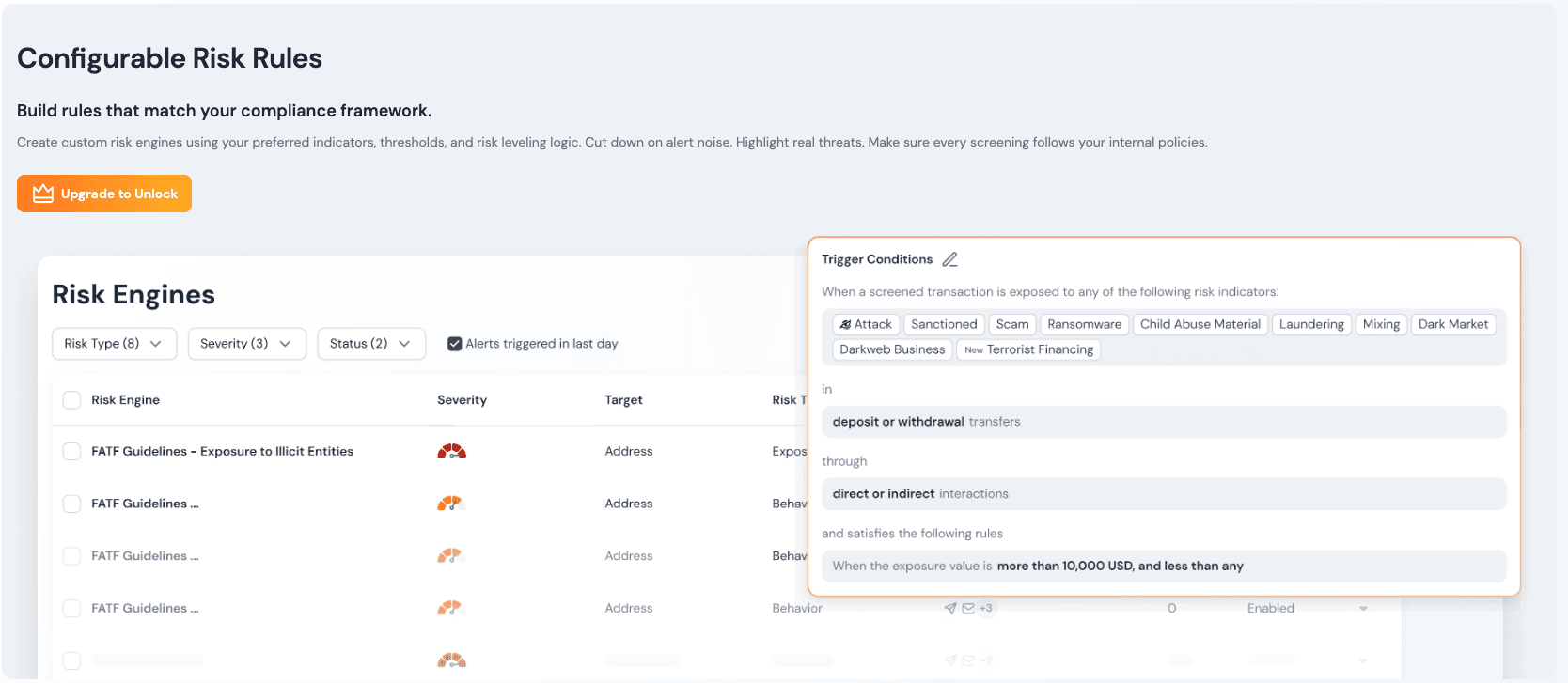
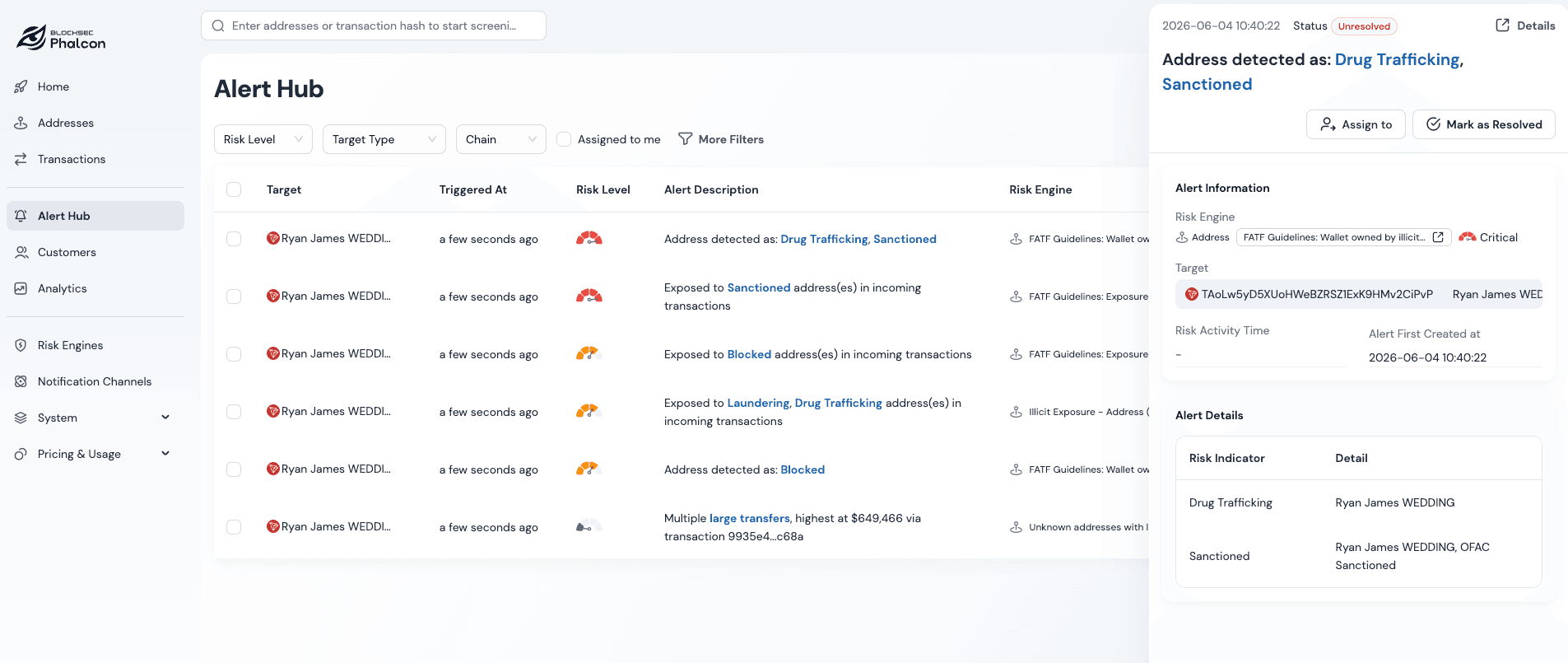
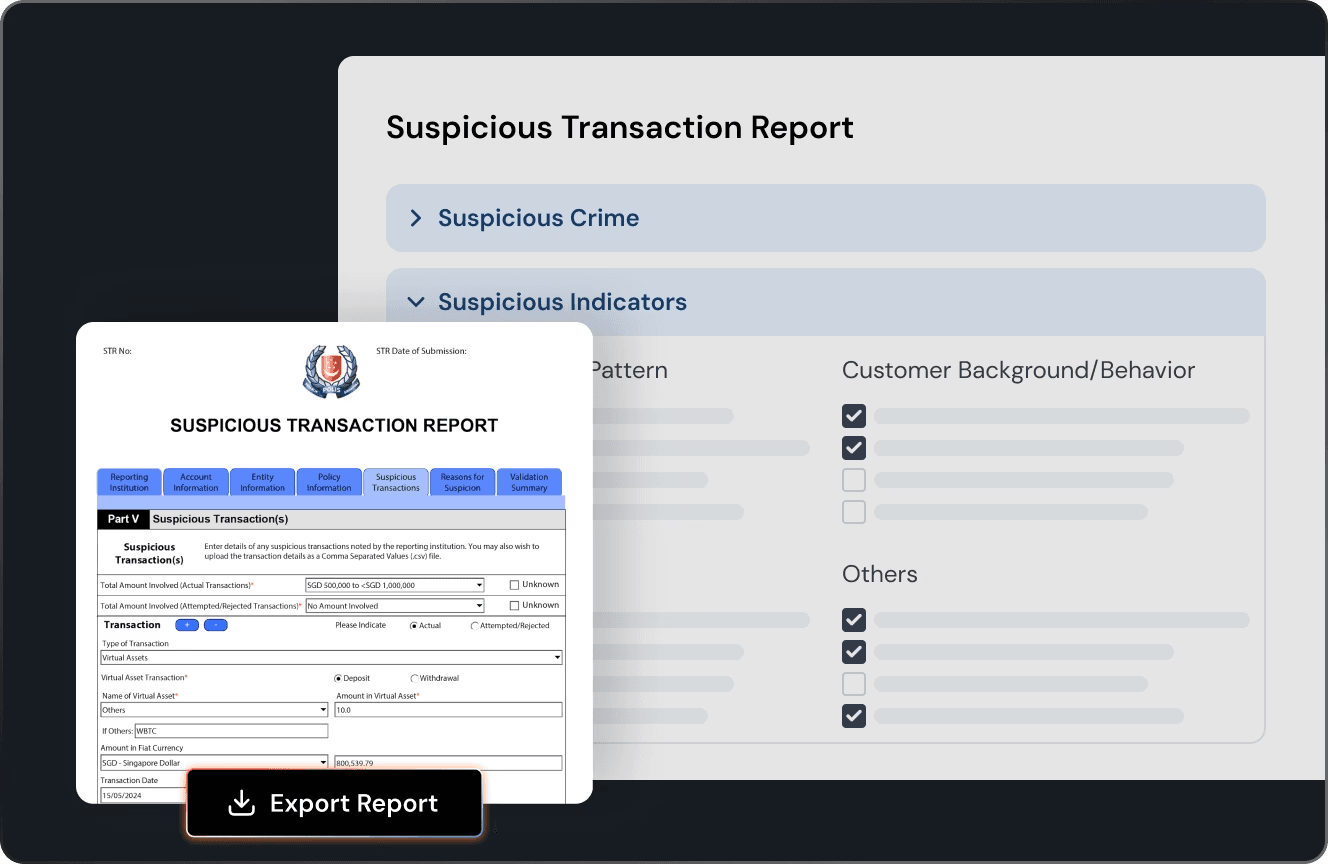
Audit-ready reporting and unified case management validate the control environment. System alerts route to investigative queues logging analyst annotations, escalation milestones, file attachments, and terminal resolutions. For regulatory examinations, the platform exports immutable records detailing the initiating trigger, wallet profile, transaction hash, applied policy configuration, analyst intervention, and precise timestamp.
Technical Evaluation Criteria for CTOs
Technical leaders must validate compliance software against the same service level agreements applied to core infrastructure. Millisecond-level latency, robust uptime, comprehensive data indexing, strict access controls, and standardized API specifications define production readiness.
API response latency dictates operational throughput. A withdrawal authorization pipeline blocked by multi-second screening queries generates queued transactions and triggers SLA breaches. For high-frequency payment gateways, sub-100-millisecond response times directly correlate with successful execution rates. Custodians handling bulk institutional transfers require predictable query performance to prevent ledger desynchronization.
System resilience must withstand maximum load conditions. Engineering evaluations should verify documented service-level objectives, API rate limits, failover mechanisms, retry protocols, queue architectures, and batch processing constraints. Transaction monitoring engines cannot degrade during periods of elevated network congestion, token generation events, or macro-driven portfolio rebalancing.
Intelligence coverage determines the efficacy of risk modeling. Platforms must index dominant blockchains, ERC-20 derivatives, stablecoin contracts, cross-chain bridges, and pertinent off-chain entity data. The accuracy of heuristic clustering and label latency supersedes raw address volume. Technical teams require verifiable logic for entity aggregation, false positive minimization, and coverage depth across ransomware, phishing, and tumbling typologies.
Integration architectures must map to existing custodial pipelines. Standard implementation points include multi-party computation signing nodes, internal ledger databases, orchestration layers, identity verification systems, and proprietary CRM tools. Security requirements mandate SAML/SSO integration, granular API key rotation, data encryption protocols, configurable retention policies, and SOC2 compliance validation.
Operational Workflows That Reduce Compliance Drag
Optimized compliance procedures isolate automated verification at critical transaction nodes, reserving manual intervention for complex edge cases. This framework sustains reliable asset processing velocities while satisfying stringent regulatory expectations.
An engineered operational model deploys three distinct layers: pre-transaction evaluation, post-settlement verification, and continuous address surveillance. Pre-transaction API calls block explicit threats prior to broadcast. Post-transaction indexing captures latent exposure following network finality. Sustained surveillance detects retroactive label updates that alter historical risk profiles.
False positive mitigation drives operational efficiency. Overly restrictive parameters force analysts to manually clear negligible indirect exposures, bloating ticket backlogs. Permissive logic allows high-risk transfers to bypass automated blocks. Implementing risk-tiered routing ensures low-risk hashes execute natively, moderate anomalies queue for secondary review, and critical flags trigger automated suspension.
Escalation hierarchies require strict definition within the case management module. Tier 1 analysts resolve baseline alerts, compliance officers override policy blocks, legal counsel evaluates complex exposure vectors, and executive sponsors authorize high-value account freezing. Systematized escalation matrices eliminate decision latency during time-sensitive incident response scenarios.
Institutional clients demand execution predictability. While internal risk parameters remain confidential, custodians establish service level agreements defining standard review windows and automated notification triggers for delayed settlements. Predictable client experiences rely on stable infrastructure and aligned internal communication rather than compromised compliance thresholds.
How to Compare Leading Compliance Platform Capabilities
Platform benchmarking extends beyond superficial feature matrices. Technical evaluations analyze the interoperability of wallet screening, monitoring pipelines, heuristic intelligence, rule engines, and reporting modules in reducing net operational overhead.
Static screening and continuous monitoring address distinct temporal risk planes. Point-in-time screening outputs historical exposure up to the query timestamp. Monitoring tracks subsequent ledger state changes. Entity intelligence layers augment this data by correlating pseudonymous addresses to centralized exchanges, darknet forums, sanctioned entities, and known threat actors.
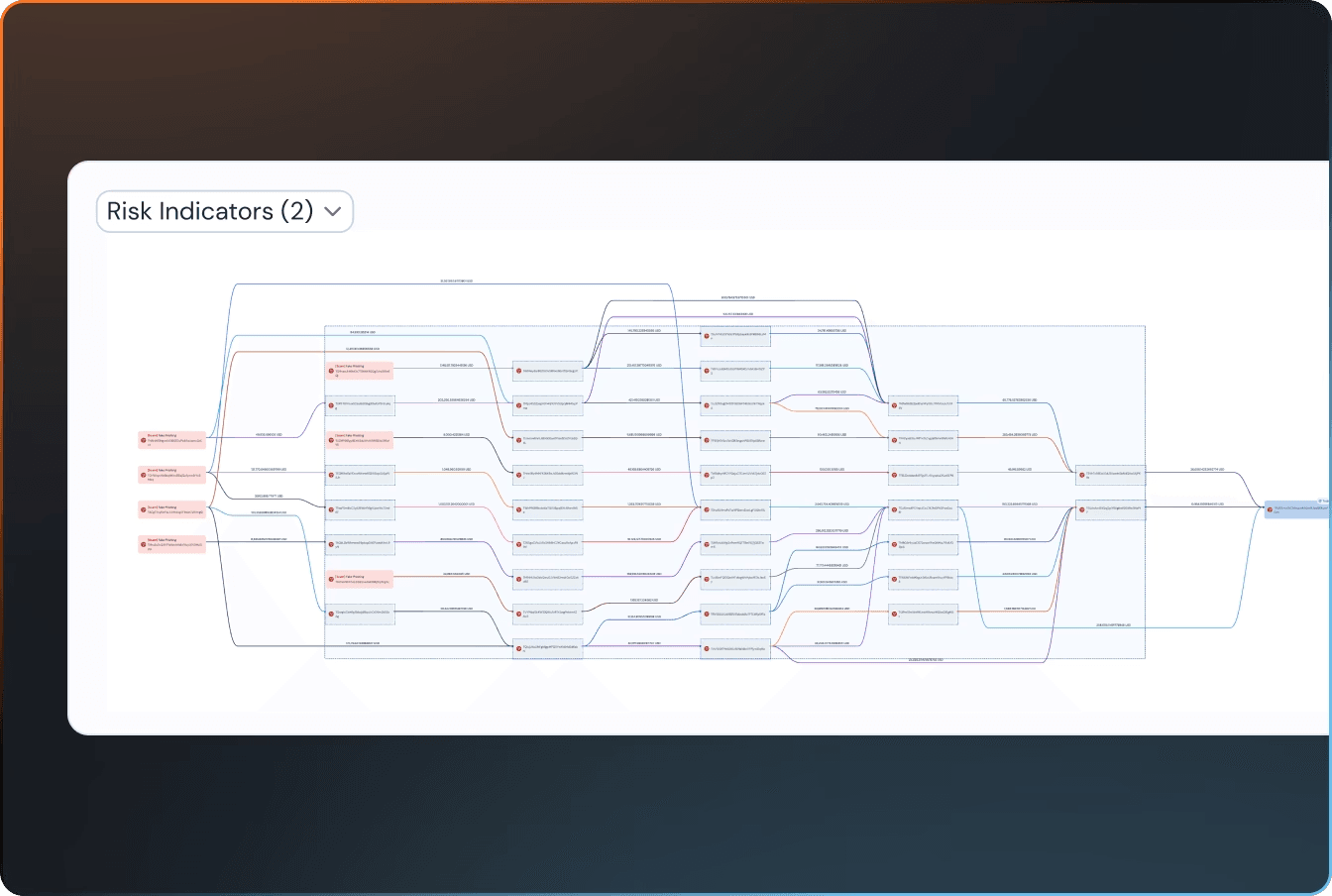
Deterministic rule engines enforce baseline compliance, while behavioral heuristics flag anomalous patterns. For instance, an address receiving fragmented deposits and routing them through non-custodial mixers warrants investigation regardless of existing database labels. Integrated investigation interfaces enable analysts to visualize fund flow topologies, calculate exposure depth, and generate standardized compliance reports.
Output formatting distinguishes enterprise tools from generic block explorers. Regulatory auditors, banking partners, and internal risk committees require standardized metrics detailing alert volumes, resolution times, and policy efficacy. Reporting outputs must remain immutable, reproducible, and strictly tethered to the specific rule version active during the event.
Total cost of ownership calculations incorporate API integration hours, required analyst headcount, policy tuning cycles, and projected downtime impact. Discounted licensing fees frequently mask expenses associated with manual false-positive resolution or unreliable API endpoints. Engineering teams must execute historical transaction logs against shortlisted APIs to measure response latency and alert precision prior to contract execution.
Where Phalcon Compliance Fits for High-Volume Crypto Businesses
Phalcon Compliance targets infrastructures demanding synchronized, high-throughput risk verification at scale. The API suite supports multi-protocol asset flows, high-frequency settlement processing, and dynamic policy execution.
The system architecture supports crypto-native payment gateways, centralized trading venues, digital commerce infrastructures, advertising networks, and decentralized applications requiring instantaneous risk scoring. While institutional custodians maintain specific governance mandates, they face identical technical constraints: risk controls must process asynchronously without blocking legitimate network transfers.
For payment processors, sub-second screening validates incoming transactions against illicit entity databases while preserving user checkout velocities. Centralized exchanges leverage cross-chain deposit and withdrawal monitoring to enforce standardized global AML frameworks. Digital commerce platforms utilize Web3 settlement analytics to filter high-risk counterparties from interacting with proprietary merchant contracts.
Advertising networks deploy address screening to verify publisher fund origins and mitigate commercial liability. Gaming protocols and social networks query on-chain transaction histories to filter Sybil attacks and fraudulent value transfers without degrading client-side rendering. These implementation vectors validate the necessity of low-latency on-chain analytics for transaction-heavy architectures.
For custodian engineering leaders, the evaluation focuses on systemic integration. The Phalcon Compliance suite delivers granular API responses, cross-protocol indexing, configurable rule matrices, and analyst workflows mapped to institutional approval structures. It operates as a deterministic decision layer, enabling compliance teams to execute rapid interventions backed by immutable on-chain evidence.
Implementation Roadmap for Custodian Compliance Teams
Deployment schedules initiate with comprehensive risk mapping, transition into shadowed API testing, and conclude with tracked production metrics. Phased integrations isolate operational friction and facilitate logic tuning prior to mainnet execution.
Initial scoping defines regulatory obligations, internal risk parameters, and specific ledger integration points. Engineering teams map discrete queries to client onboarding sequences, deposit listener services, withdrawal authorization queues, internal treasury routing, and manual wallet recoveries. Each distinct query maps to a specific API endpoint, rule configuration, and downstream operational webhook.
Shadow testing validates logic against historical transaction batches and low-value live settlements. Retroactive analysis establishes baseline alert volumes and identifies gaps in policy logic. Live staging environments measure API latency, endpoint stability, analyst UI performance, and webhook reliability without impacting tier-one client flows. Technical leads correlate system outputs against documented legacy incidents.
The logic tuning phase calibrates alert generation. Compliance personnel adjust minimum fiat thresholds, proximity distances, entity categories, and automated escalation triggers. Operations managers establish strict service level agreements for ticket resolution. Development teams engineer fallback mechanisms handling API timeouts, degraded network performance, and scheduled vendor maintenance windows.
Production monitoring relies on strict telemetry. Essential dashboards track entity coverage ratios, alert precision, false positive percentages, median review duration, automated block volumes, and API latency percentiles. Custodial infrastructure teams conduct monthly retrospective reviews to recalibrate parameters following significant market volatility, major protocol exploits, or structural policy updates.
FAQ: Blockchain Compliance Platform for Custodians
Engineering and compliance units frequently question implementation mechanics, API prioritization, and latency implications. Responses scale based on institutional risk parameters, transactional throughput, and existing infrastructure maturity.
What is a blockchain compliance platform?
It operates as an enterprise software layer mapping pseudonymous on-chain data to real-world risk profiles. Core modules include API-driven address screening, continuous transaction monitoring, heuristic entity attribution, configurable risk logic, and verifiable case management. For custodians, it translates raw block data into actionable, regulatory-grade compliance decisions.
What features should crypto custodians prioritize first?
Integration priorities begin with low-latency wallet screening, continuous UTXO/account monitoring, customizable policy engines, robust heuristic data sets, and secure ledger integrations. These endpoints secure the most vulnerable operational vectors: entity onboarding, inbound deposits, outbound settlement, and latent exposure shifts.
How does wallet screening differ from transaction monitoring?
Screening queries the historical risk profile of a specific address at a discrete timestamp. Monitoring sets up continuous listener services tracking subsequent state changes and asset transfers. Custodial architectures require both mechanisms, as clean addresses frequently interact with compromised smart contracts or illicit entities post-onboarding.
Can compliance tools work in real time without delaying withdrawals?
Yes, provided the vendor architecture supports low-latency RPC calls and the custodian deploys tiered resolution queues. Safe hashes execute programmatically, moderate anomalies trigger asynchronous analyst review, and critical flags initiate automated API blocks. Engineering teams validate these latency limits via load testing against simulated peak network congestion.
How should custodians evaluate data accuracy and false positives?
Validation requires running legacy transaction batches containing known malicious entities and benign commercial flows against vendor APIs. Success metrics calculate attribution accuracy, alert signal-to-noise ratios, exposure trace clarity, and adherence to configured rule logic. Heuristic quality is determined by actionable data precision rather than the nominal count of supported testnets.
Conclusion
Integrated compliance layers operate as fundamental primitives for institutions securing digital assets. Configured correctly, these platforms intercept illicit exposure, minimize operational friction, satisfy auditor demands, and scale alongside cross-chain settlement volumes.
Custodial technology executives must scrutinize compliance APIs using the same load testing and security parameters applied to core cryptographic signing nodes. Effective integrations fuse sub-second screening algorithms, continuous monitoring daemons, granular policy engines, and immutable audit logging. They embed directly into asset pipelines without degrading front-end execution speeds.
Phalcon Compliance aligns with infrastructures where high-frequency asset movements demand deterministic, low-latency risk evaluations. For custodians and adjacent financial platforms, the engineering mandate is precise: deploy automated controls rigorous enough for regulatory auditors, actionable for investigative teams, and performant enough to match on-chain settlement speeds.