Executive Summary
The processing of high-frequency digital asset transactions establishes a new operational baseline for modern financial institutions. For Anti-Money Laundering (AML) teams, mitigating risk is a daily operational requirement rather than a periodic review. Compliance analysts process extensive alert queues, investigate cross-chain transfers, and maintain adherence to shifting global regulatory frameworks. Operating in this environment requires the integration of blockchain analytics tools to convert raw ledger data into verifiable intelligence. By executing suspicious activity monitoring, standardizing fiat-to-crypto risk scoring, and applying automated compliance workflows, compliance officers isolate illicit funds while processing standard retail and institutional transfers. This operational manual details the daily protocols, structured methodologies, and technical procedures utilized by compliance teams to operate crypto compliance software and minimize their institutions' financial exposure.
The Daily Routine: Setting Up for Effective Monitoring
Standardizing a daily operational protocol is necessary for AML analysts managing continuous cryptocurrency transaction flows. Systematic alert triage, fiat and on-chain data correlation, and priority-based entity screening allow compliance departments to allocate operational bandwidth according to exact risk parameters.
Reviewing Overnight Alerts and Initial Risk Triage
The operational shift for a crypto compliance officer begins with clearing the queue of overnight automated alerts. Since digital asset networks process blocks continuously, monitoring systems accrue notifications outside standard business hours. The primary morning task is alert triage. Analysts categorize alerts by severity, applying baseline scoring configurations to filter high-risk indicators from standard network noise. Standard procedure involves querying alerts tied to high-risk jurisdictions, direct interactions with sanctioned platforms, or transaction volume deviations from historical baselines. Systematic triage reduces alert fatigue and allocates investigative hours toward accounts showing verifiable indicators of institutional risk.
Integrating Fiat and On-Chain Data Sources
A core component of routine monitoring involves reconciling on-chain transfers with fiat banking records. Risk often concentrates at the conversion points where digital assets interface with fiat currency. Compliance teams correlate fiat deposit and withdrawal records with the respective blockchain transaction hashes. This integrated tracking provides visibility into the complete lifecycle of funds. If a retail client deposits fiat, executes a conversion to a digital asset, and initiates a transfer to a high-risk external address, the unified dashboard logs the sequence for money laundering topology review. This dual-ledger visibility supports standard risk management protocols.
Prioritizing High-Risk Entity Screening for the Day
After the initial alert triage, AML teams allocate time to entity screening for corporate clients or high-volume retail accounts slated for onboarding. Priority routing relies on quantitative risk matrices that measure counterparty exposure. Analysts run these entities through continuous screening configurations against international watchlists and proprietary databases of flagged addresses. Flagging high-risk accounts early in the shift allows compliance officers to place accounts on administrative hold or request enhanced due diligence (EDD) documentation before executing large-volume transactions, thereby limiting the institution's regulatory exposure.
Step-by-Step Transaction Monitoring (KYT) Workflows
Running Know Your Transaction workflows demands systematic fund tracing across different ledger environments. By mapping specific obfuscation techniques and logging detailed audit trails, compliance officers document suspicious transfers for regulatory reporting and internal compliance reviews.
Tracing Illicit Funds Across Multiple Blockchains
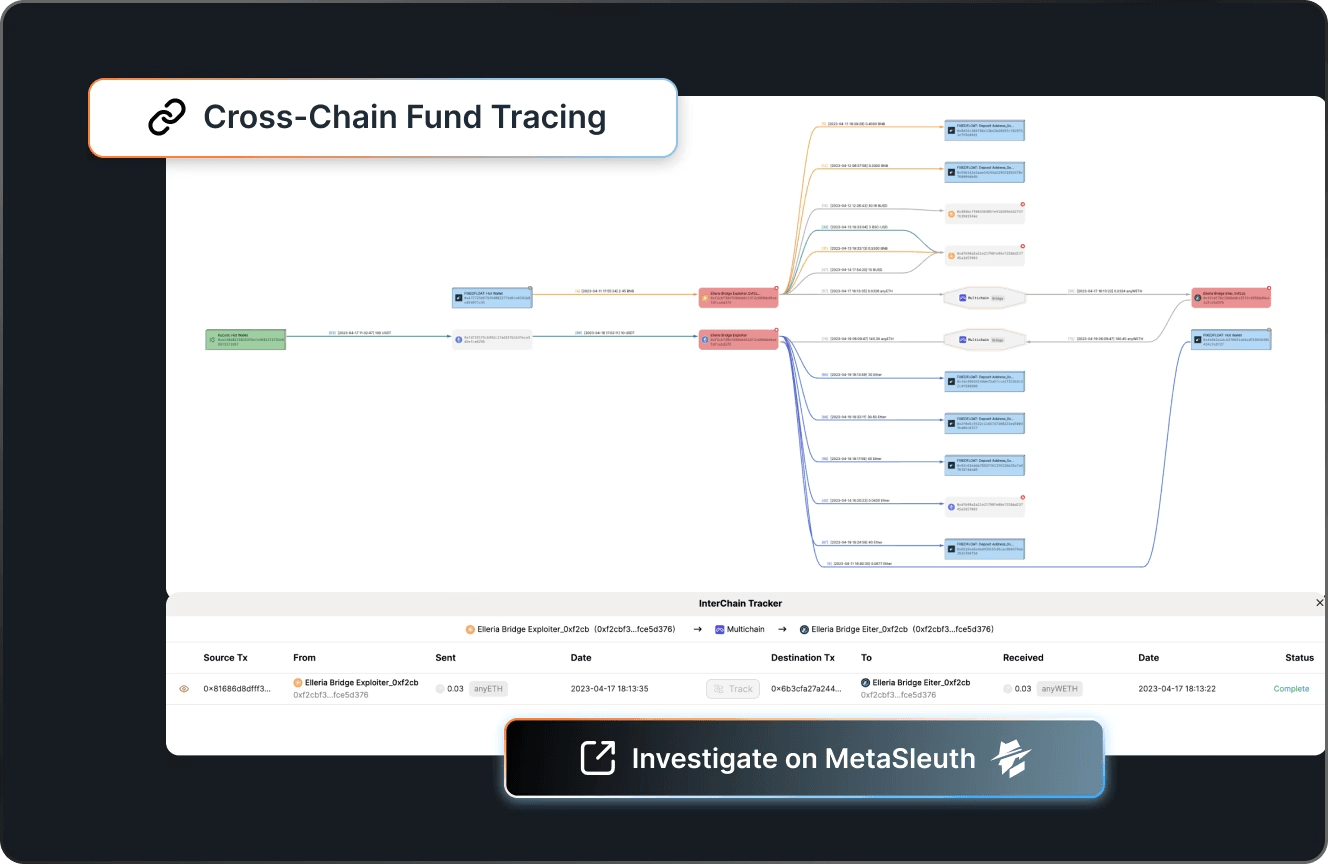
Know Your Transaction (KYT) protocols require exact tracking of digital assets across distinct ledger environments. Entities attempting to obscure transaction histories often route funds through cross-chain bridges and decentralized exchanges. Analysts use blockchain visualization software to map these assets as they move between networks such as Ethereum, BNB Chain, and various Layer-2 networks. The goal is determining the ultimate source of funds (SoF) or destination address. Industry data shows that applying multi-chain tracing techniques improves the identification of original funding sources by 40% compared to single-chain queries [1]. Analysts document these transaction graphs to verify direct or indirect exposure to restricted addresses.
Identifying Mixing Services and Obfuscation Tactics
Daily transaction monitoring includes the detection of asset obfuscation, specifically the routing of funds through cryptocurrency mixers or coinjoin protocols. When system alerts register interactions with mixing contracts, analysts transition from standard monitoring to manual investigative procedures. While utilizing a mixing service does not constitute a regulatory violation in all jurisdictions, it increases the transaction's baseline risk score. Compliance officers review the deposit and withdrawal patterns adjacent to the mixing event for heuristic indicators of structuring. Logging these techniques early serves as a standard trigger for suspending withdrawals and starting detailed forensic tracking.
Documenting the Audit Trail for Suspicious Activity Reports (SARs)
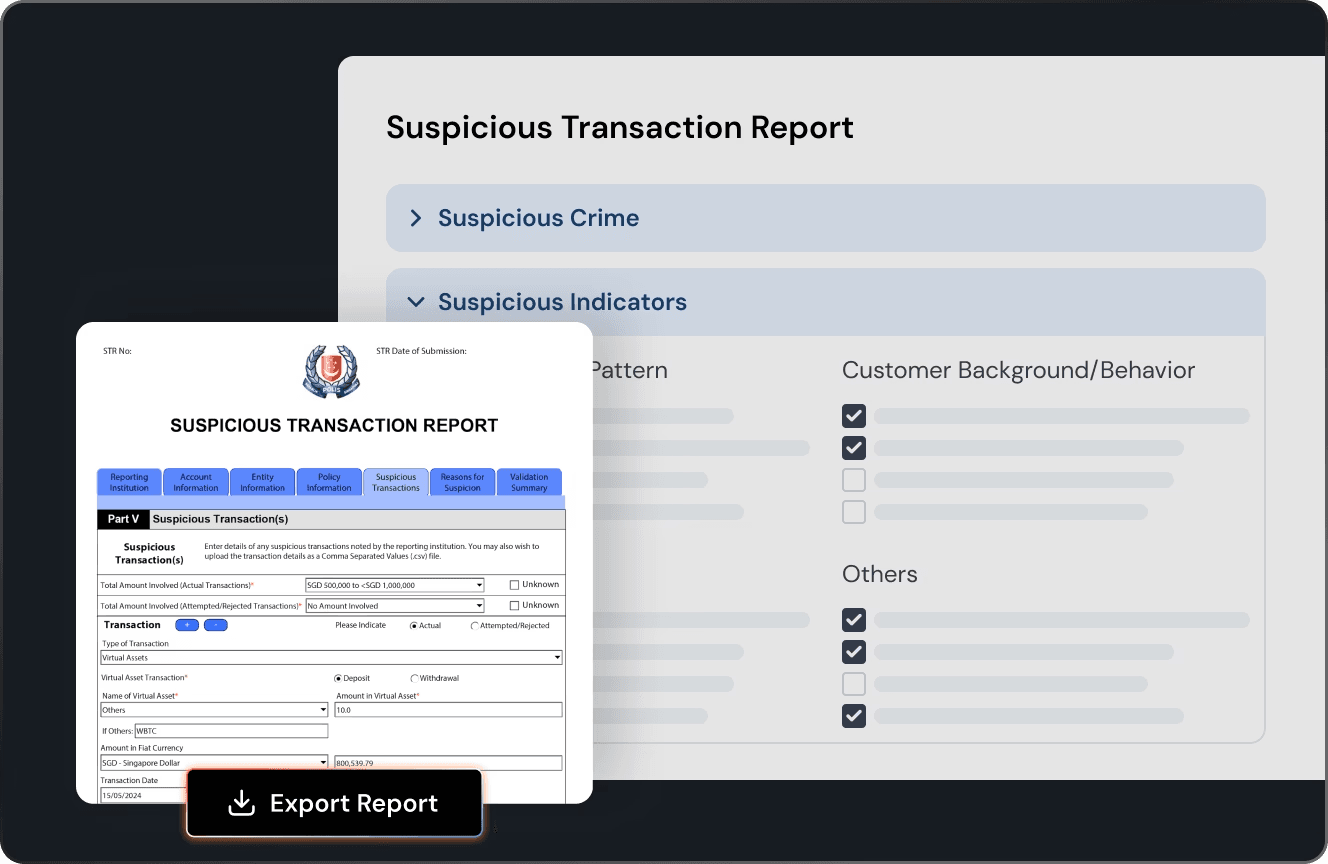
The final output of an on-chain investigation is the drafting of a Suspicious Activity Report (SAR). AML departments must log an exact, time-stamped audit trail of their analytical process. This record contains transaction hashes, entity graphs, exposure percentages, and the chronological timeline of the flagged behavior. Structuring this data is required for regulatory filing and facilitates coordination with law enforcement agencies. Standard compliance platforms enable analysts to export these visual and tabular data points directly, verifying that the justification for freezing an account or submitting a SAR is recorded, defensible, and archived in the central database.
Automating Know-Your-Entity (KYE) and VASP Due Diligence
Implementing automated entity diligence reduces manual processing delays in counterparty risk assessments. Continuous screening against global sanctions lists, dark web exposure databases, and automated freeze configurations ensure digital asset service providers meet regulatory standards while processing standard market transfers.
Evaluating Counterparty Risk Scores in Real-Time
When institutions process transactions with other Virtual Asset Service Providers (VASPs) and institutional liquidity providers, measuring the risk profile of these entities is a standard operational requirement. Know Your Entity (KYE) procedures depend on automated counterparty risk scoring. These systems measure a VASP based on historical exposure to flagged addresses, the parameters of its internal KYC policies, and its registration jurisdiction. By automating this measurement, compliance teams calculate whether to approve, review, or reject incoming transfers from specific platforms. This continuous measurement enforces the institution's risk thresholds without requiring manual approval for every transfer.
Cross-Checking Global Sanctions Lists and Dark Web Exposure
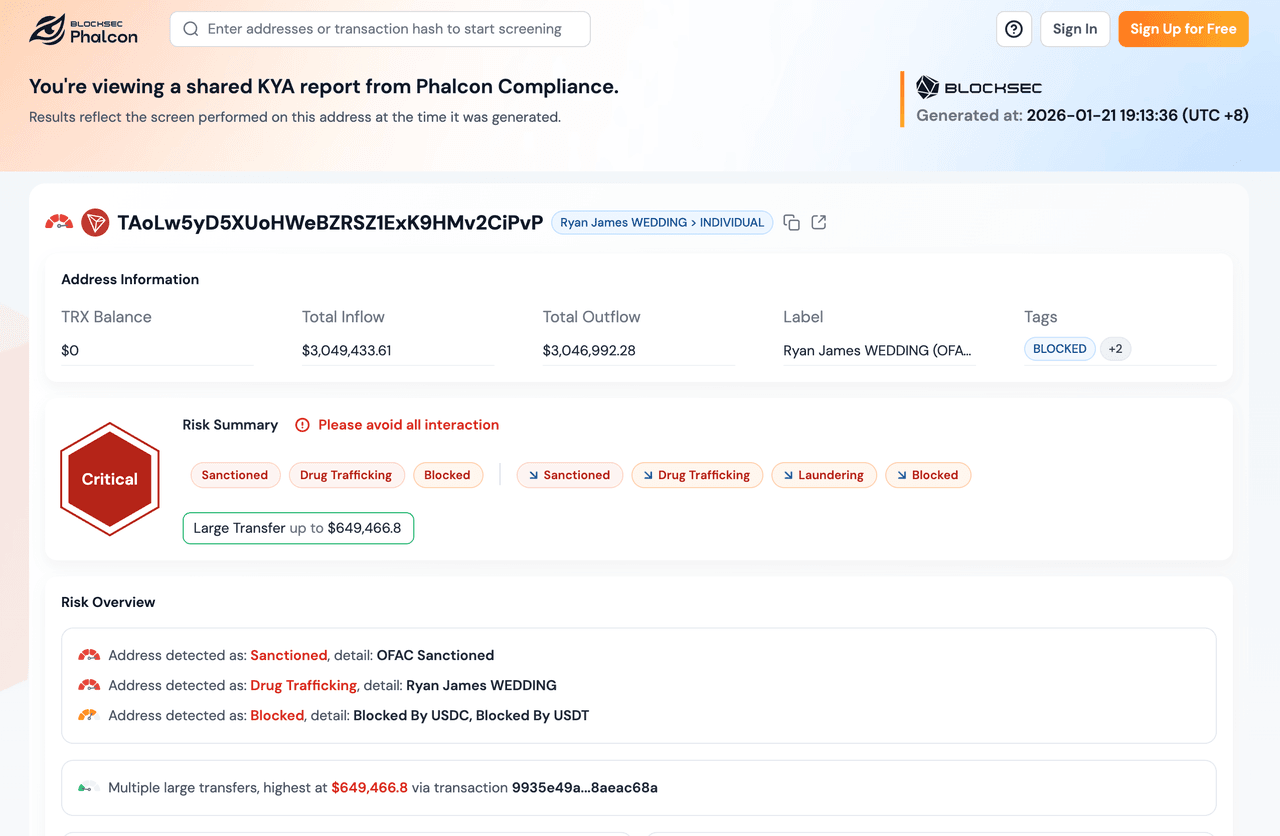
Automated screening is a baseline requirement for compliance with international sanctions programs, including those maintained by the Office of Foreign Assets Control (OFAC). Crypto compliance software queries counterparty addresses and entity names against updated sanctions databases. The software also evaluates indirect exposure to dark web vendor addresses, ransomware payment addresses, and sanctioned state-affiliated wallets. Automating these database queries removes the latency between a regulatory list update and the institution's transaction blocking systems, lowering the probability of processing transfers associated with sanctioned entities.
Establishing Thresholds for Automated Freezes
To handle the processing speed of cryptocurrency transfers, AML departments configure automated thresholds that execute immediate account freezes or transaction rejections. These thresholds follow specific rule sets aligned with the institution's compliance policies. For example, a configuration might specify that any incoming deposit exceeding $10,000 originating from a high-risk jurisdiction with an exposure score above the 90th percentile is automatically routed to a holding wallet. This automated interdiction reduces reliance on manual analysts for immediate blocks, affording the compliance unit time to execute a standard review without the risk of asset flight.
Common Pitfalls in Crypto AML Investigations
Managing cryptographic investigations requires avoiding standard operational errors such as absolute reliance on static risk scores and incorrect categorization of peer-to-peer transfers. Analyzing the technical context of unhosted wallet transactions and adjusting monitoring rules prevent systemic compliance gaps and subsequent regulatory fines.
Over-Relying on Automated Risk Scores Without Contextual Analysis
A standard error in crypto compliance operations is processing automated risk scores without manual verification. While scoring systems filter data, they do not apply contextual reasoning. An address might register a high risk score from indirect exposure to an exploited exchange, when the user was actually a victim of the breach rather than the attacker. Analysts who process alerts based solely on numerical outputs generate high volumes of false positives [2], which consumes operational bandwidth and delays processing for standard retail customers. Experienced analysts treat automated scores as initial indicators, applying manual investigation to verify the technical context of the specific transfer.
Misinterpreting Peer-to-Peer and Unhosted Wallet Interactions
The regulatory treatment of unhosted (non-custodial) wallets and peer-to-peer (P2P) transfers presents operational friction for many compliance departments. A routine misstep is classifying all unhosted wallet transfers as high-risk by default. While P2P networks carry specific risks, retail users frequently operate unhosted wallets for standard self-custody and decentralized application interaction. Compliance officers should bypass blanket restrictions and instead analyze the behavioral parameters of the specific wallet address. Reviewing the wallet's transaction frequency, interactions with decentralized finance (DeFi) smart contracts, and previous counterparties yields a more precise risk metric than penalizing the wallet architecture itself.
Failing to Update Custom Rule Sets Promptly
Cryptocurrency transaction typologies change frequently. Operational friction occurs when compliance departments operate with outdated custom monitoring rules. Parameters that flagged specific money laundering techniques twelve months ago often fail to detect current decentralized mixing protocols or cross-chain bridge routing. AML teams need to schedule standard reviews of their monitoring thresholds, recalibrating rules and integrating new threat intelligence feeds. Running outdated rule sets results in unflagged high-risk transfers and high volumes of irrelevant alerts, which degrades the institution's performance during regulatory audits.
Advanced Tips: Optimizing Your Compliance Operations
Refining compliance operations requires utilizing enterprise-grade toolkits with functional application programming interfaces. Configuring real-time transaction blocking and exporting quantitative risk reports enable institutions to shift from post-transaction monitoring to pre-transaction blocking, lowering institutional risk metrics.
Leveraging API Integrations for Real-Time Transaction Blocking
For precise operational control, compliance departments integrate their analytical software into the institution's transaction execution systems via Application Programming Interfaces (APIs). This technical integration supports real-time transaction blocking. Instead of reviewing transfers post-execution, the infrastructure queries the compliance database milliseconds before broadcasting a transaction payload to the network. If the API returns a flag for sanctions overlap or severe exposure, the transaction is rejected at the execution layer. Implementing solutions from established providers like BlockSec allows institutions to deploy these automated blocks, decreasing the timeframe malicious actors have to execute withdrawals.
Generating Board-Ready Compliance and Risk Reports
The compliance officer's scope of work includes reporting institutional risk metrics to executive management. Standard compliance software includes reporting modules that convert on-chain data points into quantitative business metrics. These reports track suspicious activity volumes, false positive rates, and total capital exposure to specific risk categories. Formatting raw blockchain analytics into standardized intelligence reports ensures the executive board reviews an accurate representation of the institution's compliance status and the operational efficiency of the internal monitoring infrastructure.
Evaluating and Upgrading Your Enterprise-Grade Toolkit
As digital asset transaction volumes scale, operating with legacy compliance infrastructure causes measurable processing delays. Financial institutions must audit their enterprise-grade toolkits against current transaction throughput requirements. Migrating to platforms that support exact historical data retention, deterministic heuristic mapping, and API reliability is a standard operational necessity. Engaging with security and compliance providers like BlockSec provides internal AML teams with precise fund tracing and threat intelligence data, shifting the compliance department from a manual review center to a scalable component of the institution's operational security.
FAQ: Navigating Day-to-Day Operational Challenges
Resolving standard operational friction assists compliance departments in standardizing internal protocols. From defining the schedule for rule calibrations to processing false positives, documented methodologies keep on-chain workflows auditable and resilient during external regulatory reviews.
How often should compliance teams update transaction monitoring rules?
Transaction monitoring rules require dynamic review, with full threshold audits scheduled at least quarterly. Minor configuration changes and score recalibrations should occur continuously based on updated regulatory publications, new threat intelligence feeds, or verified changes in standard network transaction volumes. Routine rule maintenance prevents alert degradation.
What is the most efficient way to handle false positives in crypto screening?
The standard approach relies on a continuous feedback loop. Analysts manually tag and categorize false positives inside the compliance interface. Submitting this qualitative data back into the database allows the algorithmic models to adjust scoring weights. Configuring whitelist protocols for verified institutional counterparties also limits redundant alert generation.
How do we clearly prove on-chain compliance workflows to external auditors?
Verifying internal workflows requires exact documentation and immutable audit trails. Operating compliance software that automatically records the timestamp, analyst ID, and specific queries executed for every alert handles this requirement. Exporting SAR data formats and detailing a documented internal policy for risk threshold enforcement provides auditors with the necessary verification data.
Conclusion
Operating crypto compliance software on a daily basis depends on the alignment of technical infrastructure and standard analytical procedures. For AML analysts and compliance officers, the daily shift involves quantitative risk triage, deterministic fund tracing, and automated entity screening. By mapping standard operational errors and migrating to enterprise-grade compliance infrastructure, compliance departments manage the technical requirements of the digital asset sector. The precise configuration of these tools satisfies current regulatory standards while establishing the operational baseline necessary for processing institutional cryptocurrency transactions.