Executive Summary
For financial officers and procurement heads managing digital asset operations, stabilizing the operational expenditure associated with anti-money laundering (AML) protocols is a baseline requirement. As transaction volumes increase, enterprise leaders encounter a structural resource allocation decision: whether to construct proprietary compliance architecture or to integrate specialized vendor software. The fiscal impact of this determination goes beyond standard licensing comparisons and internal payroll allocations. Establishing automated transaction monitoring and connecting to updated blockchain threat intelligence feeds are requisite steps for sustaining platform availability and avoiding regulatory enforcement actions.
This evaluation presents a targeted cost-benefit model to assess the return on investment (ROI) when deciding between internal system development and enterprise infrastructure procurement. By detailing the engineering overhead of node maintenance, the delay in proprietary database updates, and the processing metrics of established compliance platforms, decision-makers can formulate procurement strategies that allocate capital efficiently and support regional compliance standards.
The Financial Reality of Crypto Risk Management
Assessing the fiscal footprint of digital asset compliance requires examining metrics beyond base software licensing. The overhead of manual transaction audits, the onboarding friction caused by rigid security parameters, and the legal liabilities associated with enforcement actions define the actual operating costs of a compliance department.
Hidden Costs of Manual Review and Legacy Operations
Internal teams relying on manual analysts to verify blockchain flows face clear scaling limitations. As trading platforms expand their user base, the volume of incoming and outgoing asset transfers predictably exceeds the processing bandwidth of standard risk desks. Accounting departments frequently underestimate the cumulative cost of headcount expansions. Sustaining a unit of compliance analysts to investigate daily flagged addresses requires a high baseline operating budget. Additionally, manual heuristic analysis often fails to identify layered transactions across multiple liquidity pools, resulting in undocumented compliance gaps. Internal tracking metrics indicate that operations dependent on manual address verification allocate significantly higher payroll budgets to compliance over a multi-year cycle compared to automated architectures [1].
The Operational Friction Between Risk Controls and User Experience
Sustained platform activity depends on straightforward onboarding procedures and consistent transaction settlement times. However, internally developed risk parameters often generate processing bottlenecks. When a proprietary engine fails to distinguish between standard retail deposits and structurally complex transfers accurately, it routinely suspends accounts or places funds in a manual review queue. This operational friction directly suppresses platform revenue. Elevated false-positive rates delay transactions for institutional participants and retail traders alike, causing quantifiable drops in daily active user metrics and lowering overall transaction conversion ratios.
Calculating the Impact of Regulatory Fines vs. Tech Investment
The final liability in under-provisioned compliance architecture is regulatory intervention. Financial oversight committees globally enforce predefined financial penalties for platforms that process illicit capital flows. These enforcement actions carry specific financial detriments that impact quarterly earnings. When evaluating the capital required to license enterprise compliance software against the statistical probability and defined cost of a compliance failure, the payback model becomes clearer. Allocating budget to structural monitoring software represents a calculable risk mitigation strategy compared to resolving the legal and operational deficits of a formal enforcement action.
Analyzing the True Cost of Building In-House Systems
Constructing a proprietary risk engine involves high upfront capital requirements and a continuous allocation of engineering hours. Maintaining data parsers across multiple blockchain networks and addressing the indexing delays associated with new obfuscation techniques transform internal builds into complex operational burdens.
Initial Capital Expenditure and Engineering Resource Drain
Initiating internal development dictates the assembly of a specialized technical unit experienced in blockchain data indexing, distributed database management, and transaction heuristics. The initial capital expenditure (CAPEX) required to hire and retain dedicated node engineers and data analysts is substantial. Instead of assigning development hours to core product offerings and feature optimization, technical teams are redirected to build underlying security parsers. This reallocation of engineering hours limits product iterations and represents a direct opportunity cost for the engineering department.
Ongoing Maintenance of Complex Blockchain Node Infrastructure
Procuring accurate on-chain data necessitates operating node infrastructure across various blockchain networks. Each protocol relies on specific client architectures, consensus variables, and upgrade schedules. Running these multi-chain nodes creates a recurring engineering overhead. When a network executes a hard fork or transitions its consensus model, internal developers must modify proprietary indexing scripts to avoid missing block data. The monthly server fees for full nodes, coupled with the engineering hours spent resolving database synchronization errors, frequently push infrastructure spending past original budget estimates [2].
The Latency in Internal Threat Intelligence Updates
On-chain obfuscation methods and smart contract exploitation techniques change regularly. Entities attempting to launder funds deploy updated routing contracts, leverage decentralized finance (DeFi) liquidity pools, and rotate addresses associated with specific marketplaces. A localized internal engineering team faces practical limits in indexing every newly identified address across global jurisdictions. This latency in threat identification leaves internal models temporarily blind to active laundering strategies. By the time a proprietary database identifies and tags a new malicious contract, the associated funds have often completed their transfer through the platform's liquidity pools.
ROI Dynamics of Enterprise Crypto Compliance Tools
Migrating to established vendor architecture shifts variable development cycles into defined operational expenses. Integrating API-driven access to updated entity databases and deploying high-volume automated screening procedures protects internal capital while stabilizing compliance spending.
Predictable OPEX Pricing vs. Uncapped R&D Expenses
When procurement teams review digital asset compliance tools, comparing fixed pricing structures against internal development projections is a primary step. Software-as-a-Service (SaaS) models convert variable internal research and development allocations into predictable operational expenditures (OPEX). Financial officers can forecast compliance budgets accurately by analyzing tiered API request limits and projected transaction volumes. This fiscal predictability enables accurate margin planning and reduces the likelihood of emergency budget requests triggered by internal server failures or the need to hire specialized technical contractors abruptly.
Instant Access to Real-Time Sanctions and Exploit Databases
Dedicated compliance software providers allocate resources to map blockchain ecosystems continuously. Integrating an established monitoring tool provides a platform with API access to synchronized datasets containing restricted entities, documented smart contract exploits, and identified phishing operations. The return on investment is realized through the reduction of internal database maintenance overhead and the immediate application of global compliance lists, ensuring that platform operators evaluate inbound transfers against current industry threat data.
Automating Deposit and Withdrawal Tracing at Scale
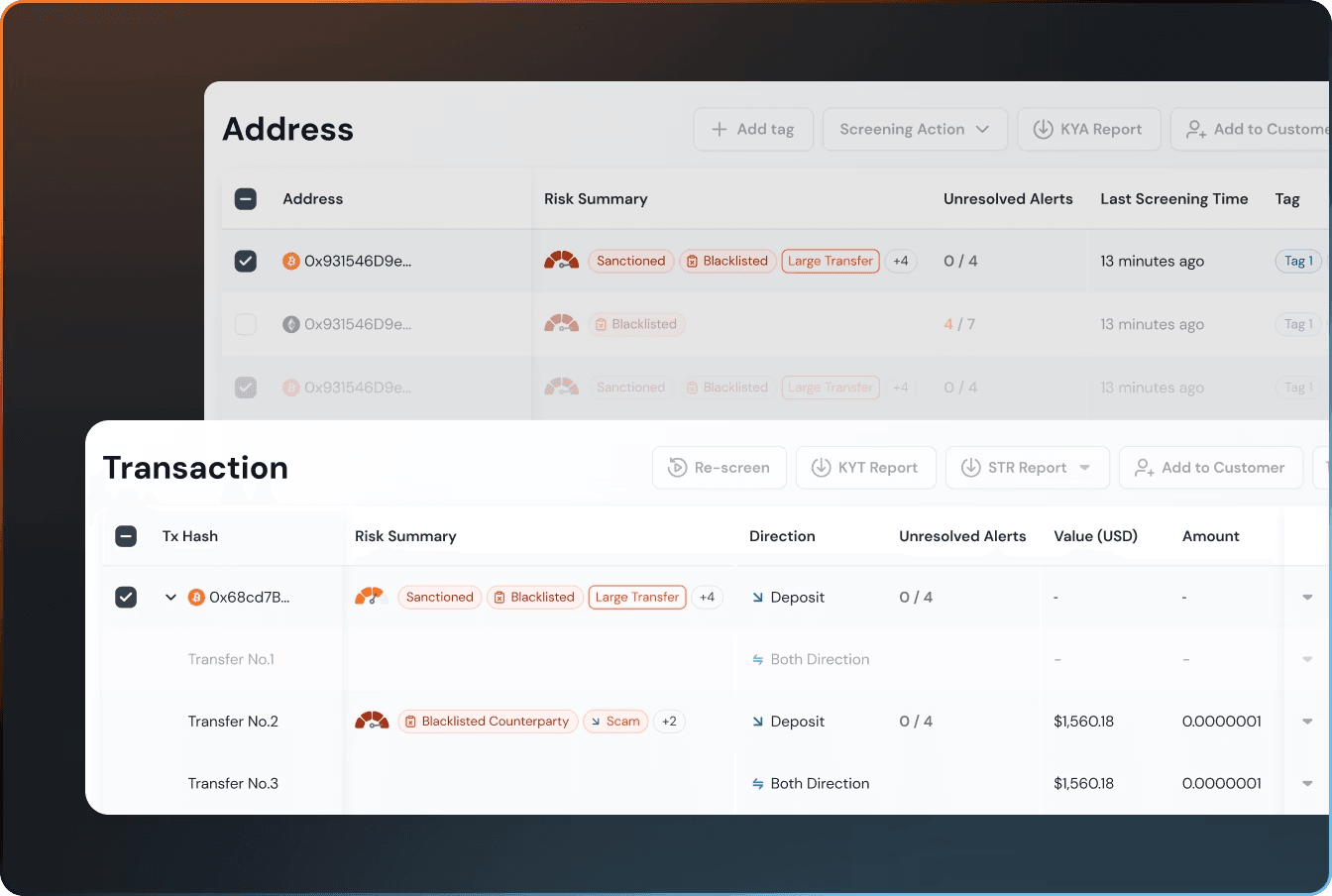
Managing high transaction limits is an operational necessity for digital asset exchanges. Specialized vendor infrastructure is configured to process concurrent API queries with minimal processing latency. These automated screening parameters evaluate the historical inputs of incoming transfers, assigning risk weightings based on defined heuristic models and behavioral tracking. Automating the initial review removes the manual queuing process, enabling the trading platform to accommodate high throughput peaks without directly increasing the payroll allocation for compliance personnel.
Build vs. Buy: A Comparative Cost-Benefit Breakdown
Evaluating proprietary development against vendor procurement reveals clear operational differences in deployment timelines. Trading venues managing high volumes require scalability, low false-positive rates, and measurable workflow improvements that are difficult to replicate internally within a standard quarter.
Time-to-Market (TTM) and Business Opportunity Costs
Developing a baseline internal monitoring system requires dedicated development cycles, typically spanning several quarters. During this integration phase, the organization must either restrict processing limits or accept elevated exposure to unscreened transactions. In contrast, connecting a standard vendor API can be completed within standard sprint cycles. Shortening the time-to-market directly supports the rollout of new regional operations, allows the listing of additional tokens, and facilitates institutional onboarding faster than relying on the deployment schedules of internal technical teams.
Scalability Under Pressure: Handling High-Volume Periods
During periods of market fluctuation, daily active user interactions and subsequent transfer requests experience sudden throughput increases. Internally hosted infrastructure, unless heavily over-provisioned with backup servers, often experiences system degradation under these concurrency loads, causing processing delays. Enterprise-focused compliance vendors rely on horizontally scaling cloud architectures configured to manage throughput variations while maintaining query response times. The commercial advantage lies in continuous transaction processing during high-volume trading windows, which directly correlates to fee generation.
Accuracy, False Positives, and Operational Efficiency Gains
Precision determines the efficiency of a compliance desk. Internal models relying exclusively on basic address blacklists generate an unmanageable volume of false positives. Each flagged, but legitimate, transaction requires an analyst to review the block explorer manually, increasing processing times. Dedicated vendors configure their screening algorithms using broad historical datasets, applying statistical modeling to adjust risk thresholds. Lowering the false positive rate from 15% to 2% delivers a measurable workflow improvement, enabling analysts to investigate complex transaction patterns instead of clearing standard operational alerts.
Case Study: Overcoming Complex Transaction Risks at Scale
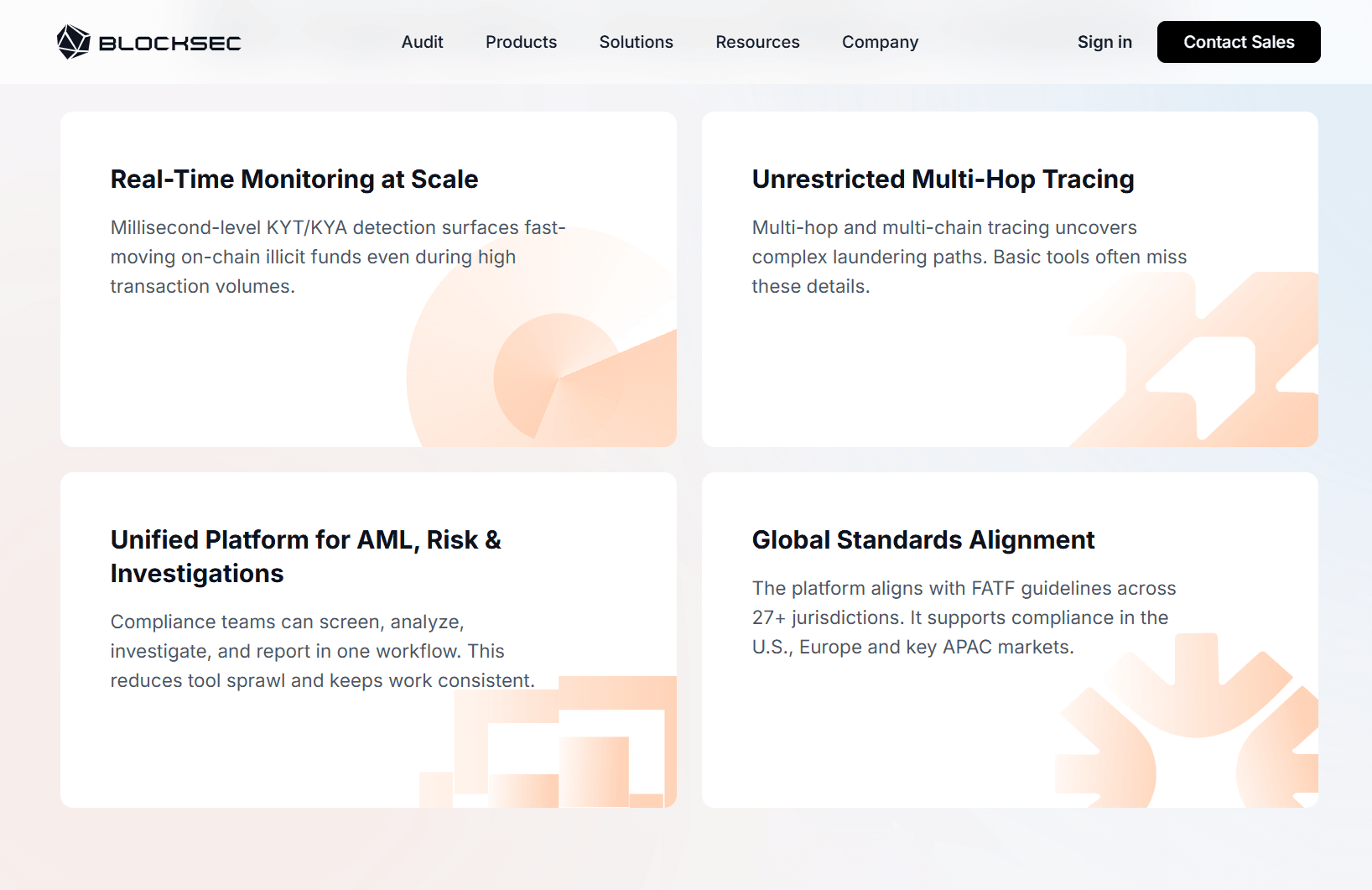
Deploying structured compliance infrastructure upgrades the processing standards for global payment platforms. Integrating specific vendor technology like BlockSec resolves intricate deposit routing issues and limits withdrawal vulnerabilities while maintaining targeted settlement speeds.
Solving Complex Deposit Routing (Stolen Protocols & Sanctioned Addresses)
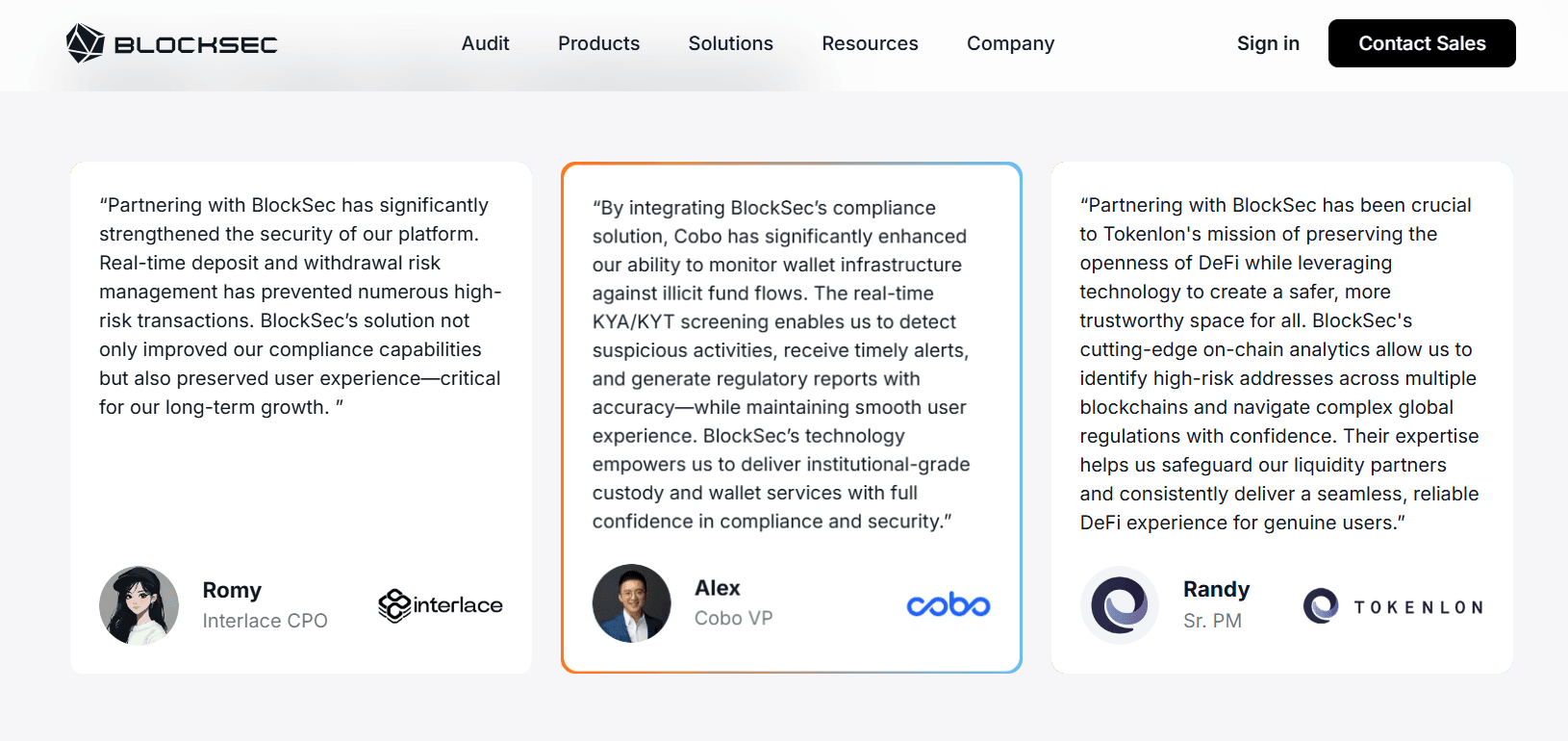
Interlace, a cryptocurrency payment processor, issues 8 million payment cards and handles a baseline $1 billion to $2 billion in annual processing volume. Before updating their architecture, the organization encountered friction with complex deposit verifications. Manual procedures were insufficient for mapping funds routed through obfuscation contracts, decentralized exchanges, and restricted jurisdictions. This opacity in fund origin created compliance liabilities. By connecting to BlockSec, Interlace secured automated tracking for the complete transaction history of incoming deposits. The system enabled the immediate rejection of flagged transfers at the protocol level, isolating the platform's liquidity pools from documented threat vectors.
Mitigating Unknown Withdrawal Risks Automatically
Securing outgoing capital requires the same level of verification as incoming deposits. Interlace previously dealt with destination ambiguity when processing user withdrawals. Without automated address verification, processing daily outbound requests carried the risk of routing platform funds to undocumented smart contracts or active phishing addresses. BlockSec implemented an automated destination risk framework. The system evaluated the target address for documented exploits, contract anomalies, and interactions with restricted entities in milliseconds. This verification process ensured outbound liquidity was directed only to verified and secure wallet addresses.
Achieving Stable Operations on $1B+ Annual Processing Volume
The primary operational hurdle for Interlace was balancing rigorous AML checks with the expected speed of cardholder settlements. Heavy manual intervention cycles were causing settlement delays and increasing user support tickets. Integrating the BlockSec architecture resolved this processing bottleneck. Relying on automated, rule-based screening protocols, Interlace removed the manual holds that delayed settlements. The deployment yielded stable operational metrics: despite managing over $1 billion in transaction volume across 8 million active cards, the payment processor recorded no documented compliance breaches. This practical integration highlights the structural ROI of utilizing established compliance frameworks over maintaining localized parsers [3].
Procurement FAQ: Evaluating Compliance Infrastructure
Procurement teams must assess vendor agreements by modeling payback timelines and identifying standard integration requirements. Measuring how automated architecture influences onboarding rates and general transaction throughput remains essential for calculating long-term software ROI.
How do we calculate the payback period for third-party compliance software?
Determining the payback period involves evaluating engineering cost avoidance, payroll stabilization, and revenue retention. First, calculate the total CAPEX of internal development, including specialized engineering salaries, multi-chain node hosting, and database management. Next, measure the stabilized headcount requirements enabled by automated alert triage. Finally, project the revenue preserved by avoiding manual processing delays and mitigating potential enforcement fines. Deducting the annual enterprise license fee from these combined operational savings typically reveals a defined payback period within standard fiscal quarters for high-volume processors.
What are the standard integration costs of API-based risk solutions?
Although integrating an API endpoint requires fewer engineering hours than building a custom indexing engine, procurement must factor in standard integration overhead. This includes assigning backend developers to connect internal order matching systems with the external risk API. There is also a required testing period where the automated system operates parallel to existing workflows to adjust specific risk parameters and scoring thresholds. These integration phases require temporary resource allocation, but they constitute a localized, non-recurring cost when compared to the ongoing maintenance cycles of internal parsers.
How do automated tools impact user onboarding and transaction conversion rates?
Utilizing automated screening architecture demonstrates a direct correlation with improved processing metrics. By executing risk queries within milliseconds, verified users encounter minimal latency during initial deposits, fiat withdrawals, or card authorizations. Improved screening accuracy reduces false positives, ensuring that standard retail operations and high-volume traders avoid unnecessary account restrictions. Consequently, exchanges operating with automated compliance feeds record stabilized transaction conversion rates, improved user retention, and optimized lifetime value (LTV) metrics per account.
Conclusion
Modern fiscal and operational strategies mandate a balance between capital protection and scalable processing limits. Technical evaluations consistently indicate that procuring specialized enterprise compliance tools offers stronger operational stability than relying on localized, in-house systems. Transitioning to defined OPEX models, accessing maintained threat intelligence databases, and deploying established vendor infrastructure like BlockSec provides trading platforms with the necessary tools to address complex transaction monitoring. By reducing the friction between AML requirements and transaction settlement speeds, digital asset operators can process high volumes while sustaining precise compliance standards.