The year 2024 can rightly be seen as the inaugural year of BTCFi. While Bitcoin’s market cap surpassed the trillion-dollar mark back in 2021, the development of DeFi within the Bitcoin ecosystem lagged behind other blockchains. For much of its history, Bitcoin was primarily regarded as a store of value, often left dormant in cold wallets.
However, early 2024 marked a turning point. BRC20, ARC20, and Rune assets sparked significant interest, and Bitcoin Layer-2 solutions experienced explosive growth. By May, the rise of Bitcoin staking led to the emergence of a growing number of BTC-wrapped assets, unlocking Bitcoin's liquidity. This shift expanded opportunities for Bitcoin holders, enabling greater liquidity, enhanced utility, and access to higher yields—all of which quietly laid the foundation for BTCFi.
The use of BTC-wrapped assets in staking, lending, and cross-chain arbitrage presents the potential for substantial returns. However, these opportunities also bring inherent security risks. The crucial question arises: what are the primary security risks associated with BTC-wrapped assets, and how can they be effectively mitigated?
Understanding Depegging Risk in BTC-Wrapped Assets
BTC-wrapped assets, such as WBTC or FBTC, must maintain a 1:1 or greater BTC reserve ratio to ensure user confidence and maintain their peg. Transparency in these underlying reserve assets is paramount. Many projects now publish proof of reserves (PoR) on their official websites, which is a positive step towards accountability. However, some only disclose total reserves without sharing the specific addresses list, while others may not update their PoR timely, making it harder for users to independently verify the data.
Projects like WBTC and FBTC enhance transparency by publishing their PoR through Chainlink, a more objective and robust method that involves independent third-party verification of reserve data. This integration with Chainlink Proof of Reserves (PoR) significantly bolsters trust and reliability.
BlockSec's Solution: Address Ownership Verification API for Enhanced PoR
BlockSec provides an Address Ownership Verification API that enables projects to conduct Proof of Reserves (PoR) on third-party platforms with verifiable ownership. This solution has been adopted by various projects. For example, FBTC leverages BlockSec's API as its data source to publish PoR on the Chainlink platform in a transparent, automated, and real-time manner. This ensures that the reported reserves are not only accurate but also consistently updated and independently verifiable.
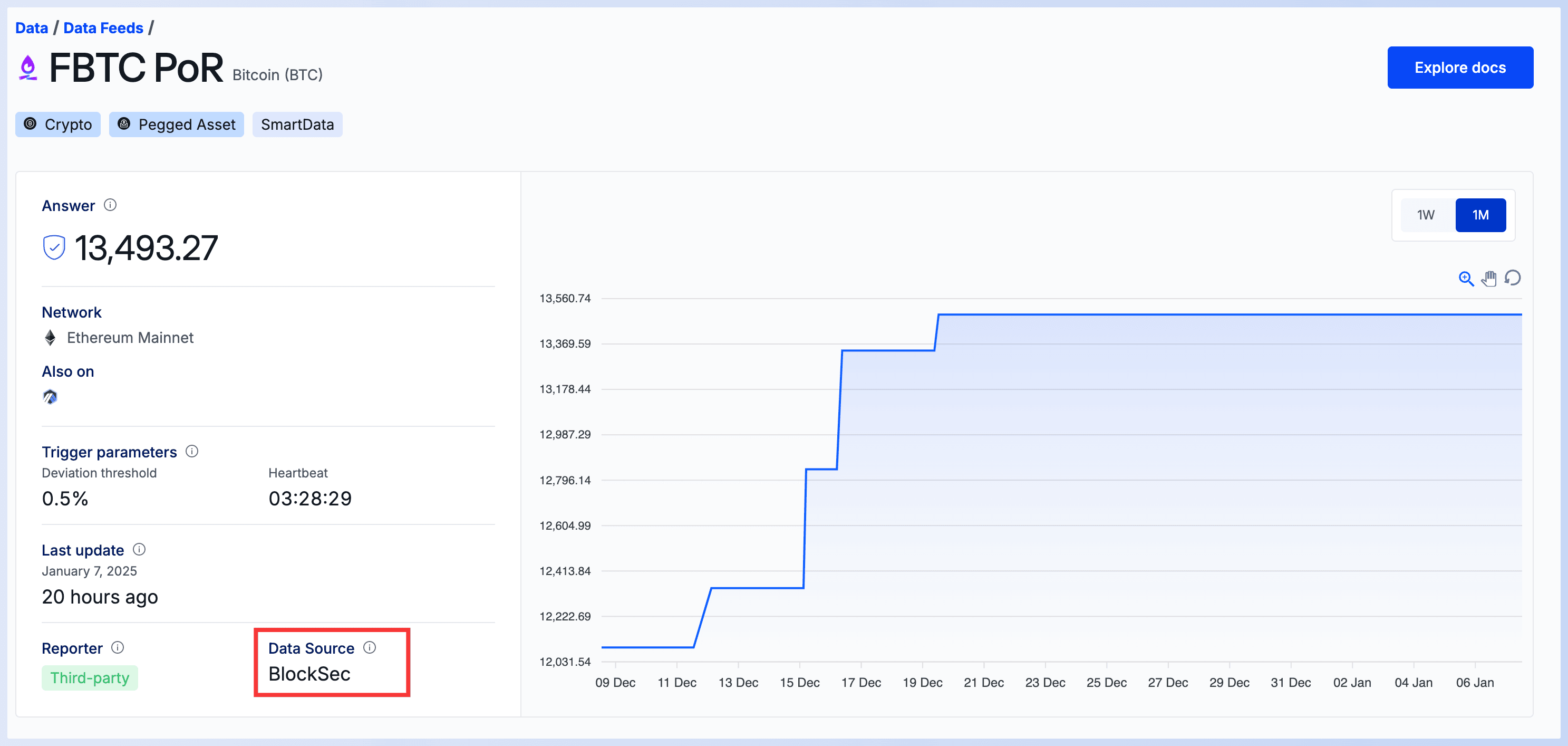 🔗 https://data.chain.link/feeds/ethereum/mainnet/fbtc-por#operator-galaxy
BlockSec's Solution: Real-time Reserve Ratio Monitoring with Phalcon Security
Thanks to the advanced monitoring capabilities of BlockSec Phalcon Security, we are able to offer a comprehensive PoR API and real-time reserve ratio monitoring. Phalcon Security facilitates real-time monitoring of asset movements and constructs an intricate address relationship network for precise verification. It allows for accurate tracking of both the quantities of underlying assets and BTC-wrapped assets across various networks.
Furthermore, Phalcon Security not only verifies the quantities of assets but also sends immediate alerts and triggers automated responses when the amount of locked BTC falls below the combined total of wrapped assets across different blockchains. This proactive approach effectively mitigates the risk of de-pegging, providing an essential layer of security for BTCFi protocols.
Mitigating Cross-Chain Risks in BTCFi Transactions
In the mapping and creation process of cross-chain assets, vulnerabilities are often exploited. For example, a common attack vector involves a user initiating a deposit transaction on the Bitcoin network, but the amount of locked BTC does not change, yet BTC-wrapped assets are successfully minted on the target chain. This highlights a critical need for robust cross-chain monitoring to preemptively address such sophisticated risks.
BlockSec's Solution: Advanced Cross-Chain Monitoring with Phalcon Security
BlockSec Phalcon Security supports real-time monitoring and automatic reconciliation of all cross-chain transactions. Beyond the fake deposit issue mentioned above, it also manages scenarios including arbitrary minting, double-spending, inconsistencies in deposit amounts, and delays in cross-chain minting/withdrawal. Upon detecting any anomalies, alerts are promptly sent through selected channels to the relevant personnel, and simultaneous automated response measures are triggered to prevent potential losses.
In traditional cross-chain monitoring solutions, losses may have already occurred by the time a depegging event is detected. However, Phalcon Security offers more granular monitoring configurations, backed by a team with the expertise to address all risk points and execute the necessary customized developments. This capability enables real-time monitoring of cross-chain processes, ensuring immediate detection of Burn/Lock transactions on the source chain or Mint transactions on the target chain. Our collaboration with FBTC exemplifies Phalcon Security's ability to swiftly identify risks, offer monitoring recommendations, and develop tailored cross-chain monitoring solutions.
Addressing Smart Contract Risks in BTC-Wrapped Asset Operations
The security of smart contracts on other chains that utilize BTC-wrapped assets for cross-chain and wrapping operations is absolutely crucial. Although these contracts typically undergo rigorous code audits, they may still harbor zero-day vulnerabilities, along with risks introduced during dynamic processes such as bug fixes, contract upgrades, and configuration modifications. Continuous vigilance is required to protect against these evolving threats.
BlockSec's Solution: Proactive Smart Contract Monitoring with Phalcon Security
BlockSec Phalcon Security conducts real-time monitoring of transactions as early as the Mempool stage. By analyzing over 200 clearly defined attack characteristics, it detects attack transactions and promptly generates countermeasures. It implements a front-running strategy to ensure that the system-generated response transactions are prioritized on the blockchain over the attack transactions, effectively blocking attacks and achieving zero losses. This proactive defense mechanism is critical for maintaining the integrity of BTCFi protocols.
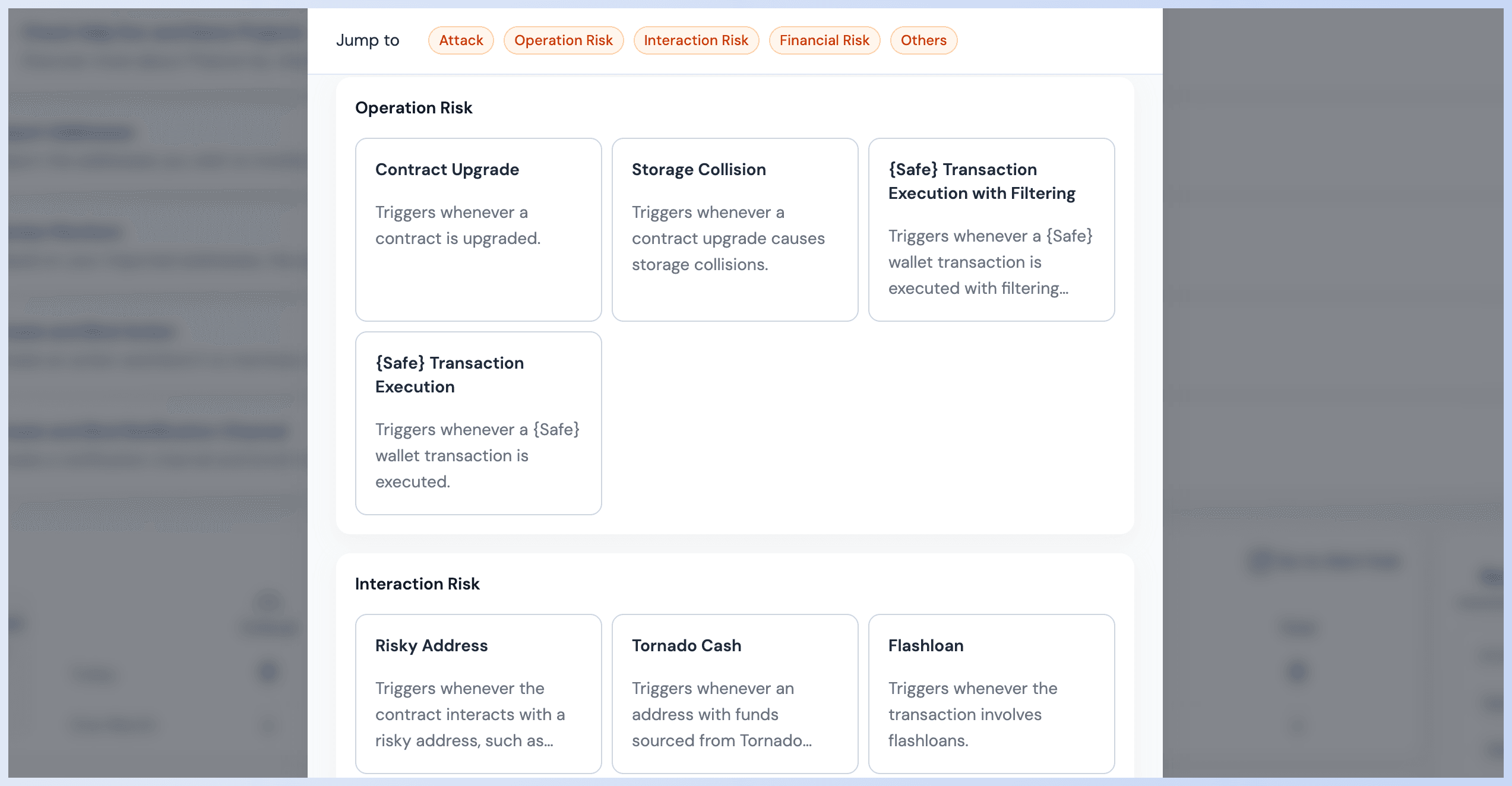
Beyond attack risks, Phalcon Security also covers operational risks, interaction risks, and financial risks, providing comprehensive security protection for protocols. Its robust framework ensures that all facets of smart contract interactions are continuously monitored and secured, setting a new standard for BTCFi security.
Partner with BlockSec for Unmatched BTCFi Security
BlockSec Phalcon Security is an invitation-only SaaS platform, accessible only to invited users who prioritize top-tier blockchain security.
Interested users can schedule a demo to learn more about the product's features and have the opportunity to discuss customized security solutions with our security experts. Our team is dedicated to helping your BTCFi project navigate the complexities of decentralized finance securely.
- Learn More about Phalcon Security: https://blocksec.com/phalcon/security
- Read More on Our Blog: https://blocksec.com/blog