As autumn arrives with pleasantly cooler weather, BlockSec is excited to share its travel itinerary for September. Come meet us: 🙌
🇸🇬 Singapore
During Token 2049 (Sept 10–15), BlockSec will visit the Lion City to connect with Web3 builders exploring new frontiers in crypto.
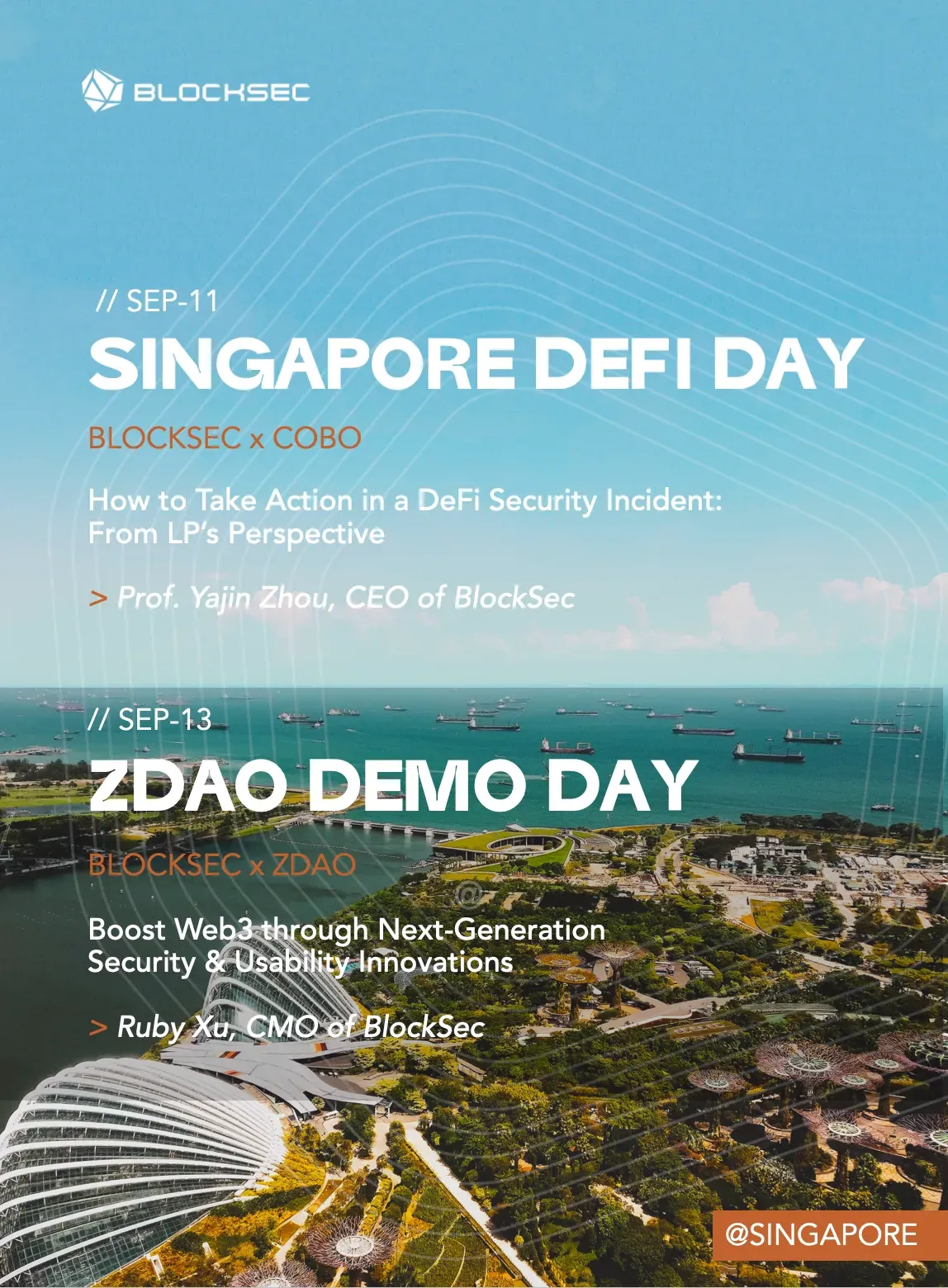
📍 Sept 11, 2PM — OGBC
BlockSec CEO Professor Yajin Zhou will present at Cobo’s “Singapore DeFi Day” event, sharing how BlockSec uses exclusive attack interception tech (BlockSec Phalcon) to help LPs withdraw funds promptly during incidents.
This supports the “DeFi Emergency Bot” recently launched in partnership with Cobo. [See more details]
🔗https://lu.ma/singaporedefiday
📍 Sept 13, 2PM — Singapore Management University
BlockSec CMO Ruby Xu will speak at a ZDAO — Zhejiang University alumni event, discussing how BlockSec productizes their front tier techniques to strengthen security & usability in Web3.
🇩🇪 Berlin
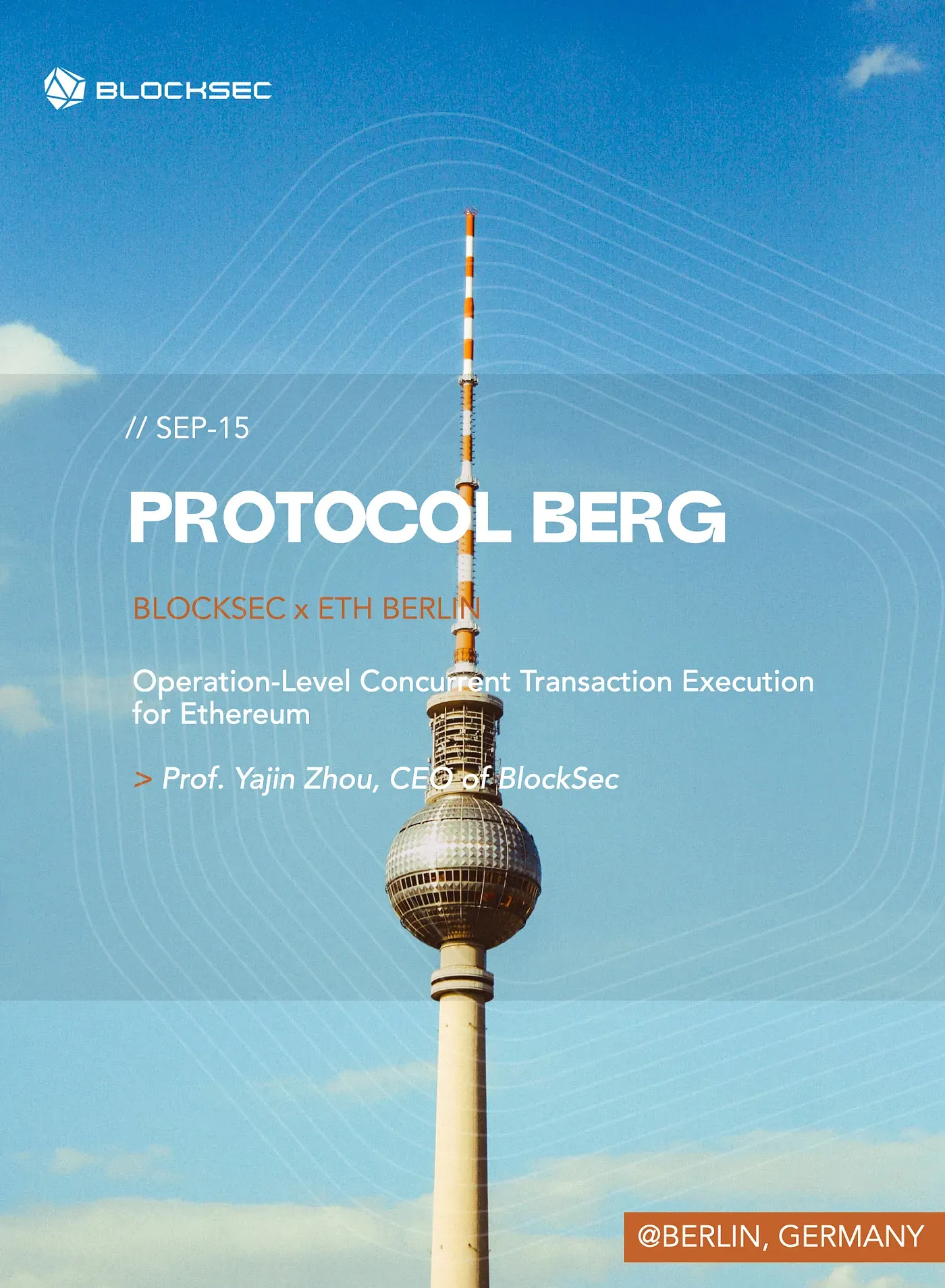
📍 On Sept 15, Berlin
Professor Yajin Zhou is invited to Protocol Berg, ETH Berlin’s flagship technical conference, to share the latest research on “Operation-level Concurrent Transaction Execution for Ethereum.”
🇨🇳 Shanghai
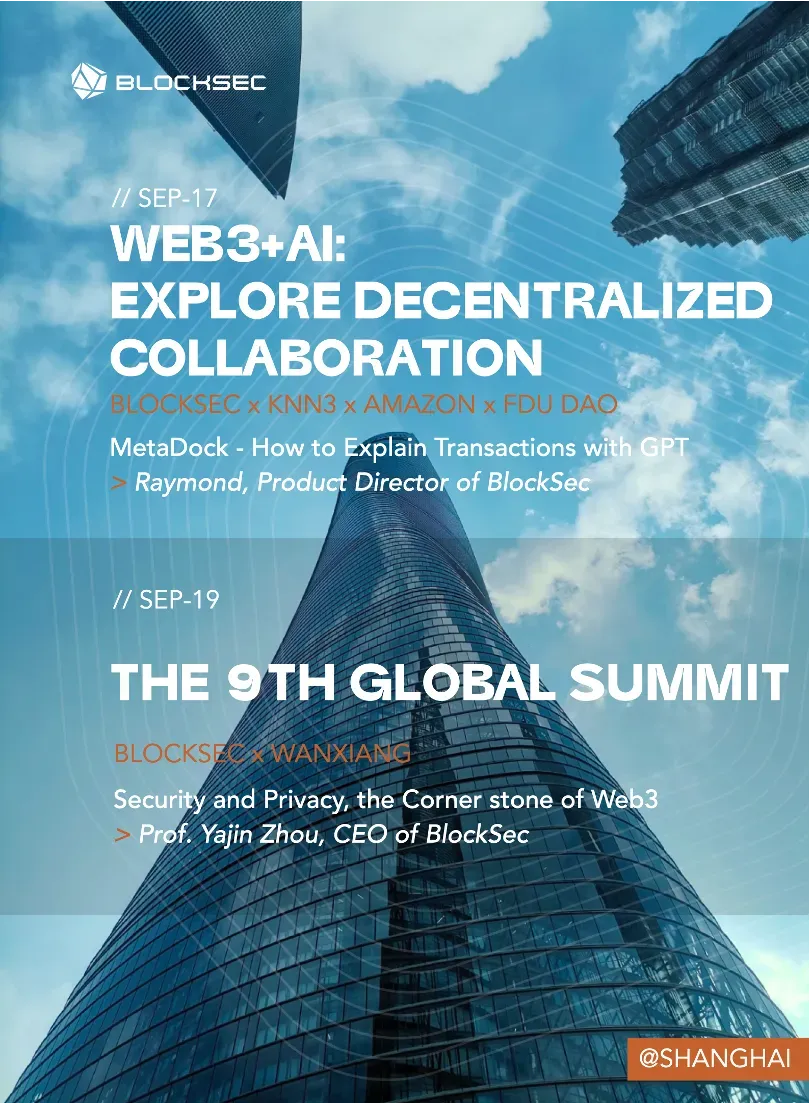
📍 Sept 17, 2PM — Shanghai Bund Center
BlockSec Product Director Raymond will present at a “Web3 & AI Fusion” event hosted by KNN3, AWS, FDU DAO on combining GPT capabilities into BlockSec products to reduce entry barriers and help users operate more securely in web3.
📍 Sept 19, 4PM — W Hotel
Professor Zhou will participate in a panel on “Web3 Cornerstones: Security & Privacy” at the 9th Global Blockchain Summit hosted by Wanxiang Blockchain, together with SharkTeam and other security firms.
See you in Singapore, Berlin, and Shanghai! 🙌
About BlockSec
BlockSec is a pioneering blockchain security company established in 2021 by a group of globally distinguished security experts. The company is committed to enhancing security and usability for the emerging Web3 world in order to facilitate its mass adoption. To this end, BlockSec provides smart contract and EVM chain security auditing services, the Phalcon platform for security development and blocking threats proactively, the MetaSleuth platform for fund tracking and investigation, and MetaSuites extension for web3 builders surfing efficiently in the crypto world.
To date, the company has served over 300 esteemed clients such as MetaMask, Uniswap Foundation, Compound, Forta, and PancakeSwap, and received tens of millions of US dollars in two rounds of financing from preeminent investors, including Matrix Partners, Vitalbridge Capital, and Fenbushi Capital.
Official website: https://blocksec.com/
Official Twitter account: https://twitter.com/BlockSecTeam